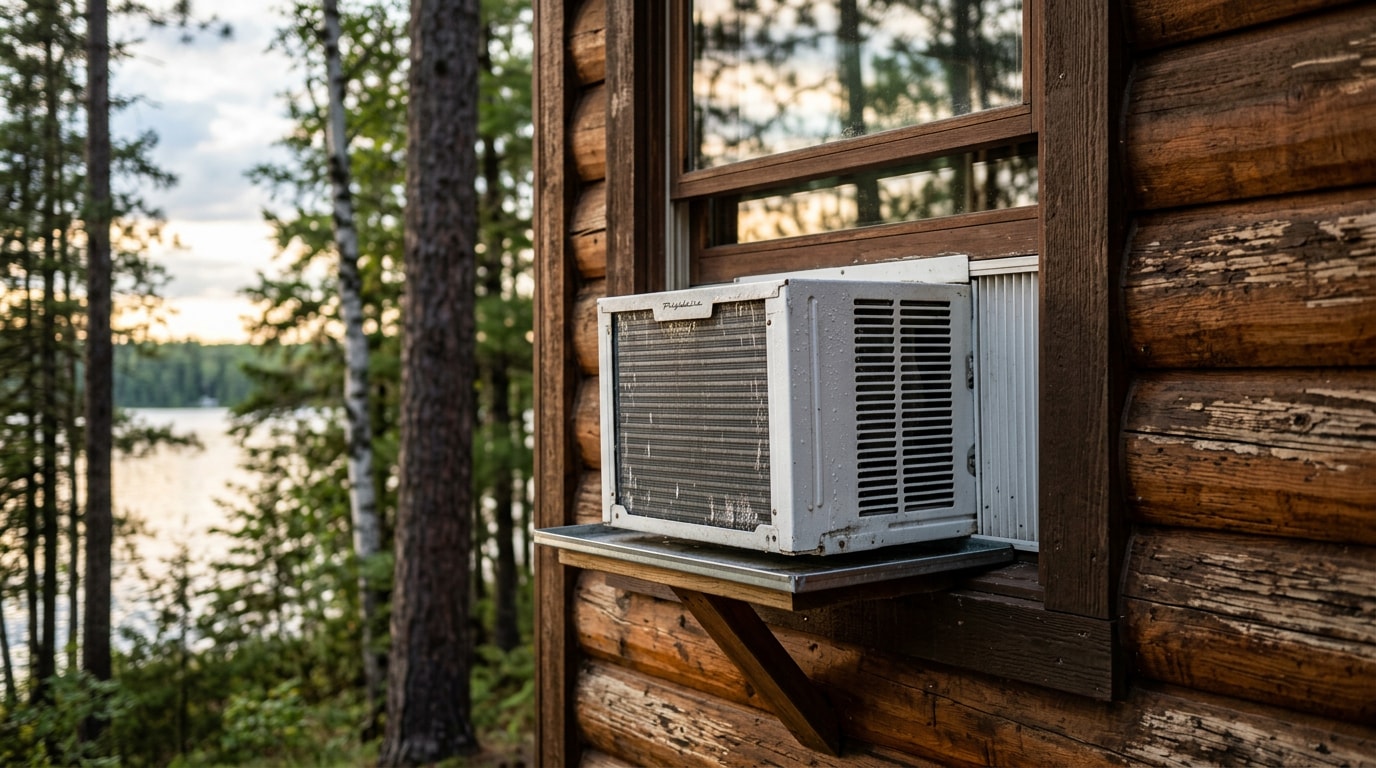
A window AC not blowing cold air in Lutsen, MN almost always traces back to one of three things: blocked airflow, the wrong setting, or a failing mechanical part. The good news is you can usually tell which bucket you're in within a few minutes. This guide walks through the checks in the order a technician would actually run them, cheapest and fastest first.
Why Your Window AC Is Running but Not Blowing Cold Air
Most units that run normally but blow warm air fall into one of three categories: an airflow problem, a settings problem, or a failed component. Restricted airflow is the most common cause by far. Dirt on the coils acts like insulation, so you might still feel air coming through the grille, but it won't be as cold as it should be.
A dirty filter can block air from reaching the evaporator coils at all, which keeps cold air from ever circulating into the room.
It also helps to separate "no air at all" from "air but not cold." If your window AC unit won't turn on, there's a good chance the issue lies in the outlet or the circuit itself rather than the cooling system. This guide focuses on units that run and produce airflow, just not cold airflow, since that's the scenario most Lutsen homeowners run into during our short cooling season.
Step 1: Check Airflow — Clean the Filter, Coils, and Vents
Airflow problems cause the majority of "running but not cold" complaints, and they're also the cheapest to fix. A fan draws air across a filter and over the cooling coils before pushing it back into the room. Block any part of that path and cooling suffers, even though the unit sounds fine.
Work through the steps in this order:
Inspect the air filter and clean it or replace it if it's severely clogged or damaged.
Check the coils and fins for debris or blockages.
Use a vacuum cleaner with a soft brush attachment to gently clean the coils.
Use a fin comb to straighten any bent fins so air can pass through evenly.
- Confirm nothing in the room, such as curtains or furniture, is blocking the front grille.
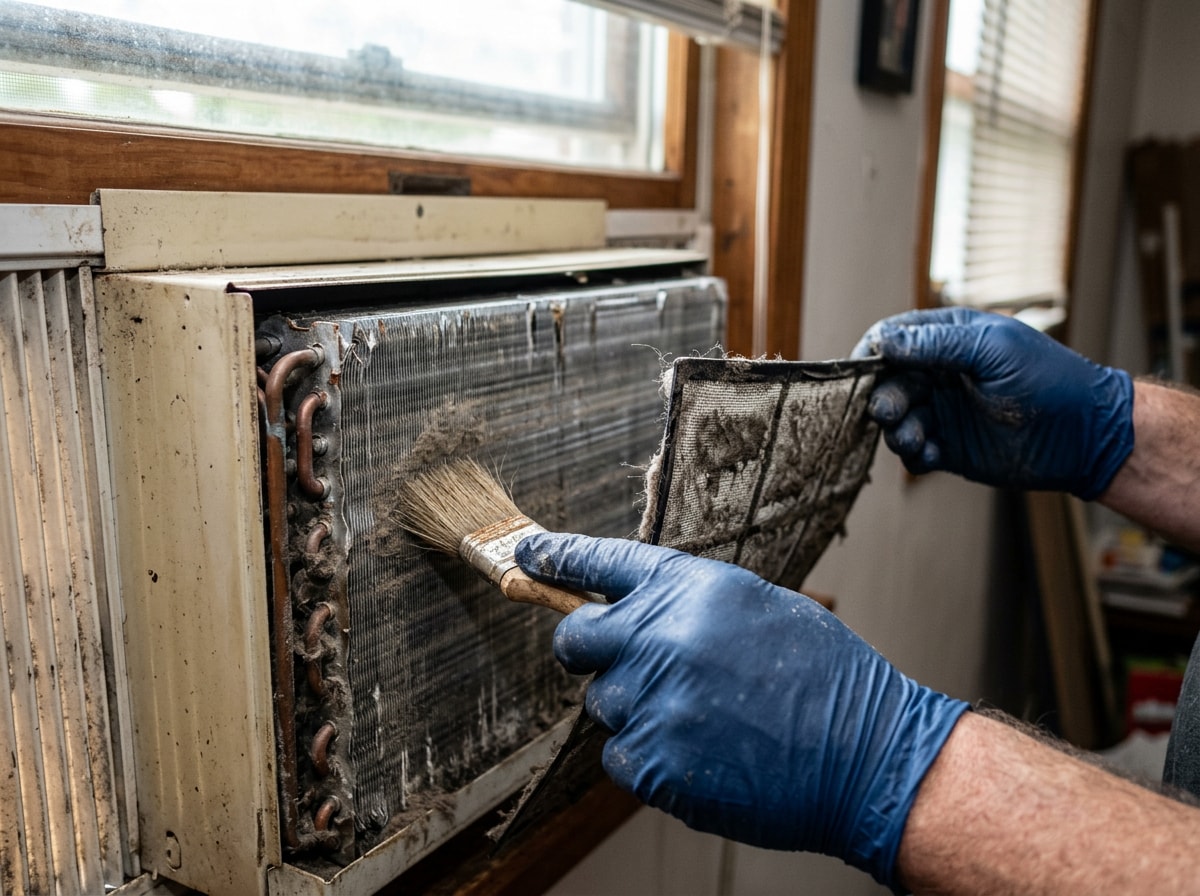
On service calls across Cook County each summer, our technicians see the same pattern: a unit that cooled fine in June starts blowing lukewarm by August because the filter never got a mid-season cleaning. In Lutsen's short, humid cooling window, pollen and dust build up fast during the brief warm stretches we do get. Check the filter every two weeks while the unit is running regularly, and clean the coils at the start and end of the season, more often if the unit faces a gravel driveway or wooded lot.
Step 2: Confirm the Thermostat, Mode, and Fan Settings
If the filter and coils are clean, check the controls before assuming something is broken.
Sometimes a window AC not blowing cold air is simply operating under the wrong settings, so check that the AC is set to "Cool" mode instead of Fan or another mode. In Fan mode, the compressor never cycles on, so the unit only circulates room-temperature air. If your AC unit is clean and running normally but it isn't blowing cold air, chances are you've chosen the wrong mode in the control panel.
Behind the scenes, the temperature on a window air conditioner is controlled by the thermostat setting and the thermistor.
The thermistor on most window AC units sits behind the air filter, next to the evaporator coil. If it misreads the temperature, the unit may shut off early or never reach the set point, which can look like a bigger mechanical failure.
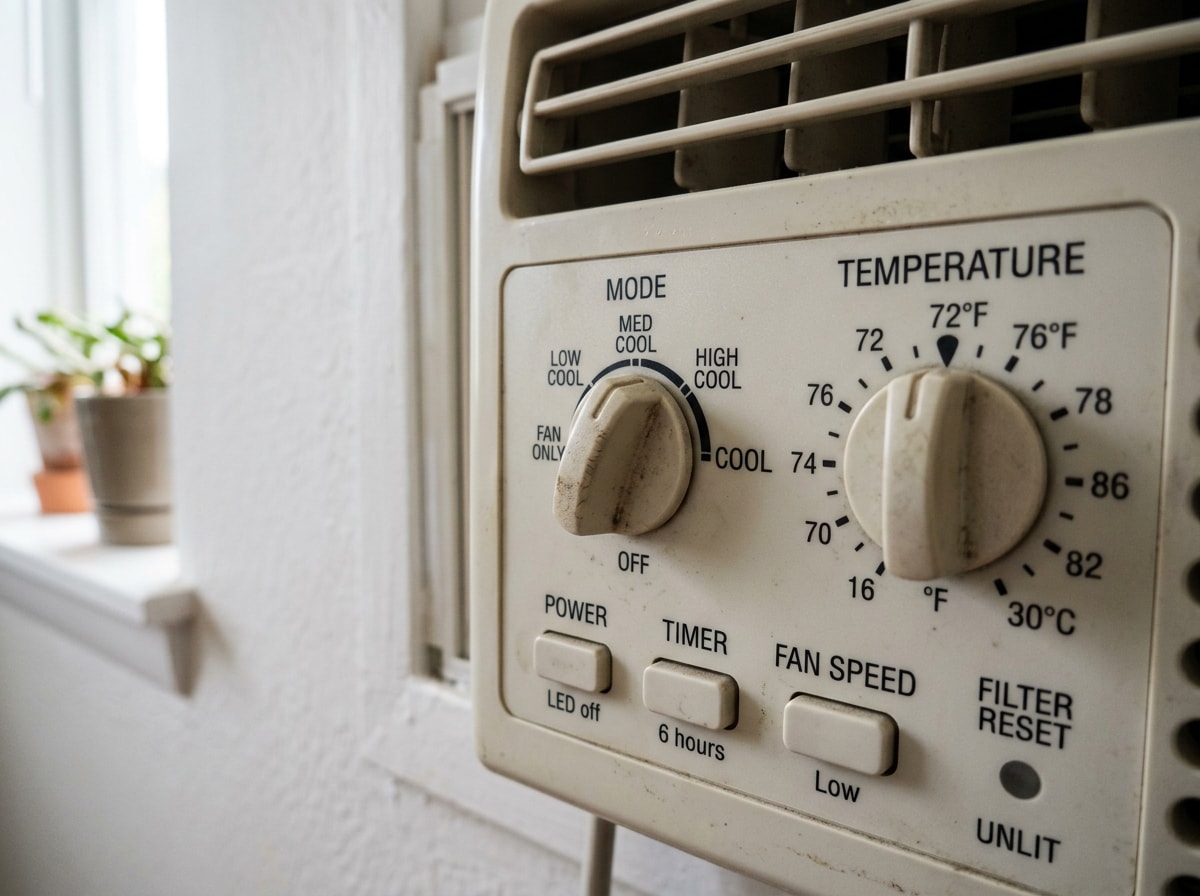
The simplest fix is often the most obvious one: turn the thermostat to a colder setting and give the unit 15-20 minutes to respond before troubleshooting further.
Step 3: Rule Out Fan, Capacitor, and Compressor Problems
When airflow and settings both check out, the problem is usually mechanical.
Your window air conditioner may turn on but not blow cold air because of an issue with the fan motor capacitor, which helps the fan motor circulate air properly. These parts sit inside the AC cabinet, so you can remove the cover and check that the motor and fan spin freely without obstruction.
On older units, a failing compressor is a common cause of weak or warm airflow. If the compressor circuit, specifically the capacitor, has an issue, that part can't properly start the compressor and blow cool air into the room. The control panel and the cooling system are related but separate: the panel is the electrical "brain," while the compressor and refrigerant circuit do the actual work of removing heat.
When Low Refrigerant or a Failing Compressor Needs a Professional
Low refrigerant and compressor repairs are not DIY jobs. Refrigerant is sealed and pressurized, and EPA regulations under Section 608 of the Clean Air Act require that any technician who services or repairs equipment that could release refrigerant into the atmosphere be certified to handle it legally. Regular recharging and maintenance by a qualified technician is also simply part of keeping a cooling system running at peak performance, since regular maintenance such as charging refrigerant and replacing filters is necessary to maintain peak performance.
If you suspect low refrigerant or a dead compressor, that's the point to stop opening panels and call a pro. You can schedule a free inspection or browse our air conditioning repair services if you're in the Lutsen area and need hands-on help.
Window AC Troubleshooting Checklist
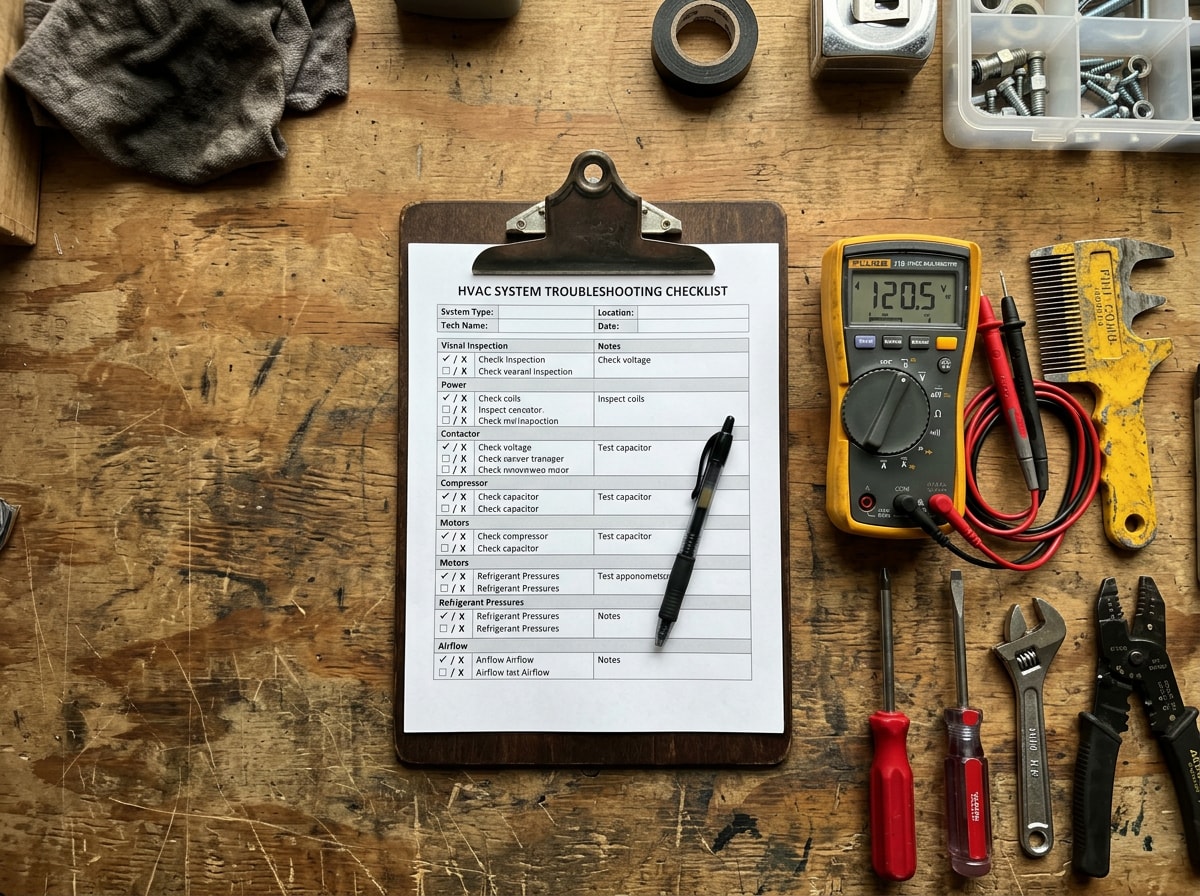
Run through this sequence before deciding whether to call for service:
- Filter check — Is it clean, or clogged with visible dust?
- Mode and thermostat check — Is it set to Cool, not Fan or Dehumidify, and set cold enough?
- Ice or gaps check — Ice on the coils points to an airflow or refrigerant issue; daylight around the frame means outside heat is fighting the cold air inside.
- Fan sound check — Grinding, rattling, or a fan that won't spin freely suggests a motor or capacitor problem.
- Call a pro if — You've cleaned the filter, confirmed settings, and still see ice, warm air, or unusual noise.
Repair or Replace? Weighing the Real Cost
Once you've found the likely cause, weigh it against the unit's age and the repair cost.
| Situation | Typical Recommendation |
|---|---|
| Dirty filter or coils, unit under 8 years old | Repair — cheap, quick, usually a DIY fix |
| Faulty capacitor or fan motor, unit under 8 years old | Repair — moderate cost, worth it on a younger unit |
| Failing compressor or low refrigerant, unit 8-10+ years old | Replace — repair cost often approaches a new unit's price |
| Unit frequently icing over even after cleaning | Have it inspected — may signal refrigerant or compressor trouble |
A reasonable rule of thumb: if the repair costs more than half of a new unit's price, or the unit is already near the end of its typical life span, replacement is usually the better value. For a broader comparison of cooling options for your home, see our guide to choosing a heating and air conditioning system, and visit our home page for current service options.
Why Lutsen's Short Cooling Season Makes This Worse
Lutsen doesn't get a long cooling season, so most homeowners only run a window unit a handful of weeks a year. That short runtime means small problems, a dirty filter, a bent fin, a wrong mode, often go unnoticed until the one stretch of August heat when the unit actually needs to work hard. Cabins and seasonal homes near the lakeshore also tend to sit closed up for weeks at a time, which lets dust and pollen settle on the coils before anyone notices reduced cooling.
If your unit never seems to blow cold enough even after cleaning and checking settings, it may also be the wrong AC for the room. If you're shopping for a window unit from scratch, it's worth understanding how these units actually draw and exhaust air before buying; our guide on whether window AC units pull air from outside covers that in detail. For homeowners in our Lutsen service area, routine air conditioning maintenance before the season starts catches most of these issues before they cause a hot week with no relief.
FAQ
Why Does My Window AC Blow Cold, Then Warm?
A coil that runs iced over can't keep cooling once ice blocks airflow, so the unit blows cold at first and then warm as the ice builds up. A dirty filter or low refrigerant is usually the underlying cause of this cycling pattern.
Why Isn't My Window AC Reaching the Set Temperature?
The usual suspects are a dirty filter, blocked vents, low refrigerant, or a unit that's undersized for the room. Check airflow first before assuming a bigger mechanical issue.
Why Does My Window AC Turn On but Not Blow Any Air?
This points to the fan rather than the cooling system, a stuck or broken fan motor, a jammed blade, or a failed capacitor. If the fan won't spin freely by hand after you remove the cabinet cover, the motor or capacitor likely needs replacement.
How Do I Reset a Window Air Conditioner?
Unplug the unit, wait at least a few minutes for internal components to fully power down, then plug it back in. If your model has a visible reset button on the control panel, press it after the wait before restarting the unit.
What Size Window AC Do I Need for My Room?
To calculate how large a unit to buy, first find the size of the room to be cooled, then increase capacity by about 10 percent if the room is very sunny. For the full official sizing chart, see ENERGY STAR's room air conditioner sizing guidance.
How Do I Know When to Replace a Window Air Conditioner?
If your unit is past 8-10 years old and needs a compressor or refrigerant repair, replacement is usually the more cost-effective choice. See the repair-or-replace table above for the full breakdown.