Choosing a heating and air conditioning system in Two Harbors, MN means picking equipment that can survive brutal Lake Superior winters without wrecking your utility bills. The furnace, heat pump, or boiler you install today will run for 15 to 20 years, so a wrong-sized or wrong-type system turns into a decade and a half of regret. This guide covers system types, climate factors, sizing, efficiency ratings, and the repair-versus-replace decision, so you walk into any quote already knowing the right questions to ask. Our heating and cooling specialists serving Two Harbors homeowners help customers work through exactly this comparison every week.
Understanding HVAC Systems
HVAC stands for heating, ventilation, and air conditioning. Together, that equipment keeps a home's temperature and air quality comfortable year-round.
In most Two Harbors homes, two core categories work together: a heating unit built for extreme cold, and a cooling unit sized for short but increasingly humid summers.
Furnaces and Heating Efficiency
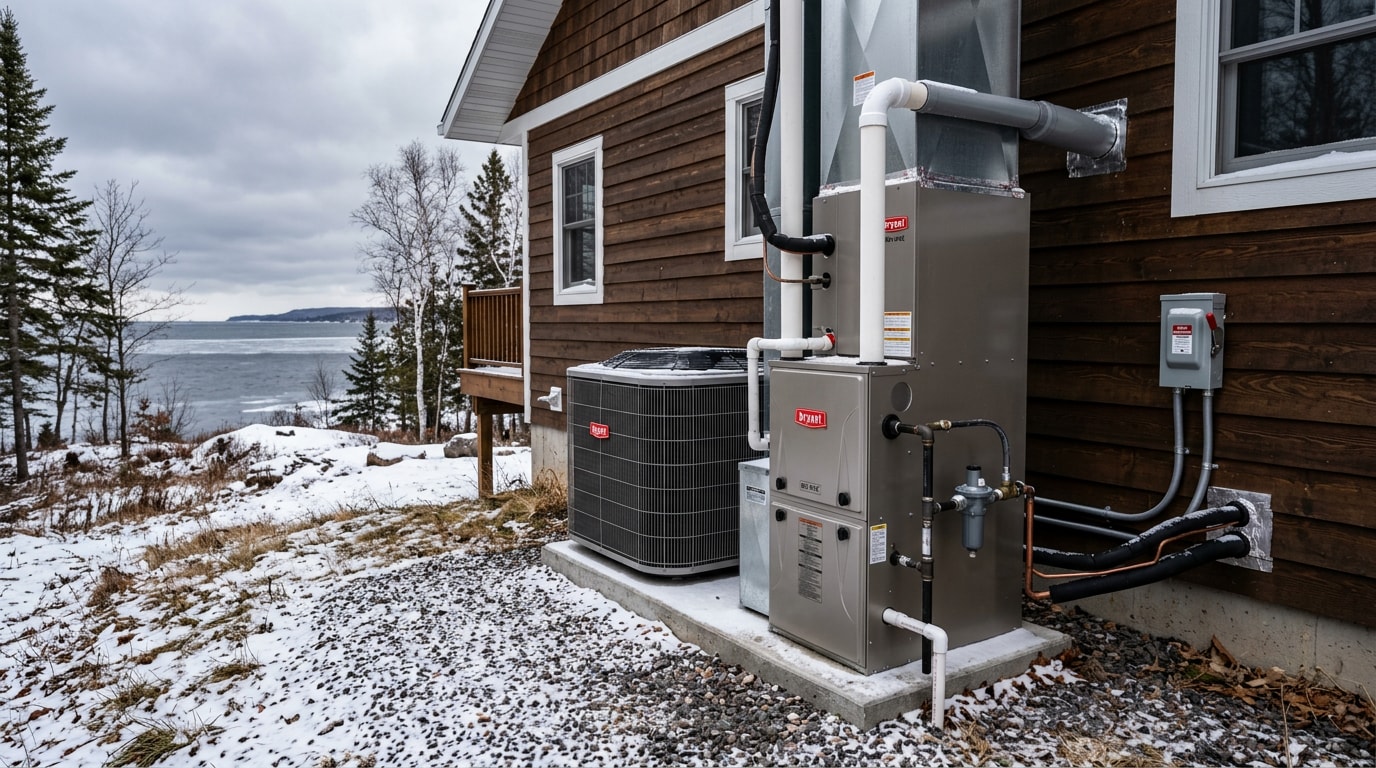
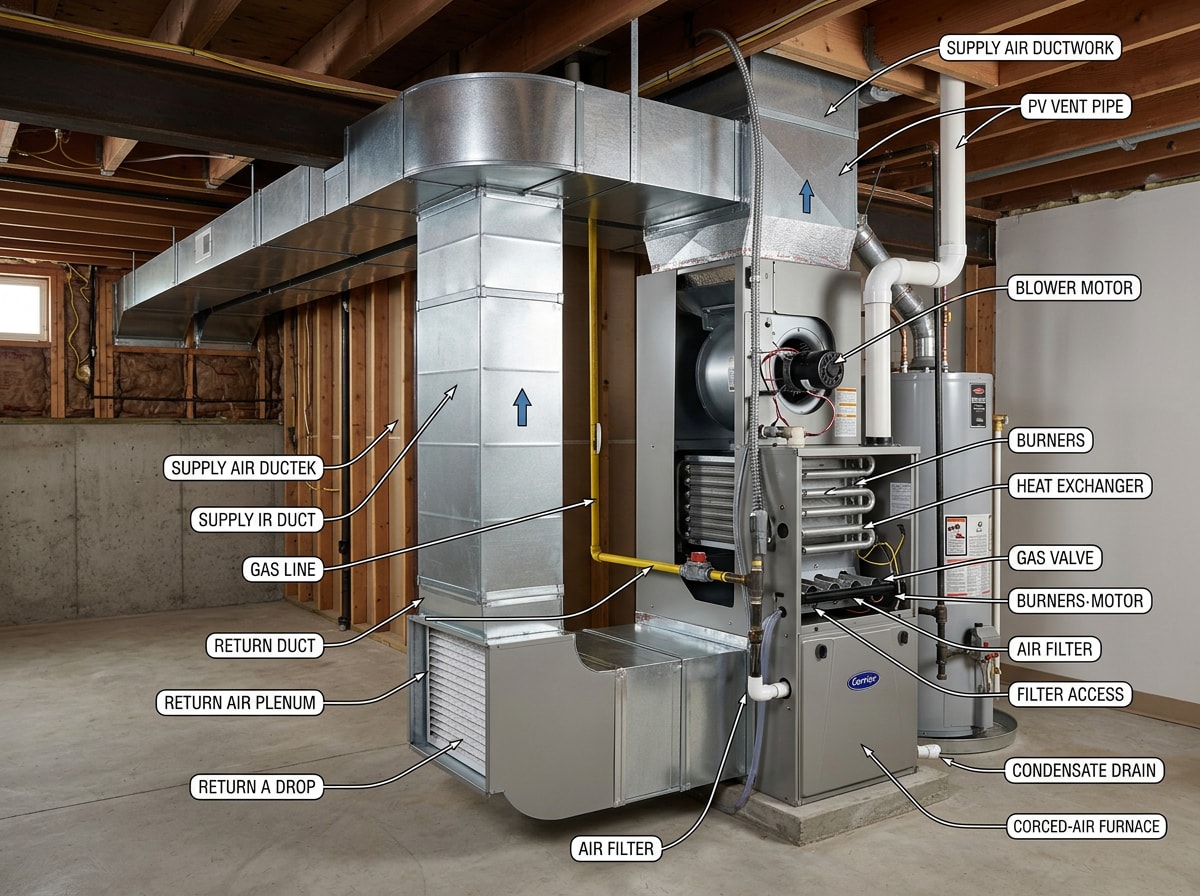
Most Lake County homes rely on forced-air heating, where a furnace warms air and pushes it through ductwork. This type of heating can run on natural gas, electricity, oil, or propane, with gas furnaces remaining the most popular choice for their efficiency and lower operating cost.
Propane furnaces are common on properties outside the natural gas service area. A fair number of rural homes around Two Harbors fall into that category.
Whatever the fuel type, the number to watch is the AFUE rating (Annual Fuel Utilization Efficiency). It shows what percentage of fuel becomes usable heat instead of escaping as waste. An 80% AFUE furnace turns 80 cents of every fuel dollar into heat. Higher-efficiency models push well past 90%.
Air Conditioners and Cooling Efficiency
Central air conditioners pull heat out of indoor air and release it outside through the home's ductwork. The efficiency metric here is SEER (Seasonal Energy Efficiency Ratio). A higher SEER rating means better cooling efficiency for every dollar spent on electricity.
Central air conditioners, ductless mini splits, and heat pumps each offer different advantages depending on your layout and existing ductwork. If you've ever wondered what thermostat setting actually keeps a North Shore home comfortable without spiking your bill, our post on a good AC temperature for Grand Marais homes breaks that down in detail.
A smart thermostat pairs well with any of these systems, using scheduling and occupancy sensing to squeeze more savings out of a high-SEER unit. Browse our central air conditioning installation services to see the systems installed most often in Lake County homes.
How Minnesota's Climate Shapes HVAC System Selection
Minnesota winters are not gentle, and Two Harbors sits right on Lake Superior, where lake-effect weather adds its own twist. Long stretches of sub-zero temperatures are routine from December through February, and the lake itself drives rapid swings and heavy, wet snow that inland climates rarely see.
The U.S. Department of Energy's Building America Program sorts climates by heating degree days, and a cold climate is defined as a region racking up between 5,400 and 9,000 heating degree days a year. Lake County sits solidly in that range, which is part of why the Department of Energy's climate zone research treats northern Minnesota differently than equipment ratings built for a national average.
After years installing and servicing systems along the North Shore, we see the same failure pattern every winter: a furnace or heat pump sized for a milder climate, installed by a crew unfamiliar with lake-effect conditions, struggling to keep up the first hard cold snap.
North Shore weather also brings high summer humidity despite short cooling seasons, on top of a housing stock that skews older, with aging systems never built for today's efficiency standards. System selection carries more weight here than it does in milder climates, where almost any mid-range equipment gets the job done.
Choosing the Right System for Your Home
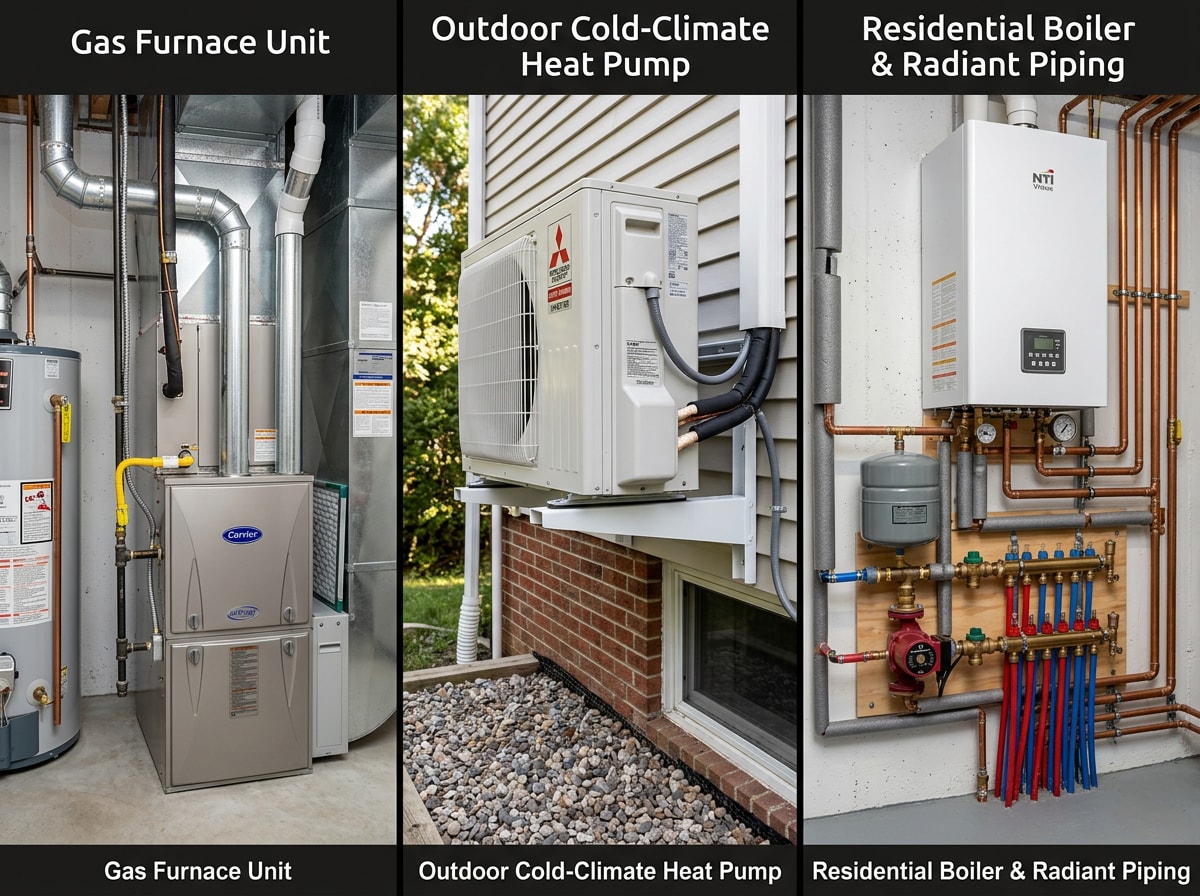
Most Two Harbors homeowners land on one of three setups:
- A high-efficiency furnace paired with central air conditioning
- A heat pump with a backup furnace in a dual fuel arrangement
- A boiler system for homes built around radiant heat
| System | Best For | Typical Upfront Cost | Cold-Weather Performance |
|---|---|---|---|
| Furnace + Central AC | Homes with existing ductwork, fast recovery needs | Lowest of the three | Excellent; built for deep cold |
| Dual Fuel Heat Pump | Energy-conscious homeowners, year-round efficiency | Moderate to high | Strong with furnace backup |
| Boiler (Radiant) | Older homes already plumbed for radiant heat | Moderate to high | Steady, even heat |
High-Efficiency Furnace (Most Common)
Furnaces remain the default choice for good reason. They stay reliable in extreme cold, heat a home quickly after a deep temperature drop, and work with existing ductwork already in place in most older homes, no costly retrofit required.
Upfront cost is also lower than heat pump or boiler alternatives. Modern units reach 90 to 98% efficiency, and a 96% AFUE furnace burns noticeably less fuel over a Minnesota winter than the 80% AFUE models still common in older houses. See our furnace installation services for the models we install most in Lake County.
Heat Pump (Fast Growing in Minnesota)
Do heat pumps actually work in Minnesota's cold winters? Modern cold-climate heat pumps can operate efficiently at much lower outdoor temperatures than older models could. According to ENERGY STAR's buying guidance, many certified cold climate models excel at space heating even in the coldest conditions, though homes here still benefit from a backup heat source once temperatures drop into true sub-zero territory.
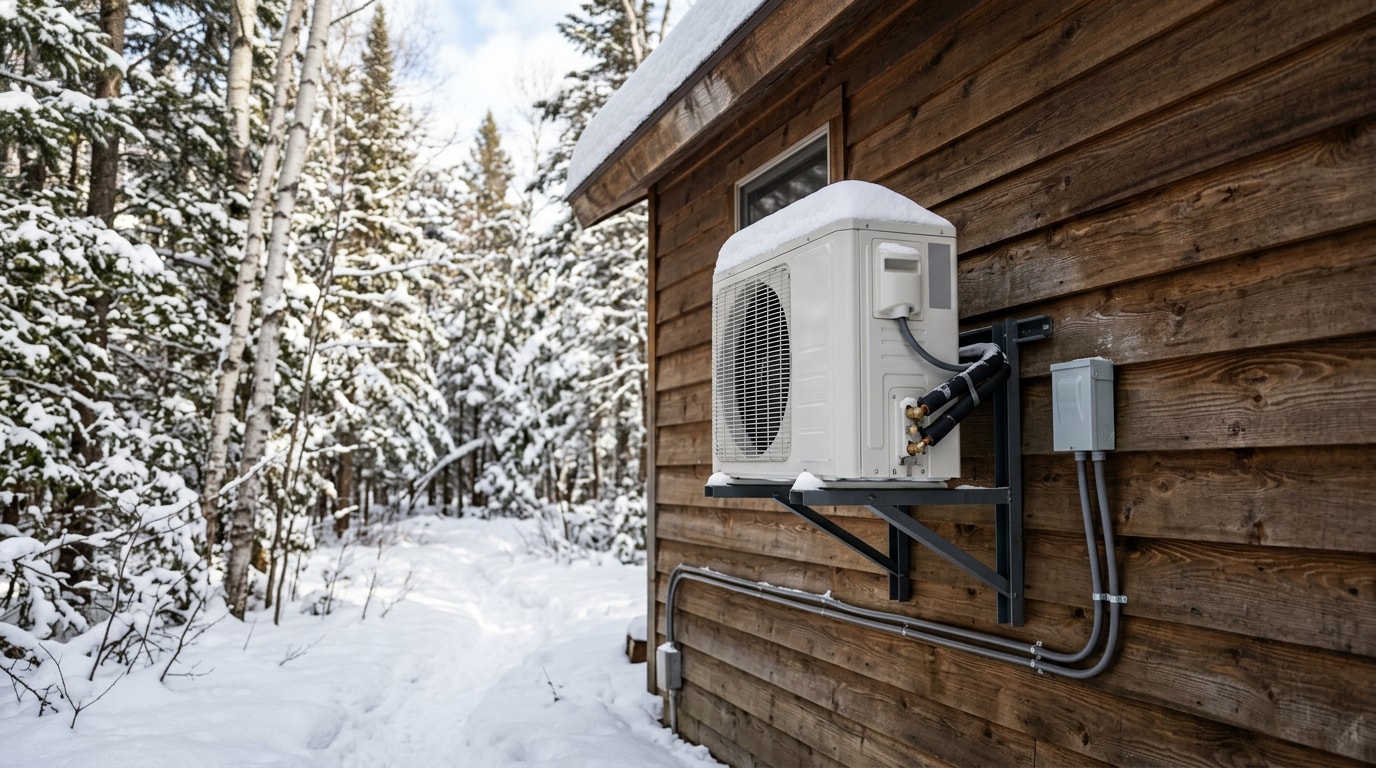
That's why the recommended setup is a dual fuel system: a heat pump handling most of the season, with a furnace kicking in automatically during the coldest stretches. This configuration suits energy-conscious homeowners well, particularly since federal and state incentives can help offset the higher upfront equipment cost. Our mini split installation page covers ductless heat pump options for homes without existing ductwork.
Boiler Systems (Steady, Even Heat)
Boiler heating remains common in older Minnesota homes, especially those built with radiant heat running through baseboards or in-floor tubing. Boilers heat water rather than air, producing steady, even warmth that many homeowners prefer over forced-air temperature swings.
They're still a great option for homes already set up this way, though adding central air to a boiler-heated house usually requires a ductless solution since there's no existing ductwork to use. Our boiler installation services team handles both new installs and radiant system upgrades.
Key Considerations When Choosing a New HVAC System
Once you've narrowed down a system type, run through this checklist to confirm it's the right fit for your specific house, not just a generic recommendation.
Evaluate Your Needs and Options
Start by assessing your current system's performance:
- Note energy costs over the past year or two
- Flag any recurring maintenance requirements
- Identify rooms that never reach a comfortable temperature no matter the thermostat setting
This kind of honest needs assessment often reveals whether the real problem is the equipment itself or something else, like insulation or duct leaks.
Proper Sizing
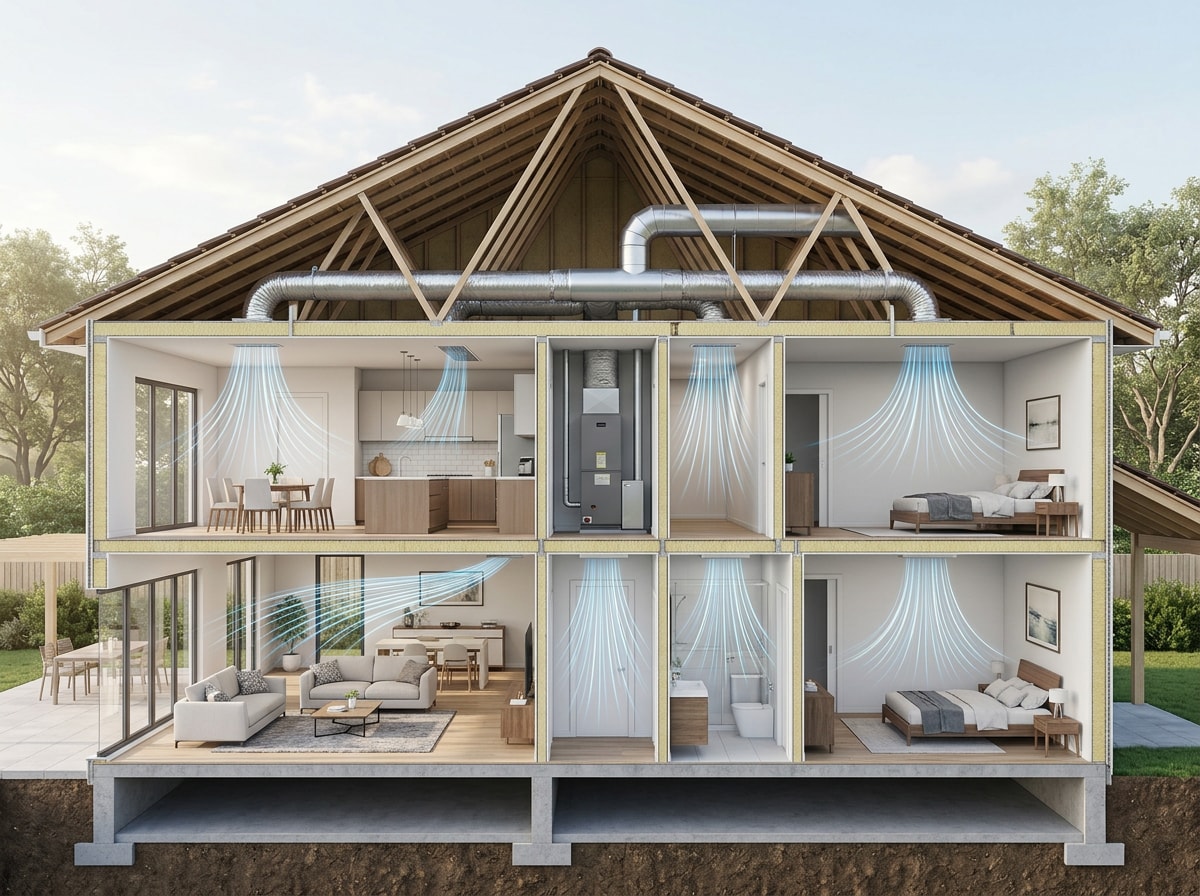
A system that's too small struggles to keep up during a Two Harbors cold snap, running constantly and still falling short. One that's too large short cycles, reaching temperature fast, shutting off, then restarting before the house has fully heated or cooled. That wears out components faster and leaves rooms feeling uneven.
Proper sizing comes from a load calculation, not a guess, and not simply matching whatever the old system was rated for. A Manual J load calculation is the national ANSI-recognized standard for producing HVAC equipment sizing loads for single-family detached homes, small multi-unit structures, condominiums, townhouses, and manufactured homes , and it's the method set by ACCA, the industry group that maintains the standard.
Energy Efficiency Ratings (SEER and AFUE)
SEER and AFUE are the two numbers worth remembering when comparing quotes. A higher SEER rating means better cooling efficiency in summer. A higher AFUE rating means less wasted fuel in winter. Both reduce long-term energy costs and environmental impact.
In a climate where furnaces run hard for months at a stretch, the math works differently than it does further south. A high-efficiency furnace costs more upfront, but fuel savings add up faster here, often producing a shorter payback period than homeowners expect when they first see the price difference.
Compatibility With Existing Ductwork
Not every home is set up for a ducted system. Retrofitting an older house that was never built with ductwork can require real investment, especially if existing ductwork elsewhere in the home is undersized, leaky, or outdated.
For homes without ducts, or additions where extending ductwork isn't practical, a ductless system delivers heating and cooling to individual rooms without the cost of a full duct network.
When to Replace Your HVAC System vs. When to Repair
A simple rule covers most situations: if a furnace or air conditioner is under 15 years old and the repair cost is reasonable, fix it. If it's pushing 20 years old, has needed multiple repairs recently, or the current repair would cost more than a third of a new system's price, replacement is usually the smarter long-term investment.
| Factor | Repair | Replace |
|---|---|---|
| Age | Under 15 years | 15 to 20+ years |
| Repair cost | Under about 30% of new system cost | Over about 30% of new system cost |
| Breakdown frequency | Rare, isolated issue | Multiple repairs in recent years |
This same logic applies to both furnace lifespan and AC lifespan: age and repair frequency matter more than the specific symptom in front of you today. If your current system is struggling now, our furnace repair and air conditioning repair teams can give you an honest read on which side of that line you're on, and our emergency HVAC service is available if a breakdown happens mid-storm.
The Role of Professional Guidance
None of this replaces an actual walkthrough from a licensed HVAC contractor. A professional assessment accounts for details a homeowner might miss, like duct condition, electrical capacity, and venting requirements, and protects the efficiency gains promised by a high AFUE or SEER rating on paper.
Local experience matters too. A contractor familiar with Two Harbors winters will size and install equipment differently than one used to milder climates. Keeping up with routine air conditioning maintenance after installation also protects that investment once the new system is in.
Before deciding on a system, it's worth scheduling a free inspection with our heating and cooling team to get a load calculation specific to your home. You can also browse our completed projects to see the kind of installs we've handled across Lake County, or visit our homepage for a full rundown of services.
FAQ
What size HVAC system do I need for my home?
The right size depends on square footage, insulation quality, window count, and ceiling height, not square footage alone. A professional Manual J load calculation, measured in BTUs, is the industry-standard method for determining proper HVAC size, and it's far more accurate than an online calculator or a rule-of-thumb estimate.
Do heat pumps work in Minnesota's cold winters?
Yes. Modern cold-climate heat pumps can handle Minnesota winters efficiently down to very low outdoor temperatures, though most homes still pair one with a backup furnace for the coldest stretches. This dual fuel setup provides efficient heat pump performance most of the season while keeping reliable backup heat available for true sub-zero temperatures.
How much does a new HVAC system cost in Minnesota?
Installation cost varies by equipment type, ductwork condition, and efficiency tier. Standard-efficiency furnaces generally cost less upfront than high-efficiency or dual fuel systems, but exact pricing depends on your home's specific load, duct condition, and fuel source. A local quote and load calculation is the only way to get an accurate number, which is why we offer a free inspection before quoting any job.
Which HVAC system is best for a home without ductwork?
A ductless mini-split system is typically the best fit for a home without ducts, since it delivers heating and cooling directly to individual rooms without the cost of installing a full duct network. It's the same solution covered earlier for retrofitting older homes that were never built with central ductwork.
How long do HVAC systems actually last on the North Shore?
Furnaces typically last 15 to 20 years and air conditioners 12 to 15 years nationally, but harsher winters and heavier runtime can shorten that range here if a system was undersized or poorly installed. Regular maintenance and correct initial sizing are the two biggest factors in reaching the long end of that lifespan.
Are there rebates available for upgrading to a high-efficiency system?
Federal and state incentives for high-efficiency furnaces, heat pumps, and dual fuel systems change from year to year, so availability and amounts depend on current programs. Ask your contractor during your quote what currently applies to your specific equipment choice and income bracket.
JSON: