Emergency heat is a manual thermostat setting that shuts off your heat pump's compressor and forces a backup heat source to carry the entire heating load. Knife River, MN homeowners usually meet this setting the first time a January wind off Lake Superior pushes the outdoor temperature past what their heat pump can handle alone. Here's exactly what it does, when to flip it on, and when it means it's time to call for repair.
What Is Emergency Heat (EM Heat) on a Thermostat?
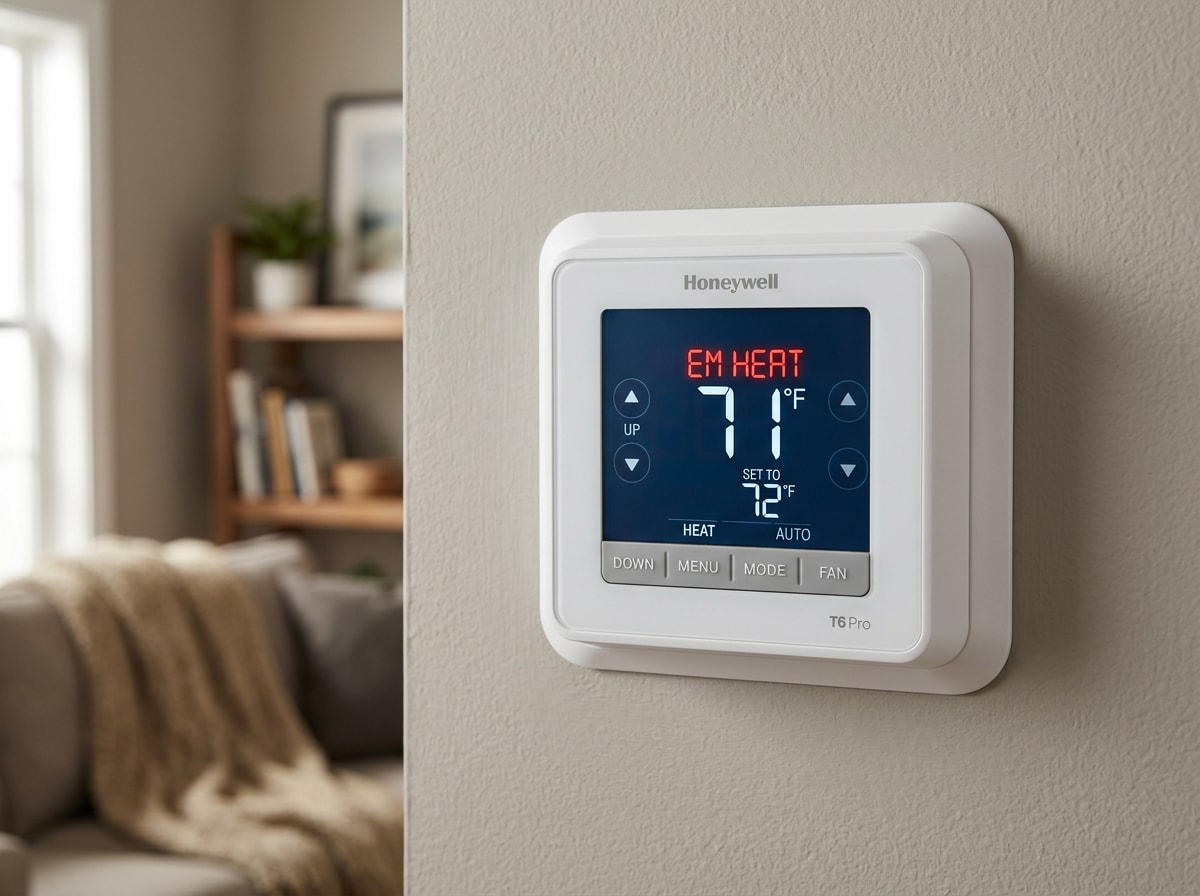
On most thermostats, this setting is labeled "EM Heat" or "Emer Heat." It only shows up on systems that pair a heat pump with a secondary source, something like an electric heat strip, a gas furnace, an oil furnace, or a hot-water coil.
Along the North Shore, where lake-effect cold snaps can drop temperatures fast and hold them there for days, homeowners with heat pump systems eventually run into this switch. On service calls near Knife River and the rest of Lake County, we regularly find the thermostat already set to EM Heat when a heat pump has iced over or stalled out during a hard freeze.
If your home runs on a heat pump, it's worth knowing how a backup-equipped heating system is built before you ever need this setting.
How Does a Heat Pump Work?
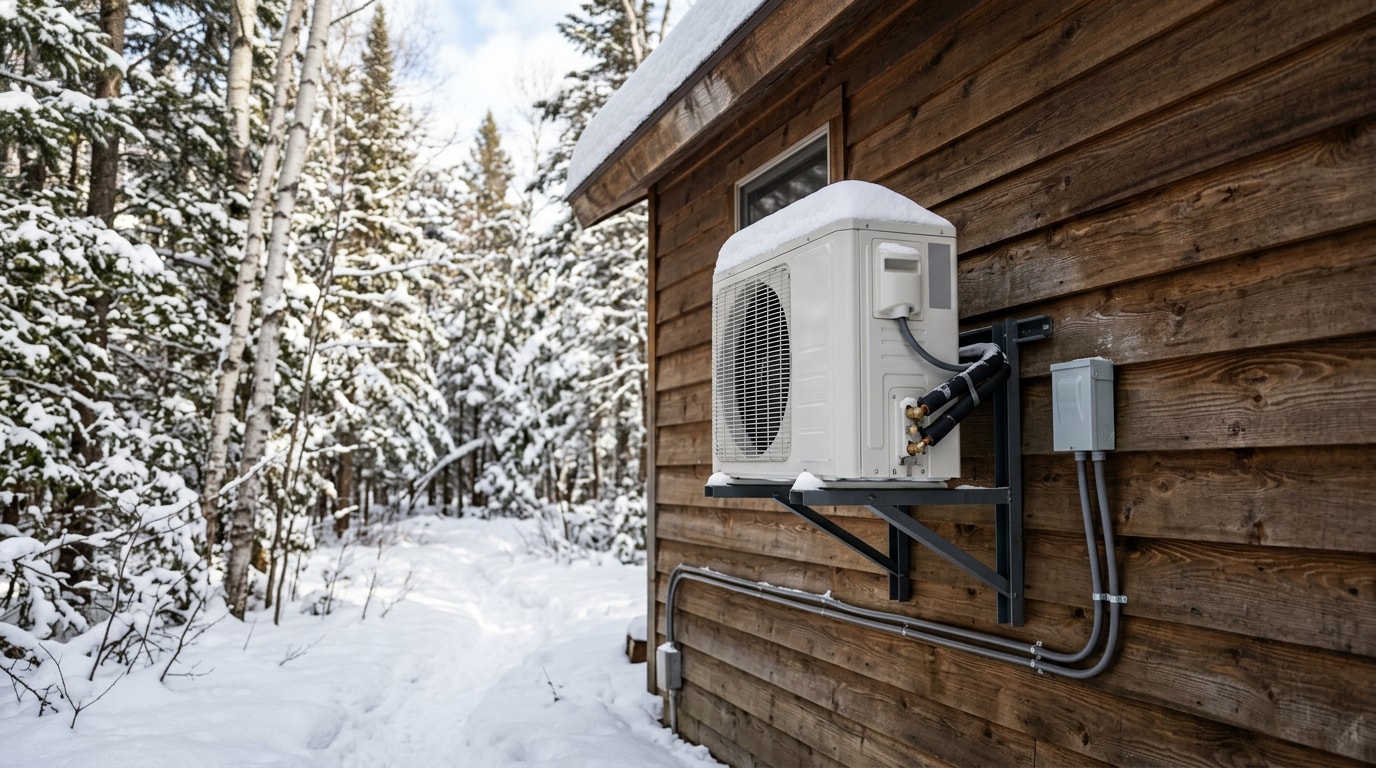
A heat pump doesn't generate heat the way a furnace does. It pulls warmth from outside air and moves it indoors, even when it's cold outside.
As outdoor air gets colder, there's simply less heat available to extract, so the system's output and efficiency both drop. Because heat pumps move heat rather than converting it from fuel, as combustion heating systems do, an ASHP is so efficient that it can deliver up to three times more heat energy to a home than the electrical energy it consumes . That efficiency advantage shrinks as the mercury falls, which is exactly why a backup heat source matters in a cold climate like northern Minnesota.
Cold climates require specially designed heat pumps that can operate at lower ambient temperatures before switching to resistance heating , according to the U.S. Department of Energy.
How Does Emergency Heat Work?
Flipping the thermostat to EM Heat shuts the compressor down completely. The backup heat source, whether that's an electric heat strip or a furnace, takes over 100% of the heating duty on its own.
Most thermostats light up a red or amber indicator to confirm the system is running on backup power instead of the heat pump. Homeowners in our Knife River service area sometimes need this setting during extended cold stretches when a heat pump simply can't keep pace with the demand.
Emergency Heat vs. Auxiliary Heat: What's the Difference?
These two terms get mixed up constantly, but they work very differently.
- Auxiliary heat (aux heat) kicks in automatically alongside the heat pump when extra help is needed. The compressor keeps running.
- Emergency heat (EM heat) is a manual override that replaces the heat pump entirely. The compressor shuts off.
| Feature | Aux Heat | EM Heat |
|---|---|---|
| Trigger | Automatic | Manual (homeowner-activated) |
| Heat pump status | Still running | Shut off |
| Relative cost | Moderate increase | Highest cost |
| Typical duration | Minutes to hours | Until repair/thaw |
The outdoor temperature at which a home's heat loss outpaces a heat pump's output is called the balance point. When outdoor temperatures are below the balance point, the heat pump cannot fully meet the home's heating needs without a backup heat source . That's the mechanism behind both aux heat and EM heat, even though one is automatic and the other isn't.
Does EM Heat Turn On by Itself?
No. EM Heat is a manual-only setting, it does not activate on its own. If your thermostat shows EM Heat running and nobody switched it there, that's a strong sign of a heat pump malfunction worth investigating.
When Should You Use Emergency Heat?
Use emergency heat when:
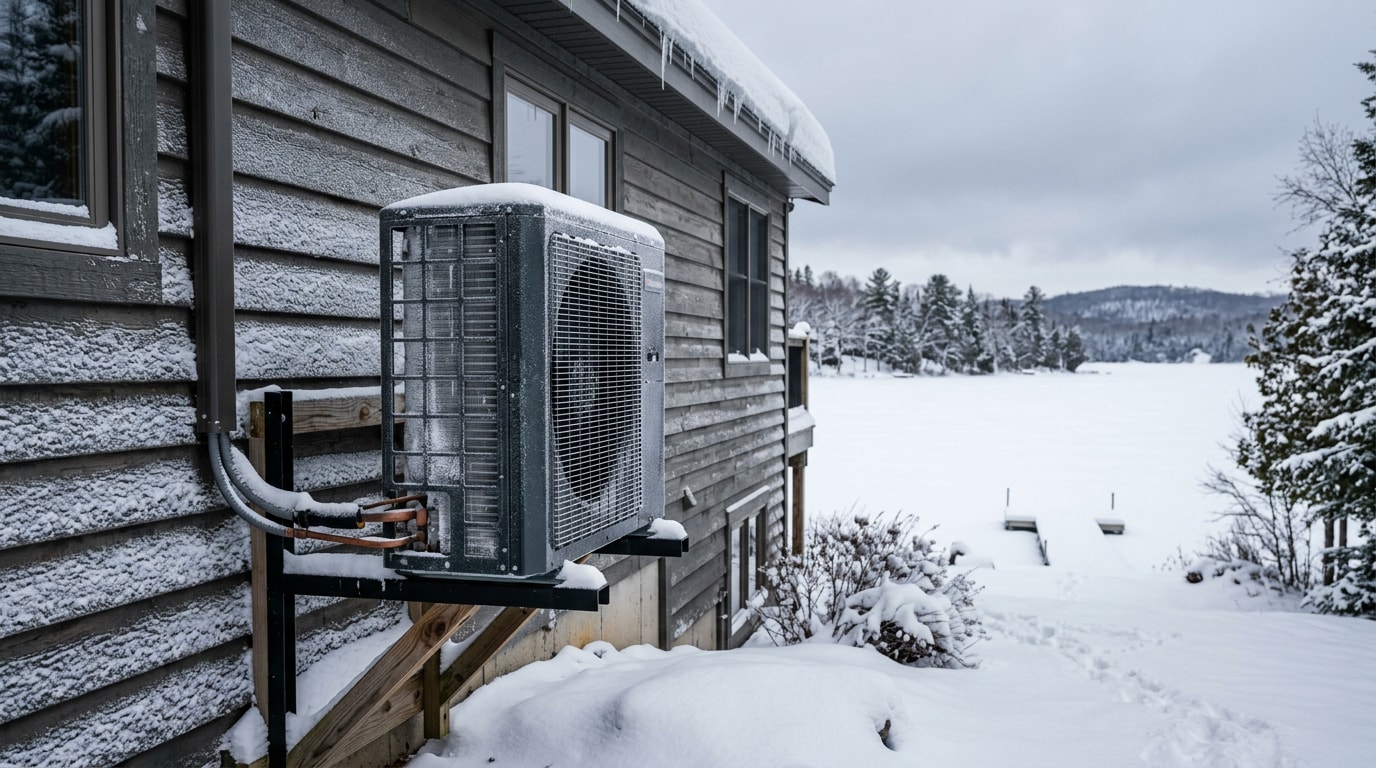
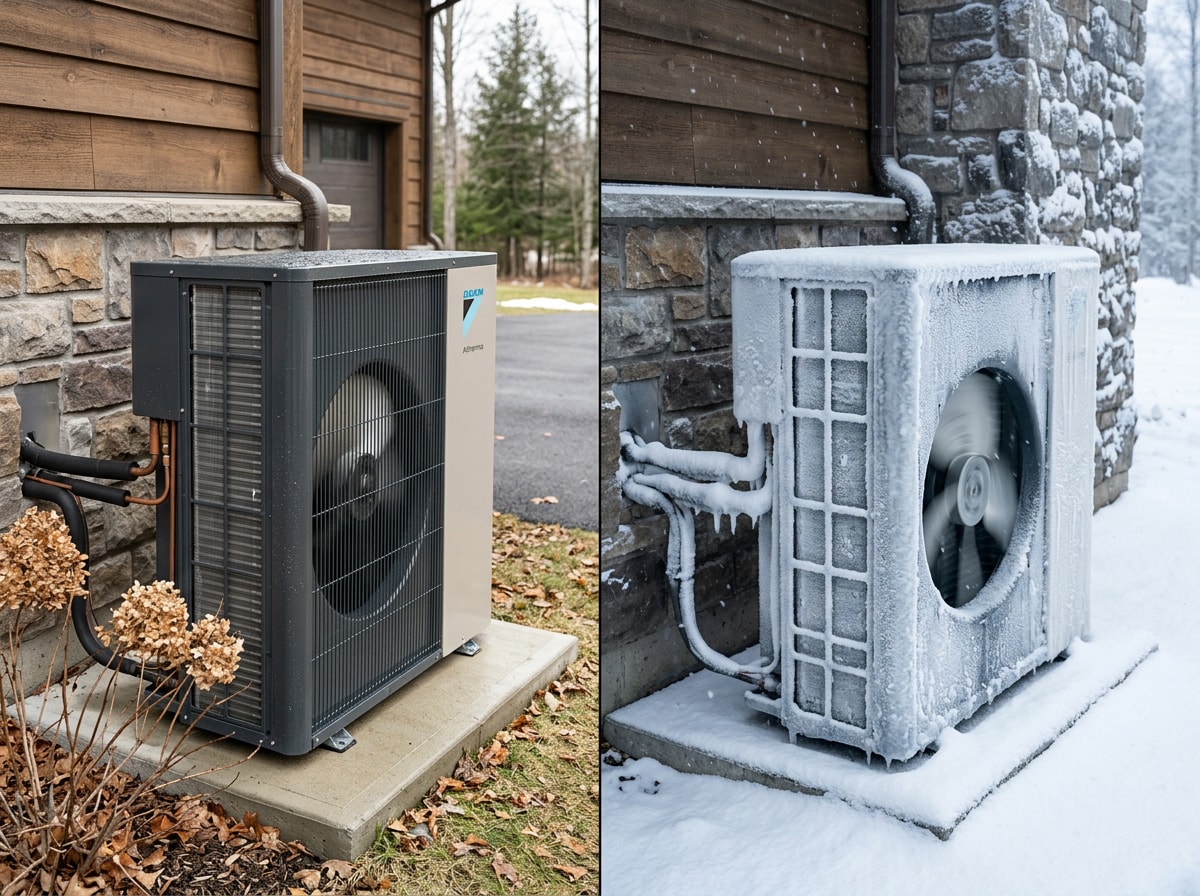
- The outdoor heat pump unit is frozen over and not thawing out.
- The heat pump has stopped producing warm air entirely.
- Outdoor temperatures have dropped below what the unit can handle on its own and you're waiting on a repair.
It's meant as a short-term bridge, not a daily heating strategy. Once you've switched to EM Heat, it's time to schedule a visit through our emergency HVAC service so a technician can diagnose the frozen coil, failed component, or other issue causing the shutdown.
Will Emergency Heat Defrost a Frozen Heat Pump?
No. EM Heat doesn't thaw the outdoor unit. It simply keeps the house warm with backup heat while the compressor sits idle during the malfunction or a natural defrost cycle.
Why You Shouldn't Run Emergency Heat All the Time
Emergency heat relies on electric resistance coils or furnace fuel instead of the efficient heat pump cycle, and that pulls far more power to produce the same amount of warmth. Running EM Heat for days instead of hours can send utility bills climbing fast.
This setting exists to get a household through a repair window, not to replace a working heat pump long-term. If your system keeps defaulting to backup heat, a stuck reversing valve, a failed capacitor, or a low refrigerant charge is usually the real culprit, and none of those fix themselves. Homeowners weighing a repair against a full system swap may also find it worth reviewing how to choose a heating and cooling system built for North Shore winters before the next cold snap hits.
If your backup source is a furnace instead of electric strips, our furnace repair team can also check that half of the system while a technician is on-site for the heat pump.
Your Heating Emergency Won't Last Forever
Emergency heat is a dependable bridge that keeps a Knife River home warm while repairs are arranged, not a permanent fix. Once it's switched on, reach out to schedule a free inspection so a technician can inspect and repair the heat pump and get the system back to normal, efficient operation.
For homeowners with ductless or mini-split heat pumps, the same manual-override logic applies. If the indoor head won't respond or the outdoor unit stays frosted, our mini split repair service handles that diagnosis too. You can see examples of completed heating and cooling work across Lake County on our projects page, or visit our homepage for a full list of services we run along the North Shore.
FAQ
What temperature should you use emergency heat?
Heat pumps commonly start struggling around the mid-30s°F balance point, but this varies by equipment, insulation, and how the system was sized. Check your owner's manual or ask a technician for your system's specific threshold.
Why is my emergency heat light on?
The light simply confirms EM Heat is active. If it's lit without anyone switching it on, have the heat pump inspected soon, it usually means the compressor has locked out or failed.
What happens if you accidentally turn on emergency heat?
Nothing gets damaged by brief accidental use, but bills rise the longer it runs since backup heat is far less efficient than the heat pump cycle. Switch back to normal Heat mode as soon as you notice.
Is it safe to leave emergency heat on all the time?
It's mechanically safe short-term but not efficient or cost-effective as a permanent setting. A heat pump stuck on backup heat for more than a day or two almost always has an underlying mechanical problem that needs a repair visit, not a permanent workaround.
What's the difference between emergency heat and auxiliary heat?
Auxiliary heat turns on automatically to assist a working heat pump during high demand. Emergency heat is a manual setting that replaces the heat pump entirely because it has failed or frozen.