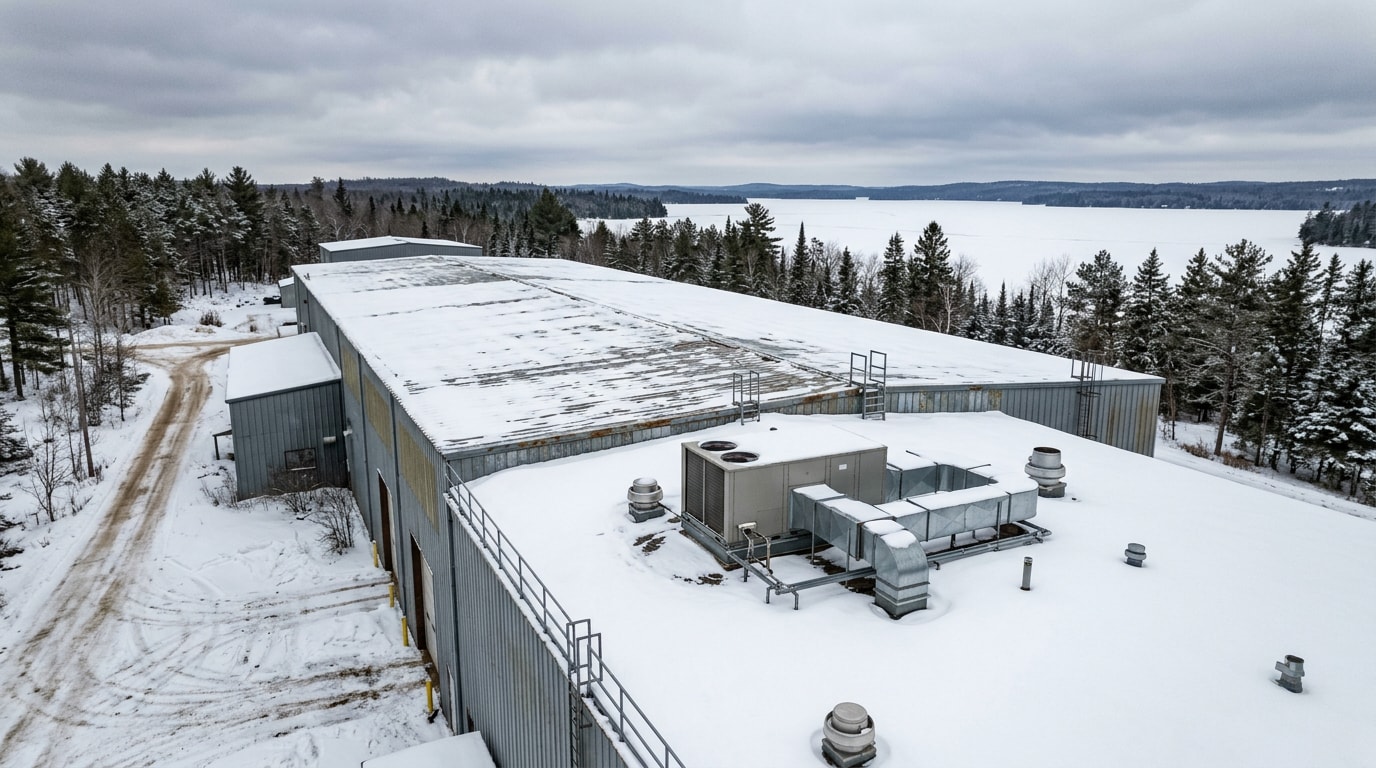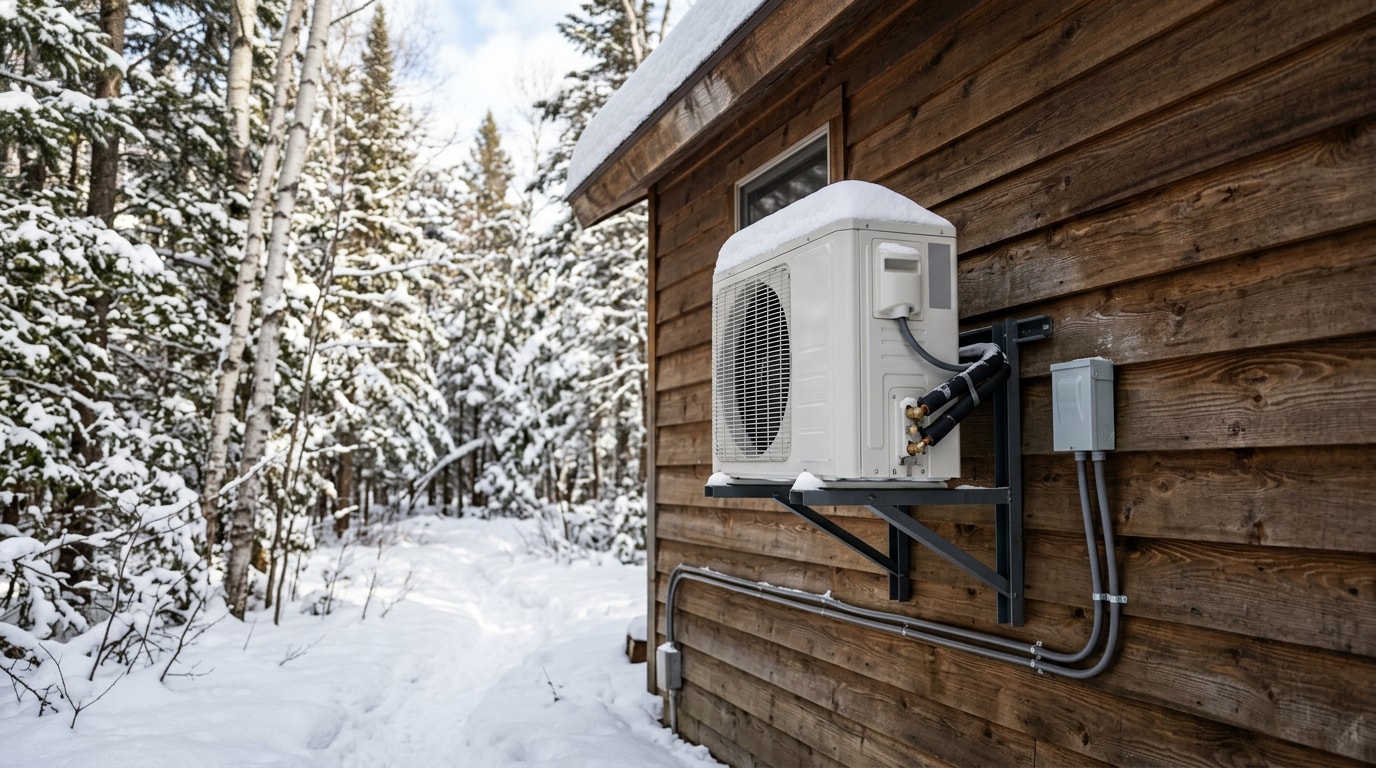
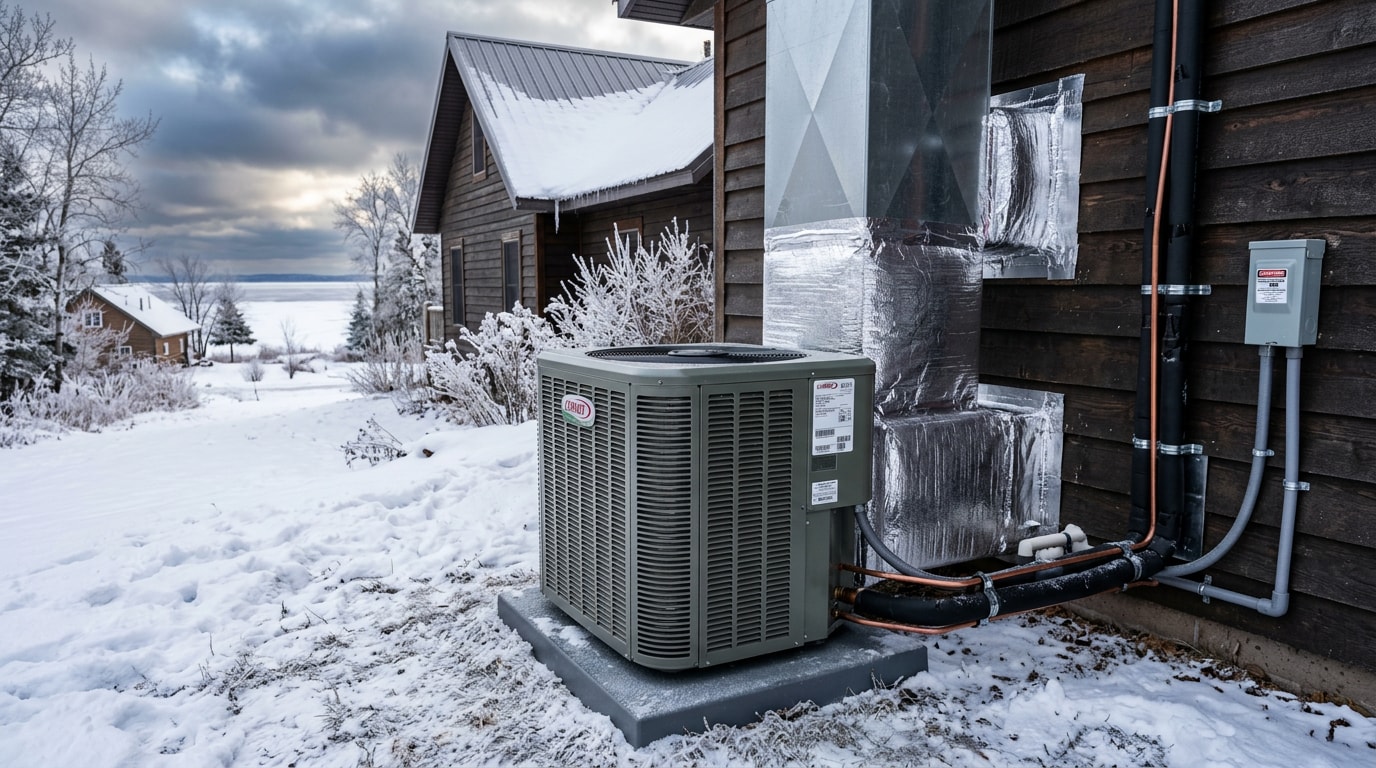
HVAC installation in Grand Portage, MN comes with a built-in complication: this corner of Cook County sits in one of the coldest building-code climate zones in the continental United States. Get the sizing, fuel choice, or installer wrong here and you find out in January, not June. Here's what actually matters before you sign a contract.
Why Grand Portage Demands a Different Approach to HVAC Installation
Grand Portage sits at the literal edge of Minnesota, wedged between Lake Superior's north shore and the Boundary Waters wilderness, minutes from the Canadian border. That location isn't just scenic trivia. It determines which equipment code allows, how big that equipment needs to be, and how it's required to perform.
Cook County, along with the rest of the North Shore, is officially classified under Minnesota's adopted energy code as Climate Zone 7. The following counties are located in climate zone 7: Aitkin, Beltrami, Carlton, Cass, Clearwater, Cook, Crow Wing, Hubbard, Itasca, Kittson, Koochiching, Lake, Lake of the Woods, Mahnomen, Marshall, Norman, Pennington, Pine, Polk, Red Lake, Roseau, St. Louis, and Wadena. That's the same severe-winter classification used for International Falls and Ely.
The state's own design-temperature table backs that up with hard numbers. For Grand Marais, the nearest listed reference city on the North Shore, the winter design dry-bulb temperature is -19°F , per Minnesota's adopted ASHRAE 90.1 climate data. That design figure, not a random guess, is the number a licensed installer should be plugging into a load calculation for a Grand Portage home.
We've pulled permits and installed systems from the Grand Portage Reservation to the Gunflint Trail, and the pattern repeats every winter: homes with equipment sized off the old unit's nameplate run nonstop once temperatures drop below -10°F, while correctly sized systems keep cycling normally through the same cold snap.
HVAC Installation Services for Grand Portage Homes
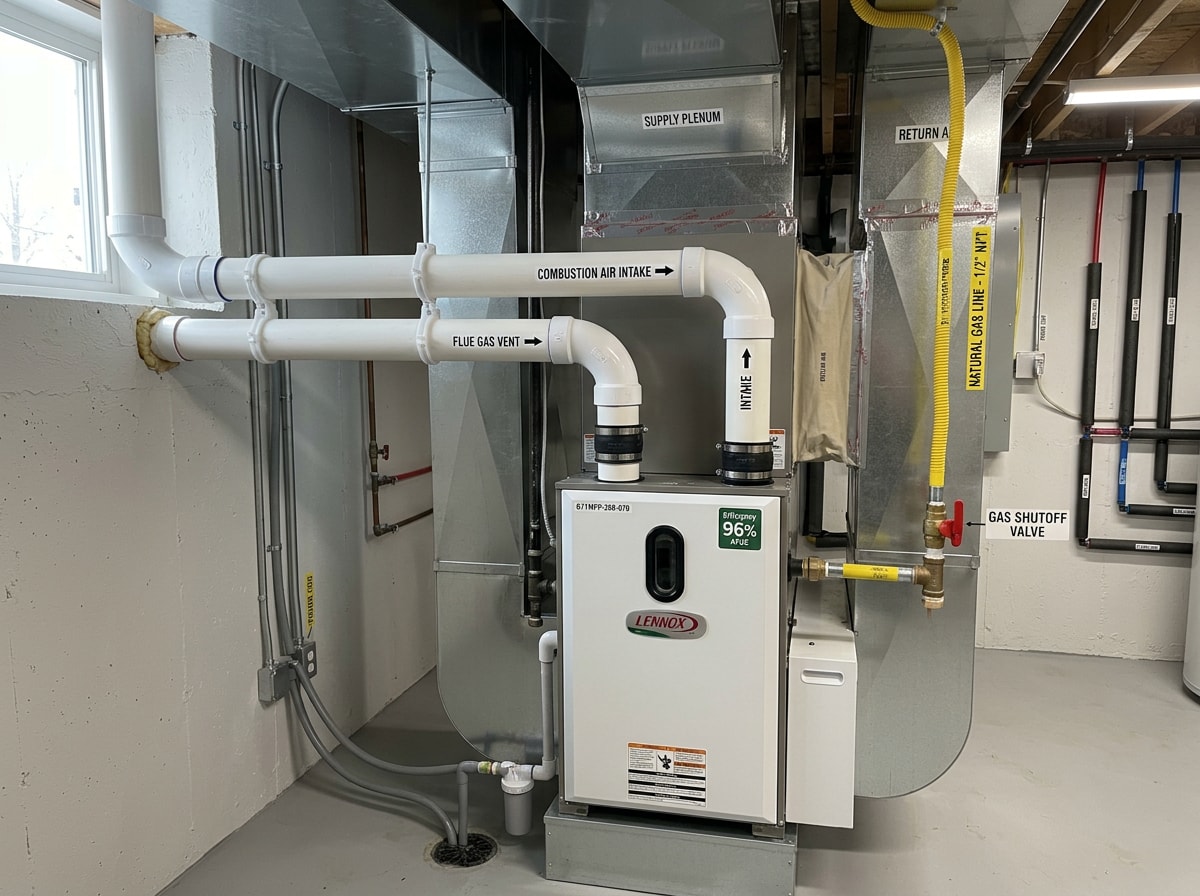
A full HVAC installation rarely touches just one system. Heating, cooling, and air quality equipment interact, so working with one qualified HVAC contractor for all three keeps warranties and performance aligned.
Heating Installation
A professional heating installation typically covers:
- Removal and disposal of the old furnace or boiler installation and any related equipment
- Venting or ductwork adjustments for the new unit's specs
- Start-up testing to confirm the system hits its rated efficiency
- Efficiency upgrades, like moving from an older 80% AFUE unit to 96%
Choosing a factory-authorized or certified installer usually protects the manufacturer's warranty on top of workmanship coverage.
Air Conditioner Installation
Northern Minnesota's cooling season is short, but central air installation still isn't optional for every home. Right-sizing matters here too: an oversized system short-cycles and leaves rooms humid even on the hottest days. A properly installed central system also beats a window unit on noise, efficiency, and resale value, and our team handles both central and ductless air conditioning service for homes without existing ductwork.
Indoor Air Quality Add-Ons
Tightly sealed, cold-climate homes trap more dust and moisture than homes in milder regions. That's why indoor air quality solutions, such as upgraded filtration, whole-home humidifiers, dehumidifiers, and ventilators, commonly get bundled into a new installation rather than added later.
Sizing It Right: Why a Manual J Load Calculation Isn't Optional Here
Correct sizing matters more in Grand Portage than almost anywhere else in Minnesota. Manual J 8th Edition is the national ANSI-recognized standard for producing HVAC equipment sizing loads for single-family detached homes, small multi-unit structures, condominiums, townhouses, and manufactured homes. That's the method a reputable installer should run before quoting equipment, using the local design temperature rather than a square-footage guess.
A proper Manual J calculation from ACCA does two things at once: it prevents an undersized system from running nonstop and failing during a cold snap, and it keeps an oversized one from short-cycling and wasting fuel. Skipping it is the single most common mistake homeowners don't catch until the first hard winter.
Heat Pump vs. Furnace: Which Heating Technology Fits Your Home?
Electric heating technology has closed the gap with traditional furnaces faster than most homeowners expect. ENERGY STAR heat pumps that are optimized for peak heating and part-load cooling performance may use the Cold Climate certification mark if certified to meet the cold climate criteria. To earn that label under the ENERGY STAR cold-climate heat pump specification.pdf), a unit's coefficient of performance at 5°F must be at least 1.75, measured in accordance with the Appendix M1 H42 test.
That's real progress, but it's not the same as a furnace's output at -19°F design temperature. Most Grand Portage homeowners still pair a mini split installation or ducted heat pump with a backup furnace for the coldest stretches rather than switching entirely.
| System Type | Typical Lifespan | Cold-Weather Performance (Zone 7) | Best For |
|---|---|---|---|
| Standard Furnace (80–96% AFUE) | 15–20 years | Unaffected by outdoor temperature | Primary heat for any Grand Portage home |
| Cold-Climate Heat Pump | 12–15 years | Rated to 5°F; needs backup in deep cold | Shoulder-season savings alongside a furnace |
| Dual-Fuel (Heat Pump + Furnace) | 15+ years (furnace) | Strongest overall; heat pump runs mild days, furnace covers deep cold | Lower bills without sacrificing reliability |
| Boiler (Radiant) | 20–30 years | Even heat, no duct losses | Older homes and radiant floor systems |
Furnace & Equipment Options for Extreme Cold
A 2-stage or variable-speed furnace typically outperforms a basic single-stage unit across a heating season this long, modulating output instead of cycling fully on and off for steadier temperatures and lower fuel use. Single-stage, 96% AFUE furnaces remain a solid, budget-friendly choice for smaller or well-insulated homes. Larger or drafty homes usually see a faster payback from 2-stage or variable-speed equipment despite the higher upfront cost. High-efficiency 96% AFUE furnaces also vent through PVC pipe instead of a metal flue, which simplifies installs on rural properties where gas infrastructure doesn't already exist.
When to Repair vs. Replace Your Heating System
A heating system usually needs replacement, not another repair, once it nears the end of its typical lifespan or shows warning signs like:
- Uneven room temperatures from room to room
- Rising heating bills without a change in usage
- A yellow pilot flame instead of blue
- Repair calls that keep stacking up year over year
Furnaces and boilers generally last 15 or more years; heat pumps and AC units run closer to 10 to 15. If your furnace is past that mark and repair visits keep piling up, furnace repair is still worth a call for diagnosis, but a full replacement usually costs less over time than continuing to patch an aging unit.
Keeping New Equipment Running: Maintenance After Installation
New equipment still needs upkeep to reach its expected lifespan.
- Check or change filters monthly during peak heating and cooling season
- Schedule an annual tune-up that includes flame-sensor cleaning and a combustion-safety check
- Book air conditioning maintenance before the short cooling season each year
- Keep an emergency HVAC service number on hand for mid-winter breakdowns
For a room-by-room seasonal checklist specific to this area, see our furnace maintenance guide for Grand Portage homeowners. Skipping winter furnace care can shorten equipment life and void manufacturer warranties.
Choosing a Qualified HVAC Installer in Grand Portage
Grand Portage's remote location means fewer contractors to choose from, which makes vetting more important, not less. Look for:
- Real experience installing cold-climate equipment in Cook County specifically
- Manufacturer authorization or certification on the equipment they're quoting
- A willingness to run an actual Manual J load calculation instead of sizing off the old unit's nameplate
- Clear answers about permits, warranty terms, and who pulls the permit
Schedule a free inspection before the next cold snap, and browse our completed installation projects to see the kind of work a proper cold-climate install should look like.
Permits and Licensing: What Minnesota Requires
Minnesota doesn't issue individual state licenses for HVAC technicians, but it does regulate the businesses that do the work. Businesses must file a $25,000 mechanical contractor bond with DLI in order to contract to perform gas, heating, ventilation, cooling, air conditioning, fuel burning, or refrigeration work. Before hiring, ask to see proof of that mechanical contractor bond filing with the Minnesota Department of Labor and Industry. Most Cook County installations also require a local mechanical permit and inspection, separate from the state bond.
Serving Grand Portage and the North Shore/Cook County Area
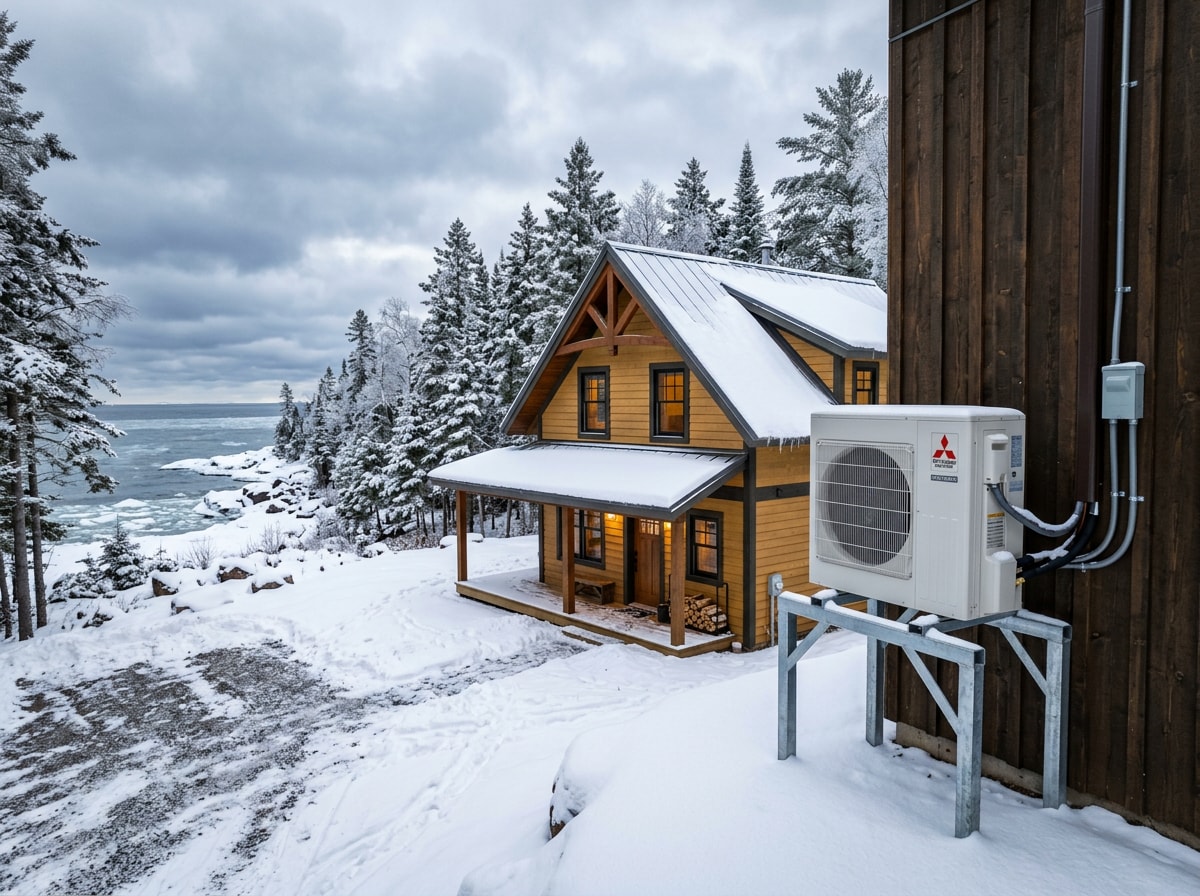
Coverage across this stretch of the North Shore typically includes Grand Portage, Grand Marais, Hovland, the Gunflint Trail corridor, and surrounding Cook County townships. Because the area is so spread out, travel time factors into scheduling more than it would in a dense metro market. Homeowners farther down the shore in Two Harbors and Silver Bay fall within our broader service area as well.
Visit our homepage to see the full range of heating, cooling, and air quality work we handle across the North Shore.
About the Author
This guide was written and reviewed by the installation team at Grand Marais HVAC, a Minnesota mechanical contractor bonded with the Department of Labor and Industry and based on the North Shore. Our crews run load calculations and pull permits on Cook County installations year-round, from Grand Marais to the Grand Portage Reservation. Questions about a specific property? Contact us directly.
Frequently Asked Questions
How much does HVAC installation cost in Grand Portage, MN?
Cost for a furnace-and-AC system often runs higher in remote Cook County than in the Twin Cities, mainly due to travel time and fewer competing contractors. A high-efficiency furnace costs more upfront than a standard model but typically pays that back through lower fuel use over a long heating season.
How long does HVAC installation take?
A straightforward furnace or AC swap usually takes one day. The timeline stretches to two or three days when ductwork changes, new venting, or a switch to a different system type, like adding a heat pump, is involved.
What's the best time of year to install a new HVAC system?
Spring and fall are generally the best windows. Off-season scheduling means more contractor availability and less risk of paying emergency rates during a mid-winter breakdown.
Should I repair or replace my HVAC system?
If your system is approaching 15 years for a furnace or 10 to 15 years for a heat pump or air conditioner and repairs keep recurring, replacement is usually the better investment. Isolated, inexpensive repairs on a younger system rarely justify early replacement.
Do I need a permit for HVAC installation in Cook County?
In almost every Minnesota jurisdiction, yes. A mechanical permit and inspection are standard for furnace, boiler, and central AC installations, separate from the contractor's state mechanical bond. A licensed installer should handle the permit as part of the job.
Can a heat pump really heat my home through a Grand Portage winter?
A cold-climate heat pump can carry the heating load on most days, but Cook County's -19°F design temperature is colder than even top-rated cold-climate units are tested to handle on their own. Most homeowners here pair a heat pump with a furnace backup rather than relying on electric heat alone.