Furnace maintenance in Grand Portage, MN carries higher stakes than it does almost anywhere else on the North Shore, because this unincorporated Lake Superior community has no dedicated HVAC shop and winter lows that routinely sit well below zero. A missed filter change or skipped tune-up here doesn't just mean a higher gas bill, it can mean days without heat while a technician drives up from Grand Marais or Two Harbors. This checklist breaks down exactly what you can safely handle yourself, what to leave to a licensed pro, and why the gap between those two lists matters more here than almost anywhere in Minnesota.
What Does Furnace Maintenance Actually Involve?
Furnace maintenance splits into two lanes: homeowner tasks that happen monthly and seasonally, and the annual professional visit that covers the combustion side of the system. The homeowner lane includes filter changes, thermostat checks, and keeping the area around the unit clear. The professional lane covers heat exchanger inspection, combustion analysis, and carbon monoxide testing, work that requires tools and training most households don't have.
That split matters more in Grand Portage than in milder, better-served areas. The community sits at the edge of Lake Superior in Cook County, with no HVAC contractor based on-site. A furnace that quits during a January cold snap can mean hours of wait time while temperatures drop well below zero. Understanding both halves of furnace maintenance, and knowing exactly where homeowner responsibility ends, is the first real step toward avoiding that scenario.
Browse our heating contractor services to see how furnace upkeep fits into a full seasonal plan, or check our Grand Portage service area page to confirm coverage for your address.
Furnace Maintenance Checklist for Homeowners
A handful of DIY tasks can catch small problems before the first hard freeze turns them into expensive ones. None require special tools, and all of them take less than 30 minutes combined. Here's the full homeowner list before you get into the details:
- Replace or clean the air filter
- Test the thermostat and swap batteries
- Clear vents, registers, and the area around the furnace cabinet
- Check the burner flame color
- Keep a working carbon monoxide detector near sleeping areas
Replace or Clean the Air Filter
A dirty furnace filter is one of the most common causes of reduced airflow and higher energy bills in a home heating system. Most manufacturers recommend checking filters monthly and replacing them every one to three months, though homes with pets or dusty conditions may need changes more often.
Buildup forms on the filter from dust, fibers, pet dander, and other airborne particles. As that layer thickens, the furnace has to work harder to pull air through it. A dirty filter can increase energy costs and damage your equipment, leading to early failure. That's effectively free protection for your blower motor for the cost of a filter.
Check the Thermostat
Start with a basic functional test: set the thermostat to call for heat and confirm the furnace responds within a minute or two. Swap the batteries if it's been a year or more, and check that the display isn't glitching or blank.
If the home still runs on a manual dial thermostat, installing a programmable one is worth the upgrade before winter. Program it to match a realistic schedule, lower overnight and while the house is empty, higher during waking hours. If a boiler-based heating system's thermostat won't call for heat at all, the troubleshooting steps differ from a furnace; our boiler thermostat guide for Lutsen, MN walks through the most common causes.
Clear the Area and Check Vents and Registers
Walk the house and confirm every supply and return register is open and unobstructed by furniture, rugs, or curtains. Blocked airflow forces the system to strain against pressure it wasn't designed to handle, which can trip safety switches or simply waste energy.
Do the same check around the furnace cabinet. Keep stored boxes, holiday decorations, and general clutter away from the unit, and make sure nothing blocks the air intake or exhaust venting. This matters even more in older North Shore homes, where mechanical rooms often double as storage space.
Examine the Burner Flame: DIY Check vs. Professional Combustion Analysis
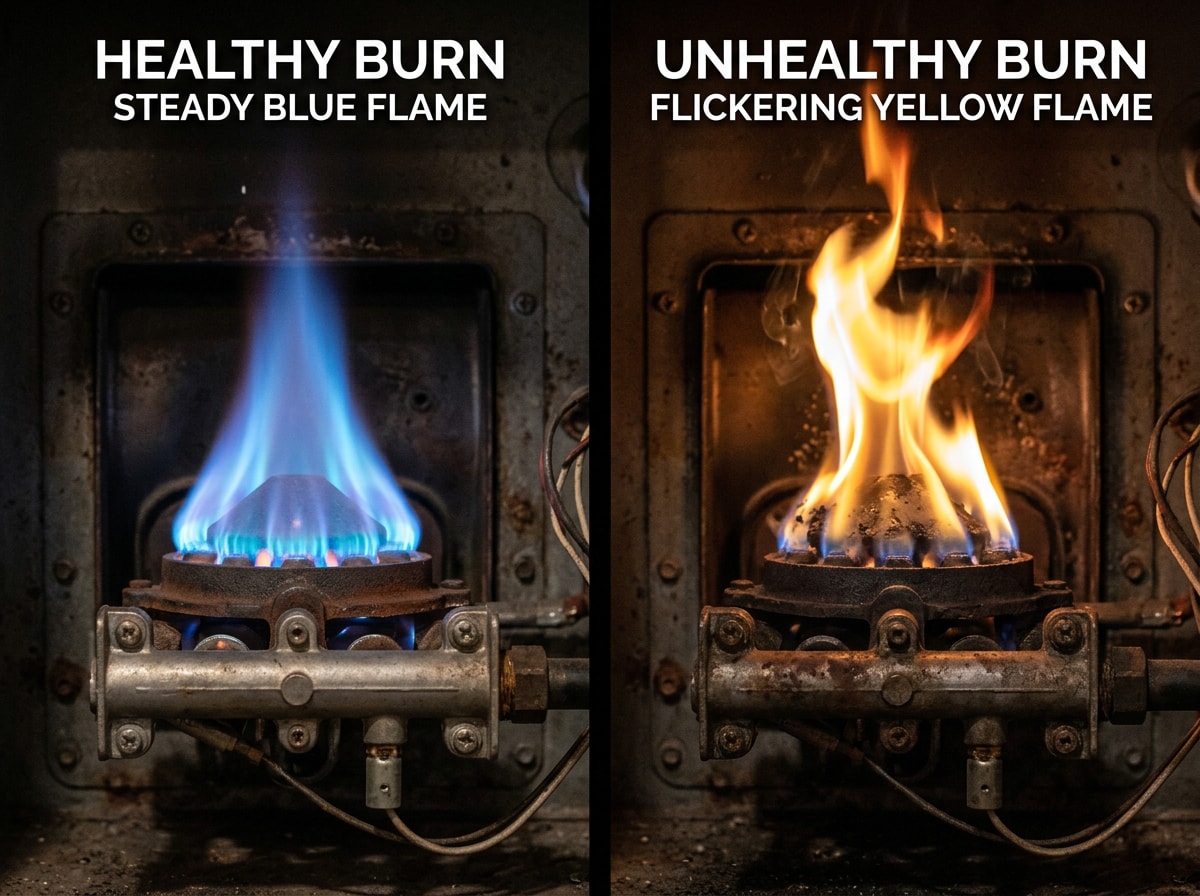
A steady blue flame is the visual sign of a healthy, efficient burn. An orange or yellow flickering flame signals incomplete combustion and should prompt an immediate shutdown and a call to a heating professional. This is one DIY check every homeowner should know, but it has real limits.
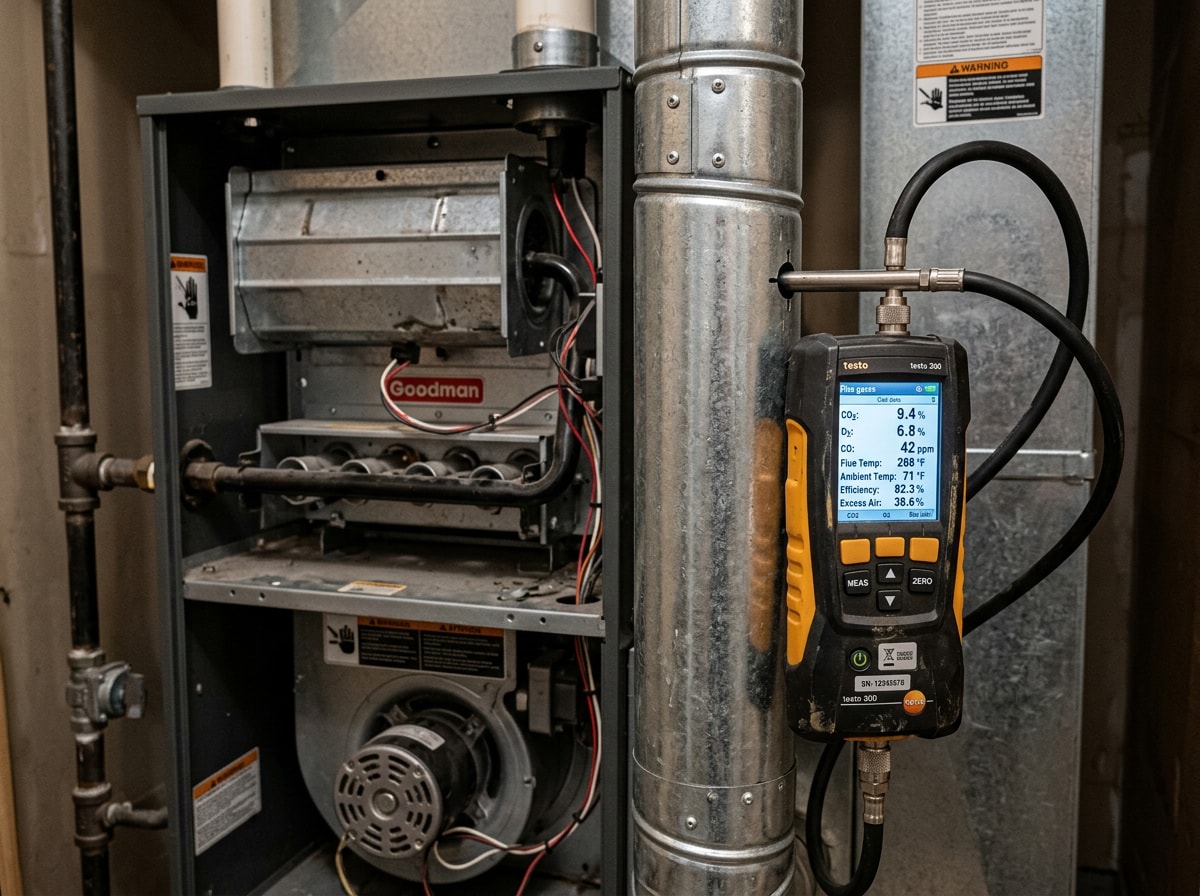
A visual flame check tells you something looks wrong, it can't tell you how wrong. You can spot a yellow flame, but you can't measure carbon monoxide parts per million without a combustion analyzer. That's the entire reason professional combustion analysis exists: it quantifies a risk the human eye can only guess at. Treat a yellow or flickering flame as a hard stop, not a wait-and-see situation, and consider our furnace repair service your next call.
Professional Furnace Maintenance Checklist (Technician Tasks)
Once the homeowner-side checks are done, the annual professional tune-up covers the parts of the furnace that require training and instrumentation to evaluate safely. A licensed technician typically inspects electrical connections, lubricates moving parts, tests the ignition system, and verifies airflow balance across the ductwork. The centerpiece of this visit, though, is the safety sequence around the heat exchanger and carbon monoxide levels.
| Task | Who handles it | Why it matters |
|---|---|---|
| Filter replacement | Homeowner | Protects airflow and blower motor |
| Thermostat test | Homeowner | Confirms the system responds to calls for heat |
| Vent and register clearance | Homeowner | Prevents pressure buildup and safety trips |
| Visual flame check | Homeowner | Flags obvious combustion problems only |
| Heat exchanger inspection | Licensed technician | Detects cracks that leak combustion gases |
| Combustion analysis / CO testing | Licensed technician | Measures CO in parts per million, a visual check can't do this |
| Ignition and electrical testing | Licensed technician | Requires gas and voltage-rated tools |
Inspect the Heat Exchanger and Test Carbon Monoxide Levels
A technician visually and mechanically inspects the heat exchanger for cracks, corrosion, or warping. Even a hairline crack can allow combustion gases to mix with breathable air. This single component is the reason furnace safety inspections exist in their current form: a cracked heat exchanger is quiet, often invisible without disassembly, and genuinely dangerous.
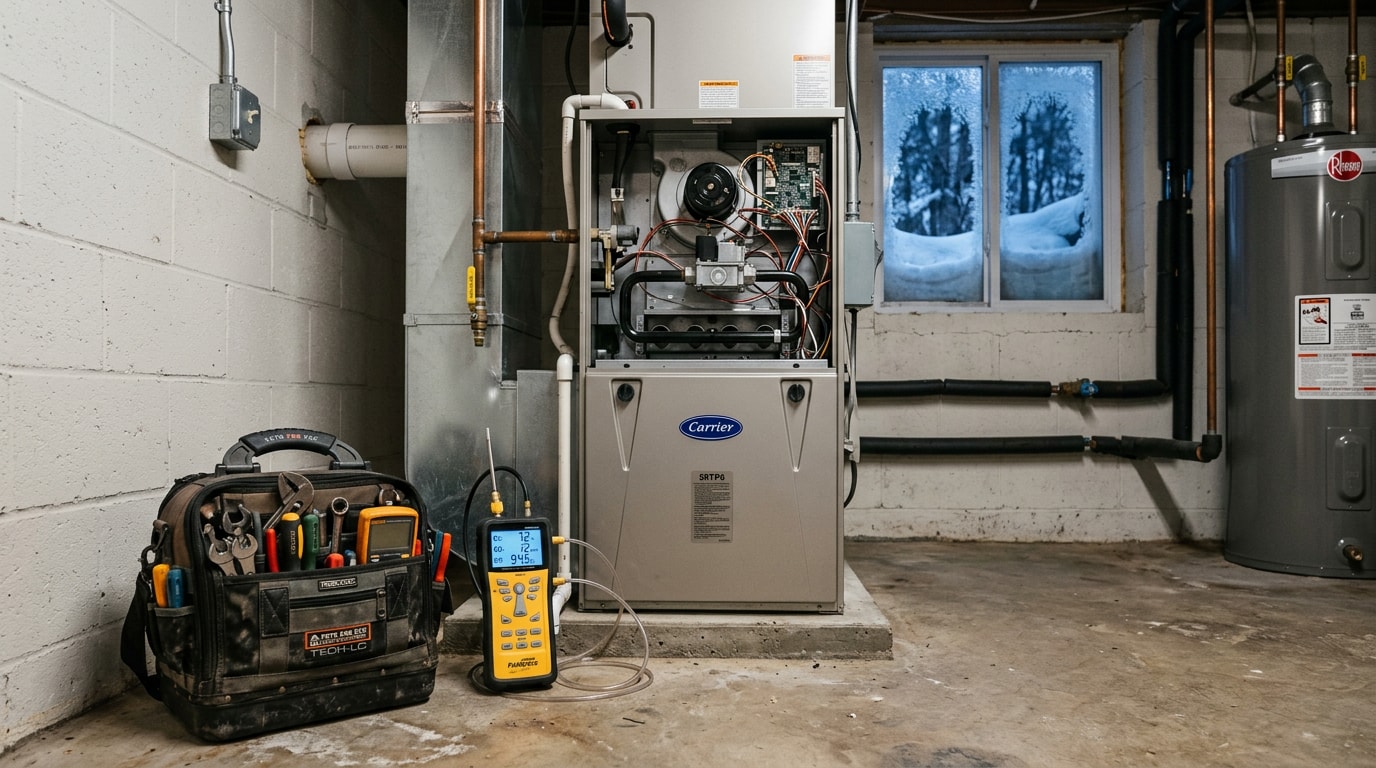
Following that inspection, the technician measures carbon monoxide levels with a combustion analyzer to confirm the system is operating within safe limits. This step produces a number, not a guess, and it's what separates a professional furnace maintenance visit from a basic homeowner check.
The risk isn't hypothetical. Every year in the United States, at least 420 people die and more than 100,000 people visit the emergency department from accidental CO poisoning.
Heating systems were associated with the second largest percentage of non-fire CO poisoning deaths in 2019, with an estimated 69 deaths, or 28%, tied to products in that category. Minnesota has its own numbers worth knowing: an average of 14 people die due to unintentional CO poisoning each year in the state, and approximately 300 people visit an emergency department annually for symptoms linked to unintentional CO exposure. A working CO detector near sleeping areas is a reasonable backstop between annual visits, but it's not a substitute for a technician's direct measurement.
Why Professional Furnace Maintenance Matters in Grand Portage
A furnace is a complex mix of gas lines, electrical components, and combustion parts. A trained technician can spot a failing igniter, a weakening capacitor, or a hairline crack well before any of them turn into a mid-winter breakdown. That early-catch value is worth more here than in most places.
Because Grand Portage is remote and unincorporated, emergency HVAC service can mean a longer wait than a homeowner in a metro area would ever expect. Preventive maintenance shrinks the odds of needing that emergency call in the first place. Keeping a cooling and heating system at peak performance means scheduling a contractor for annual pre-season check-ups, and since contractors get busy once summer and winter arrive, it's best to check the cooling system in spring and the heating system in fall.
Our technicians service furnaces across Cook County every fall, from Grand Marais out to the Grand Portage Reservation, and the same handful of issues (dust-caked flame sensors, slipped blower belts, and failing igniters) account for most of the mid-winter no-heat calls we run. Catching those in October costs a fraction of an emergency repair in January, and sometimes it's the difference between a tune-up and a full system replacement. If your furnace is already past the point of reliable repair, our furnace installation team can walk you through replacement options before the next cold snap.
If it's been more than a year since your last visit, schedule a free inspection before the next cold snap settles in. You can also see examples of our recent work on our projects page or learn more about our full range of services on our homepage.
FAQ
How Often Should You Schedule Furnace Maintenance?
Most households should schedule professional furnace maintenance once a year, ideally in early fall before the heating season starts. Grand Portage's cold weather often arrives earlier than in warmer parts of the state, so booking your annual tune-up in September rather than November gives more scheduling flexibility.
What Happens If You Don't Service Your Furnace?
A neglected furnace typically loses efficiency first, burning more fuel for the same heat output. Over time, that strain raises the risk of a mid-season breakdown, and in worst cases, an undetected issue like a cracked heat exchanger can create a carbon monoxide risk inside the home.
Is a Furnace Tune-Up Worth It?
Yes. A furnace tune-up is a small, predictable cost compared to an emergency repair bill or a full system replacement. Catching worn parts or combustion issues early typically costs far less than waiting for a complete failure, especially given limited local service availability in Grand Portage.
What Is Included in a Furnace Tune-Up?
A full furnace tune-up combines homeowner tasks (filter changes, thermostat checks, clearing vents) with professional work like heat exchanger inspection, combustion analysis, and carbon monoxide testing. Together, these cover both the everyday upkeep and the safety-critical checks only a licensed technician can perform.
Can Homeowners Do Any Furnace Maintenance Themselves?
Yes, safely. Replacing the filter, testing the thermostat, clearing vents and registers, and glancing at the burner flame color are all homeowner-safe tasks. Anything involving gas pressure, electrical components, or the heat exchanger should go to a licensed technician.
What Should You Do If You Smell Gas Near the Furnace?
Leave the house immediately and call your gas utility or 911 from outside. Don't flip switches, light anything, or try to find the leak yourself. This is one of the few furnace situations with zero DIY middle ground.