Heating radiators in Grand Marais, MN keep many of Cook County's century-old homes and lake cabins warm through brutal North Shore winters. If you've never had to bleed a valve or diagnose a cold radiator, this guide breaks down how these hydronic systems work, what goes wrong, and when a repair call is worth making. We service these systems across the North Shore regularly, and the warning signs below are the ones we actually see fail first.
How Does Radiator Heating Work?
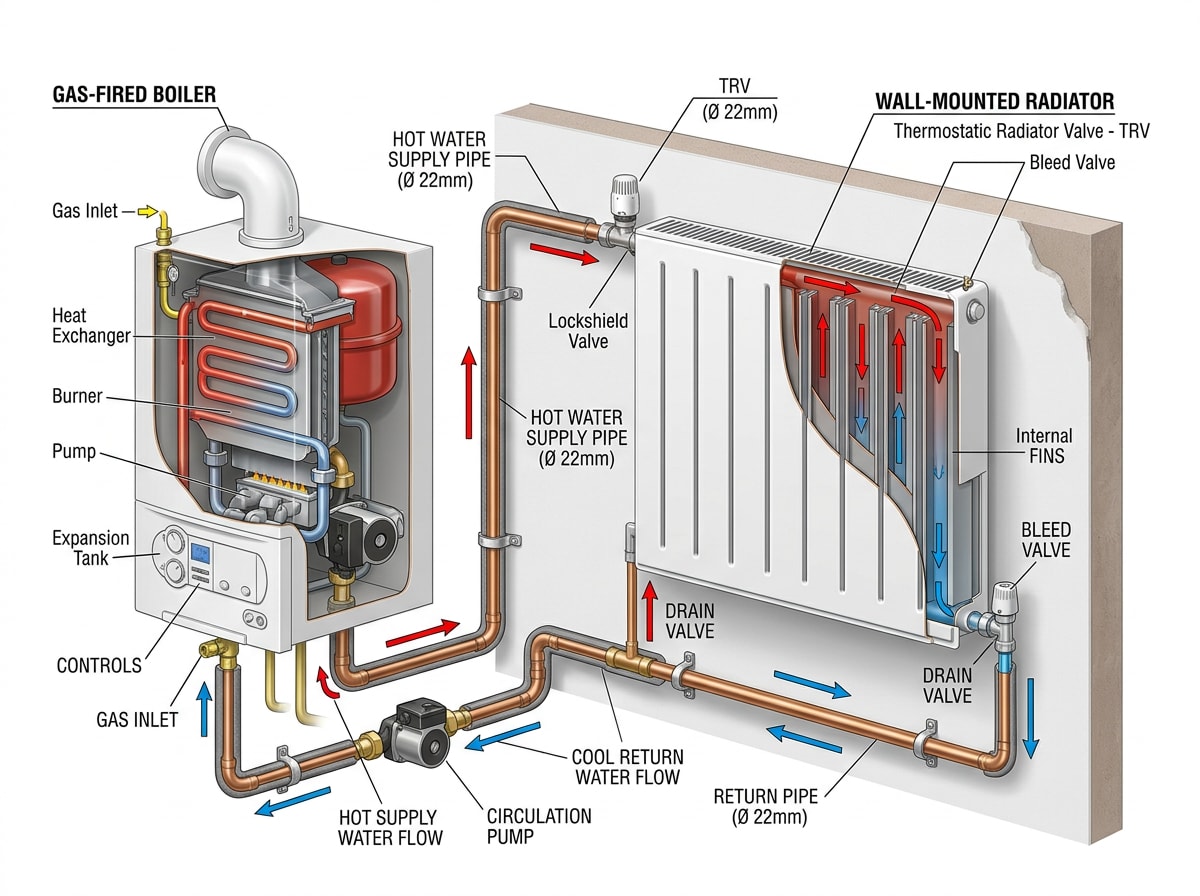
Radiator heating circulates hot water from a central boiler through pipes to individual radiators. Each radiator releases heat into the room, then the cooled water returns to the boiler to be reheated. This loop repeats as long as the thermostat calls for heat.
In many older Grand Marais homes and cabins, this loop has been running quietly for decades. Some still use the original cast iron radiators. Because the system moves water instead of air, it handles the region's long, cold winters differently than a forced-air furnace does.
Key Components of a Hot Water Radiator System
A hot water radiator system depends on a handful of parts working together. The boiler heats the water and acts as the system's engine. In this part of Minnesota, that boiler typically runs on propane or fuel oil rather than natural gas. The supply pipe carries hot water from the boiler to each radiator, while the return pipe sends the cooled water back to be reheated.
Each radiator has a valve that controls how much hot water flows in. That valve is often the first thing a technician checks during a service call. In homes with unheated crawlspaces or exposed basements, supply and return pipes running through cold areas are a common source of heat loss. For a closer look at what the central unit in this loop actually looks like, see our guide on what a boiler looks like.
Why Your Boiler's Fuel Source Matters Here
Cook County isn't connected to a natural gas pipeline, so most radiator boilers here run on propane or delivered fuel oil instead. As one local energy advocate put it, "Up here, there's no natural gas because there's no pipeline." That single fact shapes a lot of decisions homeowners make about boiler replacement, fuel storage, and annual service timing, since fuel deliveries need to be scheduled well before a storm closes the Gunflint Trail.
Types of Radiators in Grand Marais Homes
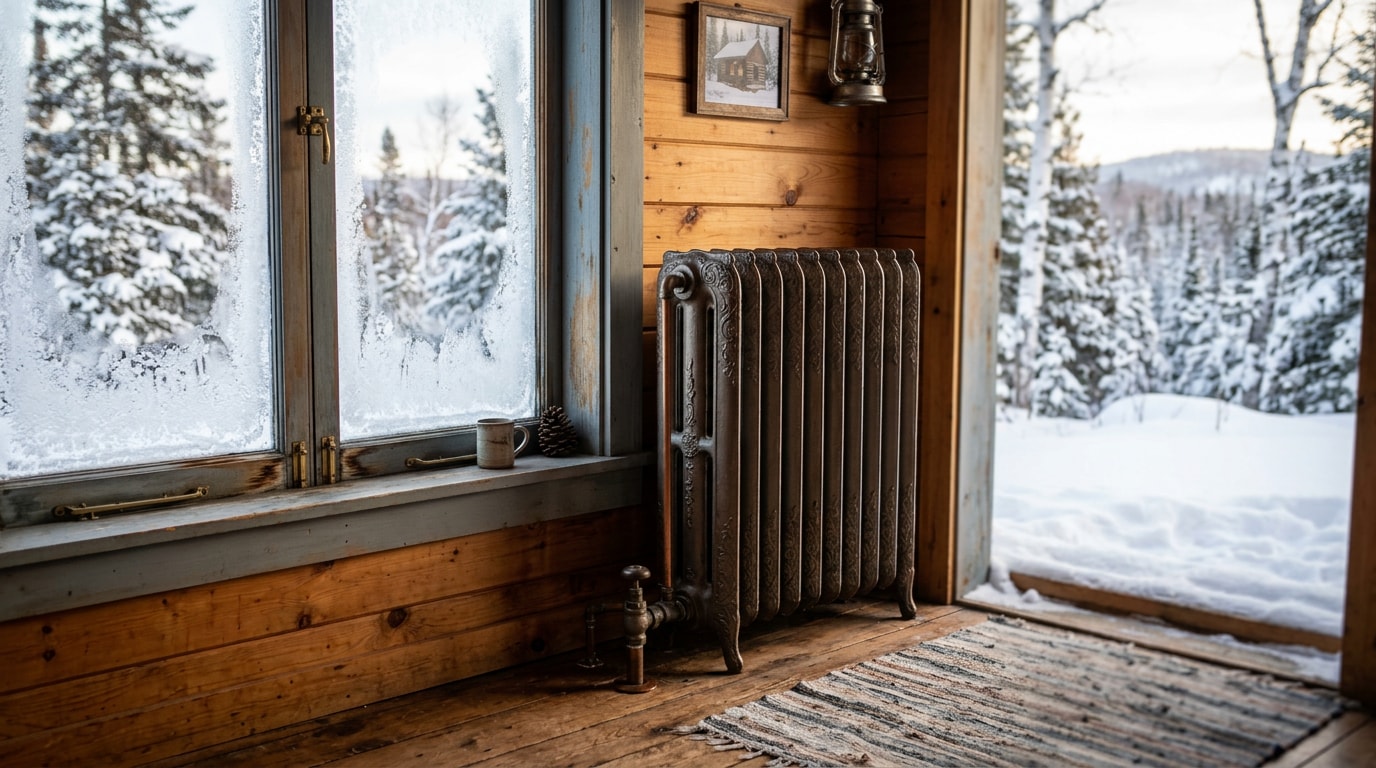
Cook County's older homes and seasonal cabins tend to have one of two radiator styles: vintage cast iron units original to the house, or newer panel radiators installed during a renovation. Knowing which type you have affects maintenance expectations and how quickly a room warms up. In our visits to homes throughout Grand Marais, we see cast iron far more often in pre-1960s houses and panel units in anything remodeled in the last 15 to 20 years.
Panel Radiators
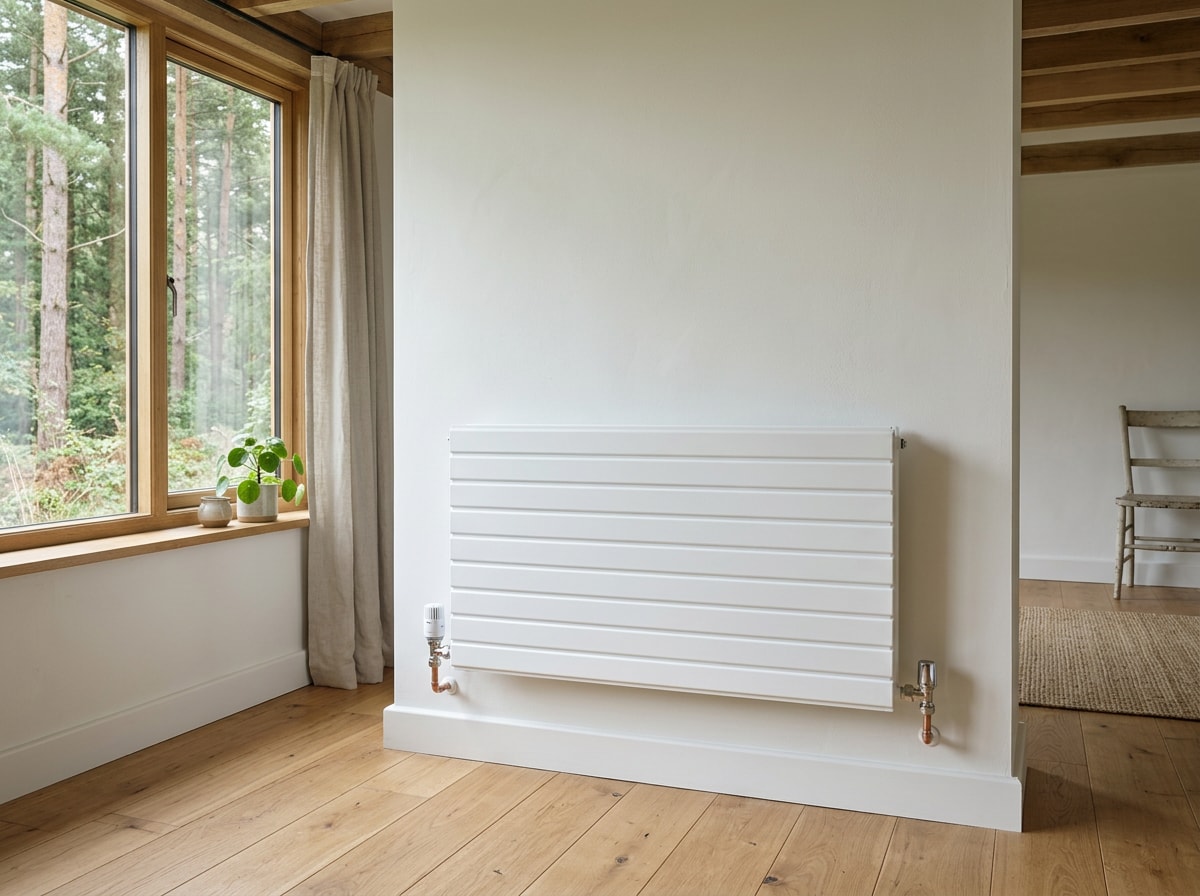
Panel radiators are thin, flat steel units that mount to a wall and represent the most common modern radiator type installed today. They're compact, relatively light, and heat up faster than older cast iron models.
Because they hold less water, panel radiators respond more quickly to thermostat changes, which some homeowners prefer during shoulder-season swings common on the North Shore. They're also easier to install during a remodel since they weigh far less than a comparable cast iron radiator.
Cast Iron Radiators
Cast iron radiators remain common in older home heating systems, and many homeowners keep them rather than replace them during a remodel. Their main advantage is mass: cast iron holds heat far longer than steel, so rooms stay warm even after the boiler cycles off.
That heat retention comes with trade-offs. A cast iron radiator is noticeably heavier than a similarly sized panel radiator, which matters if you're reinforcing a floor or moving a unit during a renovation.
| Feature | Panel Radiator | Cast Iron Radiator |
|---|---|---|
| Weight | Light, easy to relocate | Heavy, may need floor reinforcement |
| Heat-up speed | Fast | Slow |
| Heat retention after boiler cycles off | Lower | Higher |
| Typical install setting | Remodels, additions | Original to older homes |
| Maintenance | Bleed annually, minimal rust risk | Bleed annually, watch for rust/corrosion |
Is Radiator Heating Efficient?
Radiator heating can be efficient because water carries heat more effectively than air, hydronic systems avoid duct leakage, and radiator valves allow room-by-room control so you're not paying to heat unused spaces.
The U.S. Department of Energy distinguishes steam heating, which uses radiators to distribute heat, from hot-water baseboard systems, also called hydronic heat , both of which move thermal energy through pipes rather than ducted air. Duct-based systems lose energy to leakage along the way, a problem hydronic systems avoid entirely since the water stays sealed in pipe and radiator.
Actual performance depends heavily on boiler age, insulation quality, and how well the system is balanced. An older boiler paired with sound radiators may still waste fuel, so efficiency upgrades often start with the boiler rather than the radiators themselves. If you're considering a change to your whole heat-delivery approach, our radiant heating installation team can walk through whether an upgrade or a repair makes more financial sense for your home.
Radiator Heating: Pros and Cons
Radiator heating has real strengths, but it isn't the right fit for every home. Before deciding whether to repair an aging system or consider an alternative, weigh the benefits against the drawbacks honestly.
Pros:
- Even, draft-free heat compared to forced-air systems
- No ductwork circulating dust or allergens through the home
- Fewer moving parts and typically less frequent service than a comparable forced-air system
- Room-by-room control through individual radiator valves
Cons:
- Slow heating response since water takes time to heat and circulate
- Takes up wall and floor space that forced-air vents don't require
- Older systems can develop uneven heat distribution if never balanced
- Adding air conditioning to a radiator-heated home typically requires a separate mini split installation rather than central ducted AC
Why Is One Radiator Cold?
A radiator that's cold at the top but warm at the bottom, often with gurgling sounds, usually has trapped air inside it. A radiator that stays cool while others nearby work fine, especially one farther from the boiler, often points to a system that's out of balance rather than a broken unit.
Trapped air collects at the highest point in the radiator and blocks hot water from filling that space, which is why bleeding usually solves it. A balance issue is different. Water isn't distributing evenly across the loop, often because valves need adjusting or the system was never rebalanced after a renovation. If bleeding doesn't fix a persistently cold radiator, it's a sign to have a technician check the valve and overall balance.
How to Bleed a Radiator
Bleeding a radiator releases trapped air so hot water can fill the unit completely. The Department of Energy recommends homeowners eliminate trapped air from hot-water radiators once or twice a season , which lines up with what most manufacturers suggest.
- Turn off the heating system and let radiators cool completely. Bleeding a hot radiator can release pressurized water.
- Locate the bleed valve, a small square or slotted fitting usually near the top corner of the radiator.
- Keep a cloth underneath to catch drips.
- Using a radiator key or flathead screwdriver, turn the valve slowly counterclockwise until you hear hissing.
- Close the valve the moment steady water flows out.
- Check boiler pressure afterward and top it up if the gauge reads low.
Extension researchers describe a similar routine for homeowners maintaining hot-water heating systems, noting that opening the valve and holding a container under it until water flows is usually enough to clear the air pocket, without needing to drain the whole system. For additional background on heating system upkeep generally, the University of Missouri Extension guide on heating system maintenance is a solid reference.
This is a general overview, not a substitute for a licensed technician, especially if a radiator needs bleeding repeatedly. That usually points to a slow leak rather than normal air buildup.
Repair or Replace? Warning Signs to Watch
Several warning signs suggest a radiator needs professional attention:
- Inconsistent heating often points to internal blockages or sludge buildup
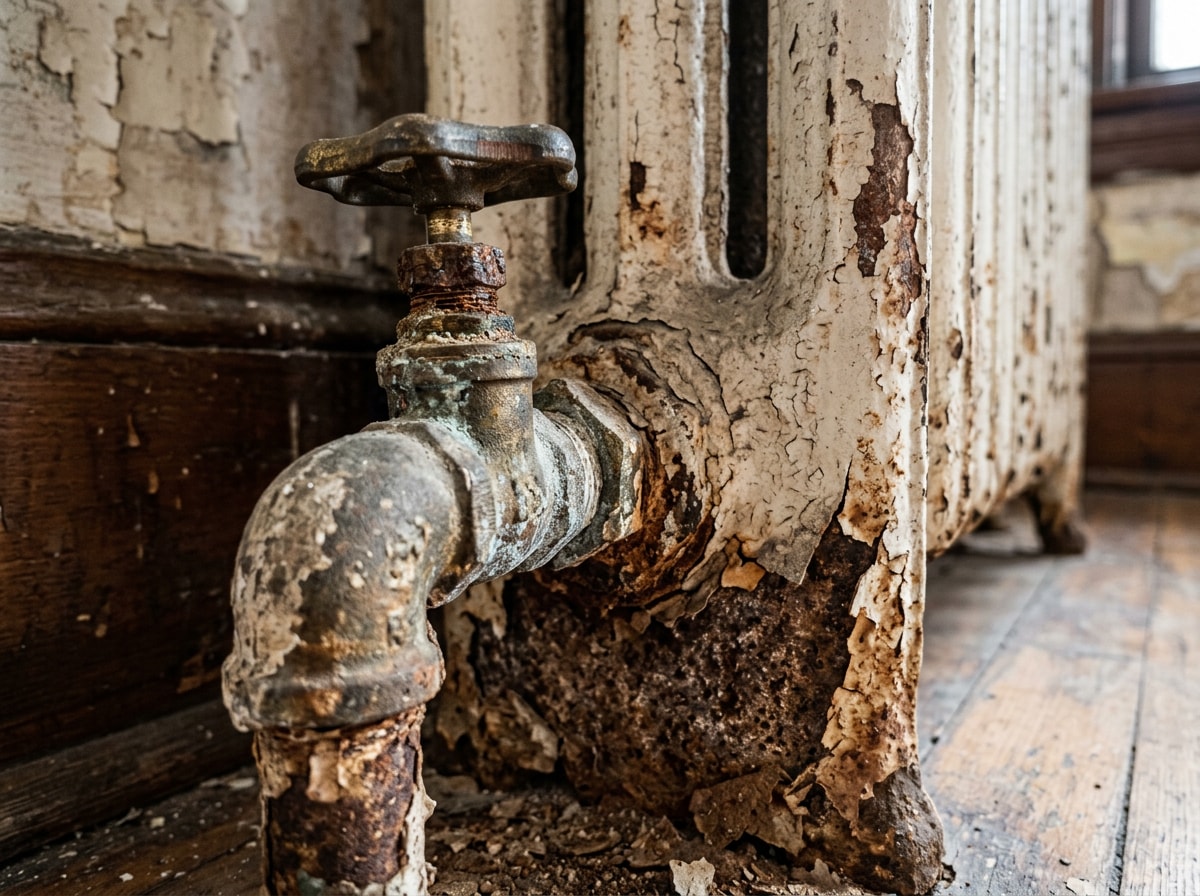
- Visible rust or corrosion can weaken the casing and lead to leaks
- Gurgling, banging, or whistling noises usually mean trapped air, sediment, or a failing valve
- Frequent repairs that keep adding up are often a sign the system is nearing the end of its life
Deteriorating heating equipment can also carry real safety risks. The Consumer Product Safety Commission advises homeowners to keep space heaters away from flammable materials and hire a professional to check all fuel-burning appliances, including fireplaces, every year , guidance that applies just as much to an aging boiler feeding a radiator loop as it does to a space heater.
A simple framework helps with the decision: consider the radiator's age, how often you've needed repairs in the past two years, and the severity of visible corrosion. An aging radiator with repeated repairs and significant rust is usually a better candidate for replacement than another patch job. If you're unsure which way to go, schedule a free inspection and we'll walk the system with you room by room.
For hands-on help with any part of this system, our heating contractor team services radiators, boilers, and the full hydronic loop throughout Cook County. You can also start from our homepage to see the full range of heating and cooling services we offer across the North Shore.
FAQ
How Often Should Radiators Be Bled?
Bleed radiators once at the start of each heating season, plus any time a radiator feels cold at the top or gurgles. If you find yourself bleeding the same radiator every few weeks, that's not normal. It usually signals a slow leak that needs to be found rather than worked around.
Are Radiator Heaters Safe?
Radiator heating is generally very safe, especially compared to forced-air systems, which can circulate dust and allergens through ductwork. Surfaces do get hot enough to cause burns on contact, so some caution is warranted around young children and pets.
How Long Do Radiators Last?
Radiator lifespan varies by material and maintenance history. Steel panel radiators tend to wear out sooner than cast iron, which can outlast several other heating components when properly maintained and kept free of rust. Actual results depend on water quality and how consistently the system has been serviced.
Can I Add Air Conditioning to a Radiator-Heated Home?
Yes, but radiator systems don't include ductwork, so central air conditioning isn't a simple add-on. Most Grand Marais homes with radiator heat add a mini split cooling installation instead, since it doesn't require tearing into walls or floors to run ducts.
What's the First Thing to Check When a Radiator Won't Heat Up?
Check whether the radiator is cold at the top only, which points to trapped air you can likely bleed yourself, or cold all over, which usually means a closed or stuck valve. If neither fixes it, the issue is probably further back in the loop and worth a professional look.