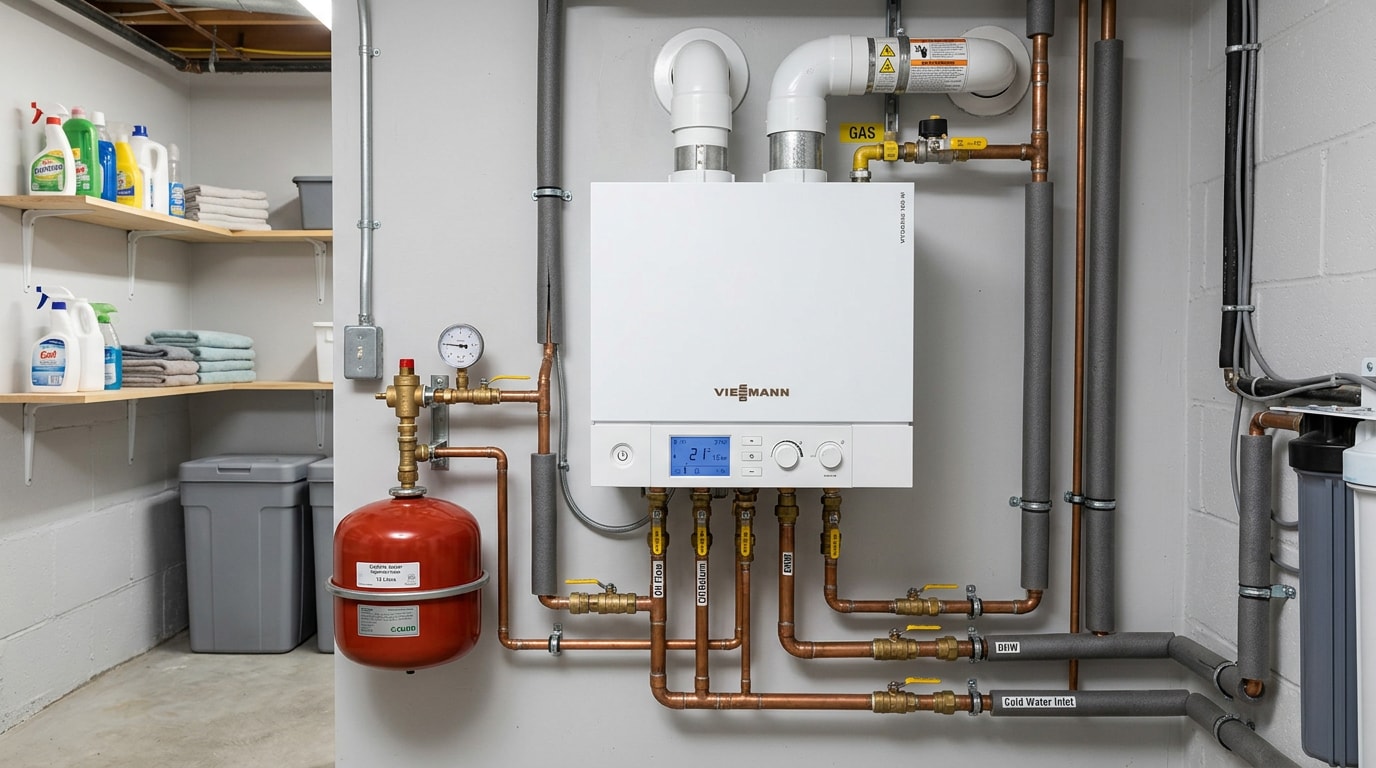
What does a boiler look like in a Grand Marais, MN home? In most cases, it's a squat, rectangular metal box bolted to a basement or utility-room wall, with a control panel on the front and a cluster of pipes running in and out of the top. Mixing one up with a water heater or furnace is an easy, costly mistake in a town where a lot of homes near Lake Superior still run on hydronic heat. Here's exactly what to look for, room by room, so you can identify your system before you ever pick up the phone.
Visit Quail Heating and Air to see our services and request a free estimate.
Quick Answer: What Does a Boiler Look Like?
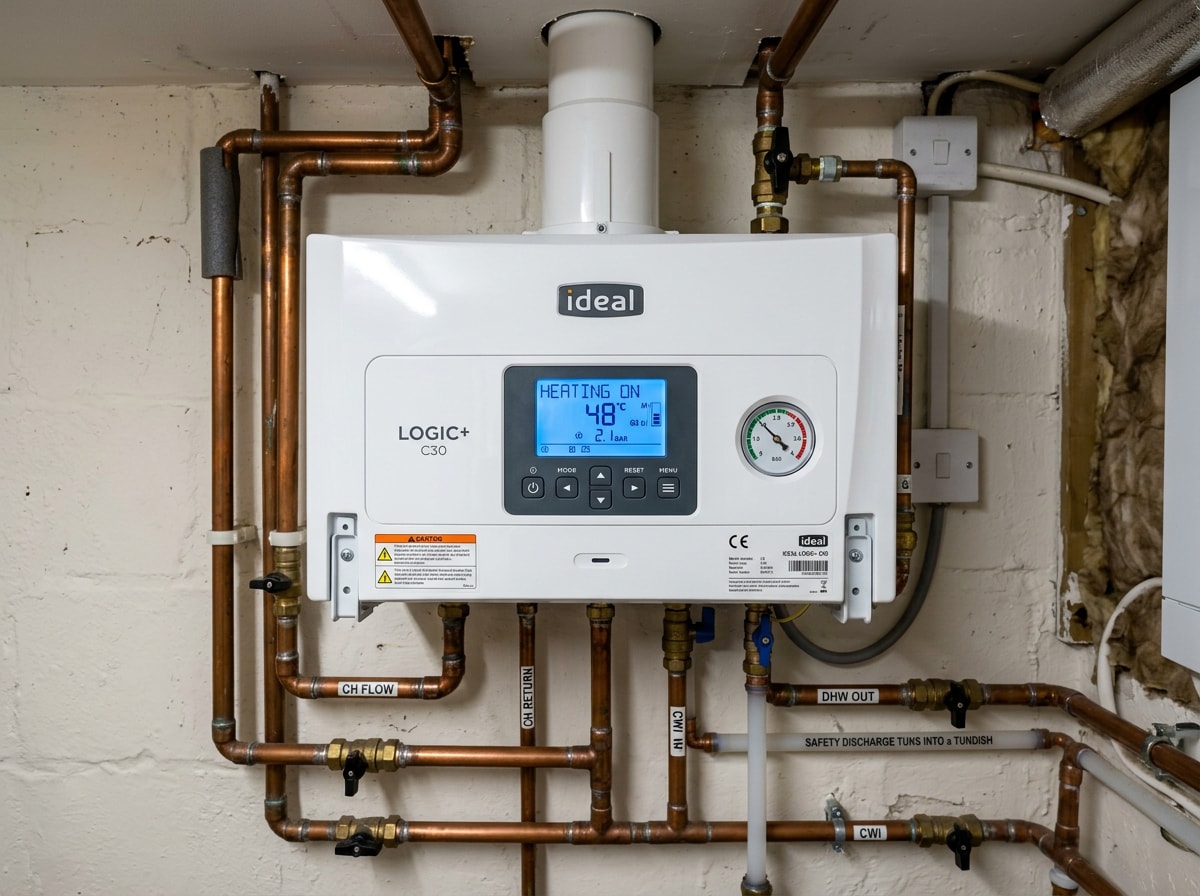
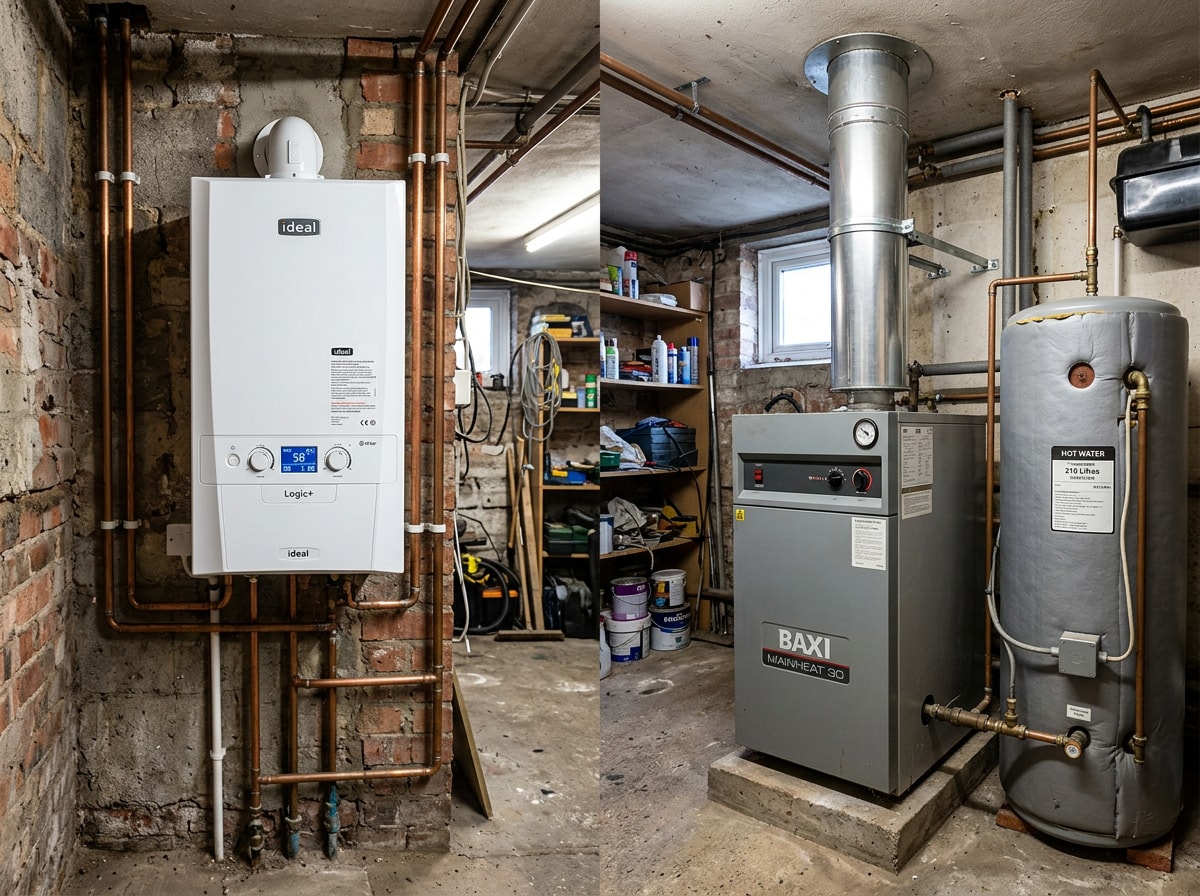
A boiler typically looks like a solid, boxy metal unit finished in white, grey, or black, with a control panel or digital display on the front and copper or steel pipes entering and exiting the top or sides. Some models vent through a flue pipe to the outside; others don't need one at all.
You might also hear boilers described as tall and cylindrical. That description almost always applies to an old oil-fired storage tank or gets confused with a hot water heater, not the boiler itself. If you're not sure which one is sitting in your basement, a quick look at Grand Marais, MN heating setups from the last few decades usually clears it up fast, since most local boilers fall into one of five recognizable types covered below.
What Is a Boiler, and How Common Are They?
A boiler is a heating system that heats water (or produces steam) and sends it through pipes to radiators, baseboard units, or a radiant floor system, instead of blowing heated air through ducts the way a furnace does. Boilers are used for heating in about 8% of U.S. homes, using natural gas, oil, electricity, or propane to heat water for steam or hot water that's distributed through pipes to radiators, baseboard convectors, or radiant floor tubing. Furnaces are far more common nationally, with roughly 65% of single-family homes in the United States relying on a central forced-air furnace that distributes heated air through ducts.
That 8% isn't evenly spread, though. Boilers show up far more often in older housing stock, exactly the kind of century homes, cabins, and downtown buildings you'll find around Cook County.
Efficiency is worth checking before you replace an aging unit. Boiler efficiency is rated using AFUE (Annual Fuel Utilization Efficiency), which measures how much fuel actually turns into usable heat. ENERGY STAR certified boilers carry AFUE ratings of 87% or greater for oil models and 90% or greater for gas models. If your boiler's rating is well below that, it's likely due for an upgrade, which a boiler installation specialist can confirm during an on-site visit.
General Appearance of a Boiler
Most modern residential boilers are compact rectangles tucked against a wall rather than standing out in the middle of a room. Picture something close to a dorm-room mini fridge, minus the door handle, finished in a plain white or grey enamel shell.
Pipes usually enter and exit from the top, bottom, or sides, carrying water, gas, or both. Wall-mounted units save floor space and are common in smaller homes or cabins, while larger floor-standing models sit directly on the ground like a chunky metal cabinet.
Location follows a pattern, too. Basements and utility rooms are the most common spots, with a water supply line, expansion tank, and pressure gauge usually mounted nearby.
Key Features That Make a Boiler Recognizable
A handful of visual cues make boilers easy to spot, even if you've never looked closely at one before.
- Boxy shape. Most boilers are rectangular metal boxes. Wall-hung units run slimmer; floor models are bulkier, but the squared-off shape is the quickest giveaway.
- Control panel. Look for a cluster of buttons, dials, or a digital display on the front face. That's where you adjust temperature, reset the system, or read an error code.
- Pipes and flue. Most boilers vent through a flue to the outside, though some sealed or electric models don't need one at all.
- Nearby components. An expansion tank, pressure gauge, and water supply line are usually mounted close to the unit itself.
Pay attention to warning signs around the flue and burner, not just the shape. Streaks of soot around the appliance, no upward draft in the chimney, or an orange or yellow flame where it should be blue are all signs a fuel-burning appliance isn't venting properly.
Minnesota law also requires every home to have at least one operating carbon monoxide alarm within 10 feet of every room used for sleeping. If you spot any of those signs, stop troubleshooting and call for emergency HVAC service right away rather than waiting for a scheduled visit.
Types of Boilers and How They Look
Different boiler types share the same basic shape but have distinct visual tells worth knowing before a technician ever shows up.
| Type | Typical Shape | Pipes/Tanks | Common Location |
|---|---|---|---|
| Combi | Compact wall-mounted box | No tank, 2-3 pipes | Kitchen cupboard, closet |
| System boiler | Wall or floor unit | Hot water cylinder, no cold tank | Utility room near cylinder |
| Regular (conventional) | Larger floor-standing box | Separate cold tank + hot cylinder | Basement/attic plus airing cupboard |
| Electric boiler | Slim wall-mounted unit | Minimal pipework, no flue | Utility room, no outside vent |
| Oil boiler | Floor-standing, bulkier | Oil supply line + flue | Basement, garage, or outbuilding |
Combi boilers are compact and wall-mounted, often tucked into a kitchen cupboard or closet since they don't need a separate storage tank. System boilers have most components built in but still rely on a hot water cylinder. Regular (also called conventional) boilers are the bulkiest, pairing a floor-standing unit with both a cold water tank and a separate hot water cylinder, usually the setup you'll find in older Cook County homes that haven't been updated. Electric boilers skip the flue entirely since there's no combustion involved, and oil boilers tend to be the heaviest floor-standing units, often paired with an outdoor fuel tank.
Many homes with older regular boilers also run a radiant heating installation off the same system, feeding warm water through floor tubing instead of (or alongside) radiators.
Boiler vs. Furnace: How to Tell the Difference
Confusing a boiler with a furnace is common, and the distinction matters before you call for service.
A furnace looks like a tall metal cabinet, usually found in a basement, attic, utility room, or closet. It connects directly to large ductwork on the top or sides, with a grill panel where the air filter sits.
Here's the quick visual test: if your home has vents blowing warm air through floor or ceiling registers, you likely have a furnace. If you have radiators or baseboard heaters instead, and no ductwork at all, you're looking at a boiler. If ductwork turns out to be the issue, a furnace repair technician can take it from there.
Why This Matters for Grand Marais Homeowners
Cold-climate towns along Lake Superior lean on their heating systems hard for six or more months a year, and a lot of that housing stock predates forced-air ductwork entirely. In our service calls across Cook County, it's not unusual to find a cast-iron boiler from the 1960s still running in a downtown building, right down the block from a brand-new wall-hung combi installed during a lake-home remodel.
Winter is also when heating equipment failures turn dangerous fastest. Minnesota recorded 228 heating fires in 2022, with 60% starting in a fireplace or chimney and another 31% starting in a furnace. Boilers weren't the leading cause, but any fuel-burning appliance that isn't vented or maintained properly carries the same carbon monoxide risk. Annual inspection is the simplest way to catch a problem before it becomes an emergency, and it's a good excuse to finally confirm which system is actually heating your house.
If your boiler's thermostat has stopped responding altogether, our guide on a boiler thermostat not working in nearby Lutsen, MN walks through what to check before calling for repair.
Not sure what's sitting in your basement, or whether it's due for a replacement? Schedule a free inspection and we'll identify it, check the venting, and tell you straight whether repair or replacement makes more sense. You can also browse our recent projects to see boiler and heating installations we've completed across the North Shore, or see our full heating contractor services if you'd rather compare options first.
About the Author
This guide was reviewed by Erik Lindstrom, a Minnesota-licensed HVAC technician with Grand Marais HVAC, who has serviced boilers, furnaces, and ductless systems across Cook County for more than a decade. Questions about your specific setup? Contact our team directly.
FAQ
Do all boilers look the same?
No. Some older models are tall and cylindrical, while most modern units are box-shaped and mount on a wall or floor. Combi boilers are the most compact; older regular boilers with separate tanks take up noticeably more space.
How do I know if I have a boiler or a furnace?
Check for pipes versus ducts. Boilers connect to pipes feeding radiators or baseboards. Furnaces connect to ductwork feeding vents or registers. If you see a radiator anywhere in the house, you almost certainly have a boiler.
Where is a boiler usually located in a house?
Most sit in a basement or utility room. Compact combi units are often tucked into a kitchen cupboard or closet instead, since they don't need space for a separate storage tank.
Can a boiler be mistaken for a water heater?
Yes, this is the most common mix-up. Tall, cylindrical tanks are usually water heaters, not boilers. A true boiler is almost always boxy, with a control panel and multiple pipes, not a single tank with one or two connections.
Do all boilers need a flue or chimney?
No. Standard gas and oil boilers vent through a flue to the outside. Electric boilers don't burn fuel, so they skip the flue entirely and simply plug into power.
How long do residential boilers typically last?
Most well-maintained boilers run 15 to 20 years before efficiency drops enough to justify replacement. Annual maintenance and timely boiler repair extend that lifespan considerably.