A good AC temperature for Grand Marais, MN is 75 to 78°F when you're home and awake, a few degrees warmer than most of Minnesota needs because Lake Superior keeps our summers unusually mild. If you've been staring at your thermostat wondering whether you're overpaying to stay comfortable, the answer has as much to do with our lakeshore climate as it does with the number on the wall.
The Short Answer: 75 to 78°F, Adjusted for Our Lake Superior Summers
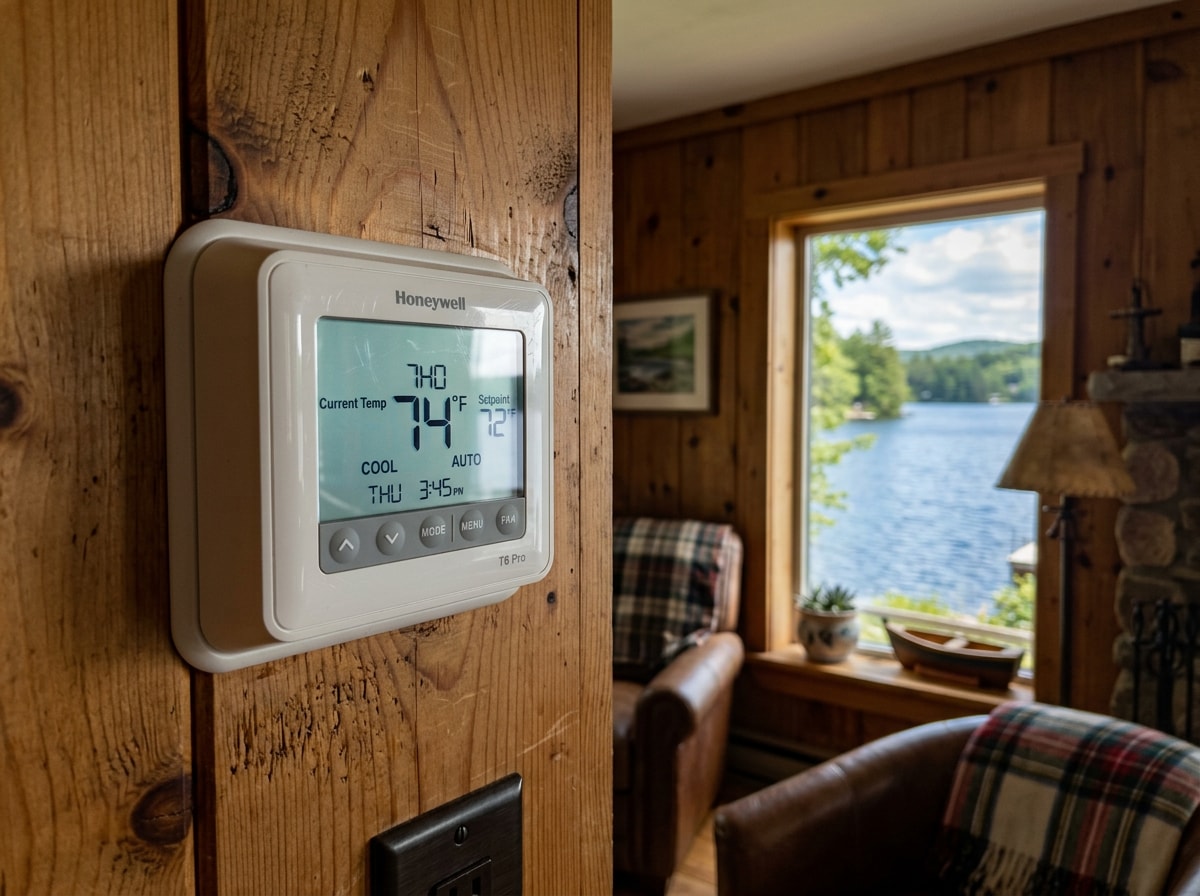
Most national energy guidance points to a thermostat setting of 75 to 78°F while you're home, a few degrees warmer while you sleep, and warmer still when the house is empty. That advice was built for the national average climate, not for a town where Lake Superior keeps the air moving cool off the water most of the summer.
Here's what matters most before you touch the dial:
- 75 to 78°F is the widely cited comfort and efficiency range for most U.S. homes while occupied.
- Grand Marais averages a July high of about 71°F and an August high of about 70°F, some of the coolest summer readings of any weather station in Minnesota.
- Because actual cooling demand here is so low, many North Shore homes can run a few degrees warmer than the national guideline without ever feeling it.
- Humidity and airflow change how a given setpoint feels more than the number itself.
Why Grand Marais Doesn't Need to Chase the National 78° Rule
The 75 to 78°F range comes from national energy-saving guidance built around the average American summer, where afternoon highs regularly sit in the mid-80s or higher. Grand Marais doesn't see that kind of heat very often.
NOAA's 1991 to 2020 climate normals for the Grand Marais weather station put the average July high around 71°F and the average August high around 70°F. Cooling degree days, the metric HVAC pros use to measure how hard an air conditioner actually has to work, stay remarkably low here all summer, often totaling less than what a single hot week does further inland.
That's a direct result of the lake effect: cool air pulled off Lake Superior keeps shoreline temperatures well below what Duluth, the Twin Cities, or even Cook County towns a few miles inland experience on the same day. Homes right along the water in Grand Marais, Grand Portage, and Tofte often get away with a thermostat setting a couple of degrees above the standard guideline. Homes further inland, where the lake's cooling influence fades, may need to stick closer to the national number on the hottest afternoons.
If you're unsure which category your home falls into, our technicians who work throughout the Grand Marais, MN service area can walk your house and tell you in minutes.
What the DOE and Energy Star Actually Recommend
The U.S. Department of Energy's Energy Saver program has long advised starting around 75 to 78°F while home and awake, then adjusting warmer by several degrees while asleep or away, as a baseline for cutting cooling costs nationwide. You can see the current version of that guidance directly on the Department of Energy's thermostat page.
Here's a detail most articles skip: the DOE has also stated publicly that it believes Americans should set their thermostats to whatever temperature they personally choose, treating the 75 to 78°F figure as a savings benchmark rather than a rule. In 2025, a related DOE webpage that specifically cited the 75 to 78°F range was taken down amid national news coverage, a reminder that this number has always been a guideline, not a mandate.
ENERGY STAR's certified smart thermostat program builds on the same logic, helping households automate the shift between home, sleep, and away settings without having to remember to adjust the dial manually. You can compare certified models on the ENERGY STAR smart thermostat page.
Common AC Temperature Myths That Cost Grand Marais Homeowners Money
A few habits show up again and again on service calls, and they usually cost homeowners more than they realize.
- Cranking the thermostat way down cools the house faster. It doesn't. Air conditioners run at a fixed output regardless of the setpoint, so a lower number just means the system runs longer, not stronger.
- Turning the AC off completely during the day saves the most money. Leaving for a few hours? Fine. Leaving the house to bake all day can force the system to work overtime catching up later, especially in humid stretches.
- Extreme low setpoints are harmless. Pushing a unit to run nearly nonstop raises the risk of frozen evaporator coils and added blower strain, both of which shorten equipment life.
If your system seems to run constantly no matter where you set it, that's usually a sign of a sizing or maintenance issue, not a thermostat problem. Our air conditioning repair team sees this exact complaint most often in homes with aging or undersized equipment.
Humidity and Airflow Matter As Much As the Number
A room set to 78°F can feel like 82 to 83°F when humidity is high, because moisture in the air slows how efficiently your body sheds heat through sweat. This is why two homes at the same thermostat setting can feel completely different.
The EPA recommends keeping indoor relative humidity between 30 and 50 percent, and no higher than 60 percent, both for comfort and to limit mold growth. You can read the full breakdown in the EPA's guide to mold and moisture control.
Lake Superior's humidity swings can catch homeowners off guard, especially in July and August when onshore winds push moist air inland. If your home always feels "sticky" no matter the setpoint, it's worth having your system checked for proper dehumidification, which is a core part of our indoor air quality solutions.
A ceiling fan running counterclockwise in summer helps close the gap, too. Moving air can make a warmer setpoint feel noticeably cooler without adding any extra cooling load.
Day vs. Night vs. Away: A Sample Summer Schedule
Your ideal setting doesn't have to stay fixed all day. A smart summer schedule nudges the temperature warmer during cooler morning and evening hours, then holds steady during the few hours of real afternoon heat.
| Time / Status | National DOE Benchmark | Typical Grand Marais Adjustment |
|---|---|---|
| Home / awake | 75 to 78°F | 76 to 80°F on most days |
| Asleep | 78 to 82°F | 78 to 82°F |
| Away | 82 to 85°F | 80 to 85°F (or off for extended trips) |
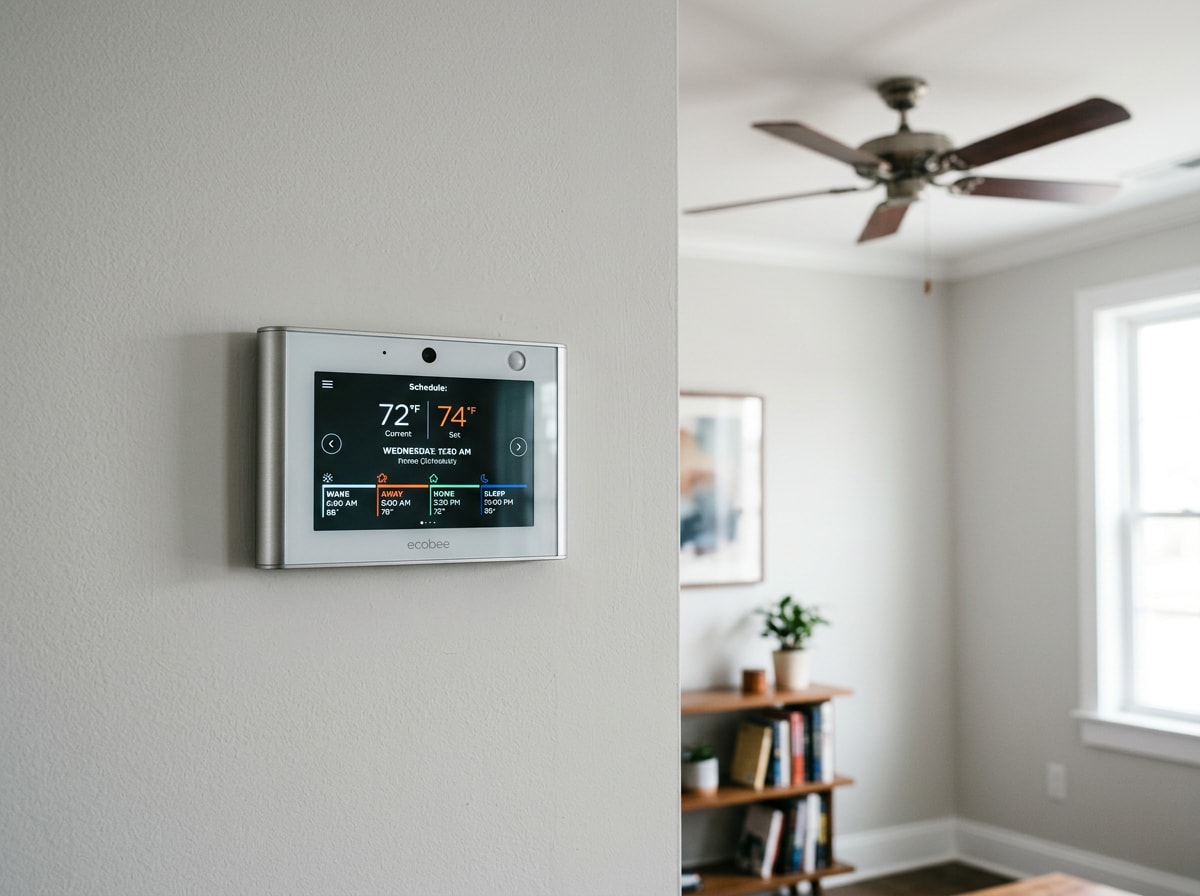
A programmable or smart thermostat handles this automatically, which matters most on the handful of genuinely warm North Shore afternoons each summer when the lake breeze dies down.
How to Stay Comfortable at a Higher Setpoint
A few habits make it easier to stay comfortable at a warmer thermostat setting without sacrificing comfort:
- Run ceiling fans counterclockwise and only in occupied rooms.
- Close blinds or curtains on south- and west-facing windows during peak sun.
- Use a programmable or smart thermostat to automate the day-to-night shift.
- Keep up with seasonal air conditioning maintenance so the system runs efficiently at whatever setpoint you choose.
- Check that your system is actually sized for your home. Many older Cook County homes were fitted with equipment that no longer matches their insulation or window upgrades.
Homeowners a bit further down the shore have asked us the same questions about cooling season upkeep, and our cooling system maintenance guide for Knife River covers the seasonal checklist in more detail.
When a Warmer Setpoint Means Your AC Needs a Look
If raising the thermostat even a couple of degrees leaves your home feeling warm, humid, or uneven room to room, that's not always a comfort preference problem. It can point to low refrigerant, a failing capacitor, or ductwork that's never been balanced for your home's layout.
Short-cycling, warm air at the vents, or a system that runs around the clock without ever reaching the setpoint are all signs worth having checked before the next heat stretch. For sudden breakdowns, especially during a stretch of humid weather, our emergency HVAC service covers Grand Marais and the surrounding North Shore. For everything else, schedule a free inspection and we'll tell you honestly whether the fix is a setting, a repair, or a system that's simply reached the end of its life.
You can see examples of recent local installs and repairs on our projects page, and our homepage has the full list of heating and cooling services we provide throughout Cook County.
FAQ
Does lowering the thermostat cool the house faster?
No. Air conditioners cool at a fixed rate regardless of the setpoint, so a lower number only makes the unit run longer, not faster.
Is 72°F a good AC temperature for summer in Grand Marais?
It's comfortable for many people, but it sits below the standard efficiency range and typically increases both cooling costs and system wear, even in our milder climate.
What temperature should I set my AC to in Grand Marais during summer?
Generally 75 to 78°F while home works well nationwide, and our lake-cooled summers often let you run 2 to 4 degrees warmer than that on all but the hottest afternoons.
What's the best AC temperature for sleeping?
Most guidance points to a few degrees warmer than your daytime setting, commonly in the high 70s to low 80s, though personal comfort varies more at night than during the day.
Should I turn my AC off completely when I leave for the day?
For a normal workday, raising the setpoint several degrees is better than shutting the system off entirely, since a badly humid house takes longer and more energy to recover from than it saves. For trips of a week or longer, turning it off (or to a minimal setting) makes sense.
What indoor humidity level should I aim for in summer?
The EPA recommends keeping indoor relative humidity between 30 and 50 percent, and no higher than 60 percent, to stay comfortable and limit mold growth.