Central air conditioning installation in Silver Bay, MN typically runs $3,500 to $15,000, and the gap between those two numbers almost always comes down to one thing: whether your home already has ductwork. Lake County's cold climate rating, older cabin-style housing stock, and a small local contractor pool all push real quotes in directions a national cost calculator can't predict. Here's what actually sets your price, broken down plainly, before you call anyone for a number.
How Much Does Central Air Conditioning Installation Cost in Silver Bay, MN?
Most homeowners in Silver Bay fall into one of three pricing scenarios, and the one that applies to you depends almost entirely on your existing ductwork.
| Scenario | Typical Installed Cost | Timeline |
|---|---|---|
| Replacement, ductwork in good shape | $3,500 - $9,000 | About 1 day |
| Replacement, ductwork needs repair/sealing | $4,500 - $11,000 | 1 - 2 days |
| New installation, no existing ductwork | $8,000 - $15,000+ | 3 - 5 days |
If you're replacing an aging system in a year-round home, you're likely in the first row. If you own a lake cabin or older North Shore property that was never built with forced-air ductwork, plan on the third. Either way, request a free inspection before committing to a number you found online. A quote built from an actual load calculation and a walk-through of your ductwork will always beat a generic estimate.
Central Air Conditioning Installation Cost Breakdown
Knowing where your money goes helps you compare quotes apples-to-apples instead of just picking the lowest bottom line. A typical installation breaks down roughly like this:
| Line Item | Typical Cost |
|---|---|
| Equipment (condenser & coil) | $2,500 - $8,000+ |
| Labor & installation | $2,000 - $7,000+ |
| Ductwork modifications | $500 - $5,000+ |
| Electrical upgrades | $300 - $2,000+ |
| Thermostat upgrade | $150 - $500 |
| Permits & fees | $100 - $500 |
| Old unit removal/disposal | $50 - $300 |
Labor and installation often make up 40 to 50 percent of the total bill, which is exactly why two quotes with identical equipment can still land thousands apart. Before signing anything, ask for a Manual J load calculation, collect at least three quotes, and ask explicitly about current utility rebates.
What Actually Drives Your Price in Silver Bay's Climate
National cost guides tend to treat Minnesota as one climate zone. It isn't. Silver Bay sits in Lake County, and counties including Cook, Lake, and St. Louis fall under climate zone 7 under Minnesota's adopted energy code, while the rest of the state sits in zone 6A . That distinction matters for insulation assumptions, duct sizing, and how aggressively your installer should size your system. A contractor quoting you off a generic "Minnesota" template, rather than Lake County's actual classification, is working from the wrong baseline.
Federal efficiency rules add another layer. SEER2 ratings now appear on all air conditioner and heat pump units sold and installed in the United States as of January 1, 2023 , and the Department of Energy evaluates energy usage and refines minimum efficiency standards and testing methods on a recurring schedule . Northern states like Minnesota currently sit at a lower regional SEER2 floor than the South, since our shorter cooling season changes the math. Confirm your installer is quoting equipment that actually meets the current regional minimum, not an older SEER-rated unit sitting in a warehouse.
It's also worth asking about current Xcel Energy or Lake Country Power rebates before you sign anything. These programs change periodically, so confirm active amounts directly with the utility rather than relying on last year's figures.
How Does Unit Size (Tonnage) Affect Installation Cost?
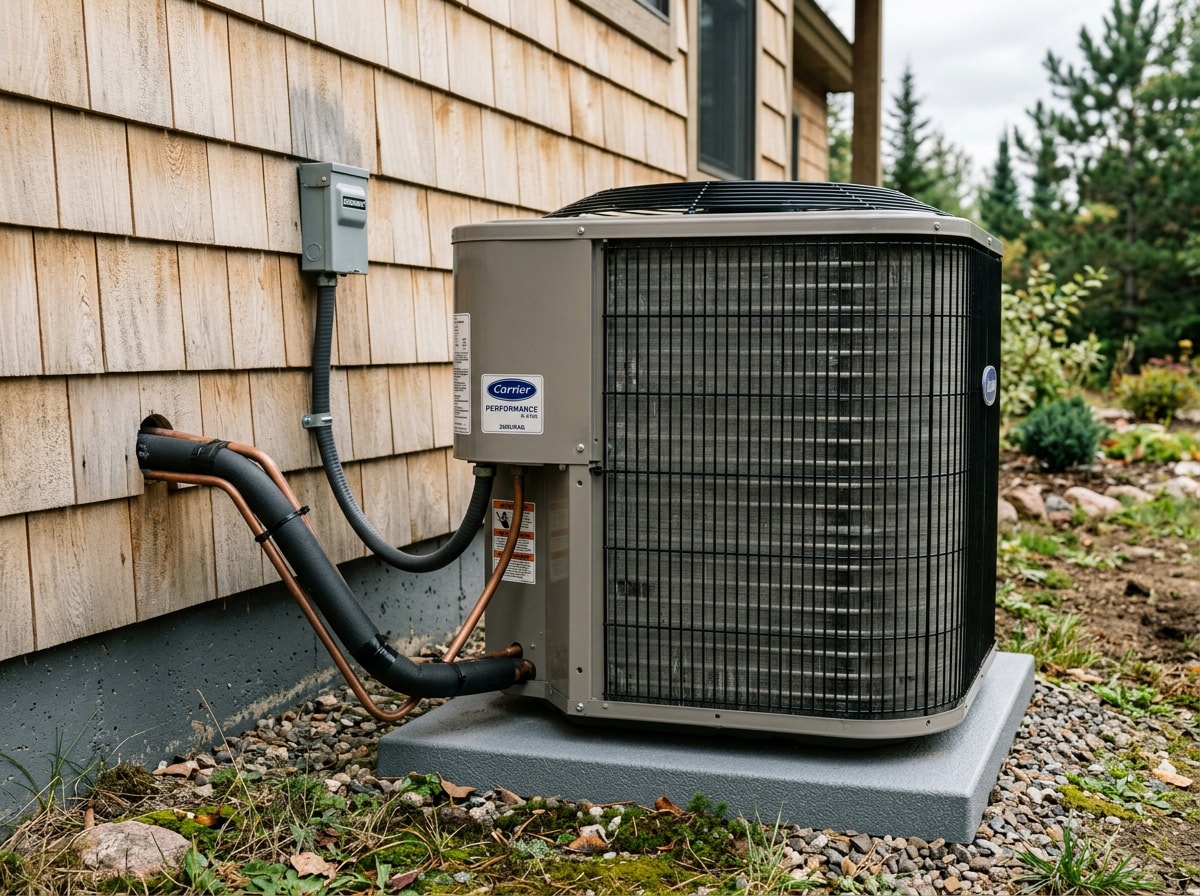
Larger systems cost more because they require more refrigerant, bigger electrical components, and additional labor to install correctly. A 4-ton unit isn't just a bigger version of a 2-ton one. It needs different wiring, more ductwork capacity, and sometimes structural support for the condenser pad.
The right tonnage for your home comes from a Manual J load calculation, not a square-footage guess. Skipping this step is the single most common reason a brand-new system runs inefficiently or short-cycles.
Central Air vs. Other Cooling Options for North Shore Homes
Choosing between cooling systems often comes down to upfront cost and whether your home already has ductwork.
| System Type | Typical Installed Cost | Best For |
|---|---|---|
| Central air conditioner | $4,000 - $8,000 | Homes with existing or easily added ductwork |
| Heat pump | $4,200 - $7,600 | Homes wanting combined heating and cooling |
| Ductless mini-split | $3,000 - $8,000+ | Cabins, additions, or homes with no ductwork |
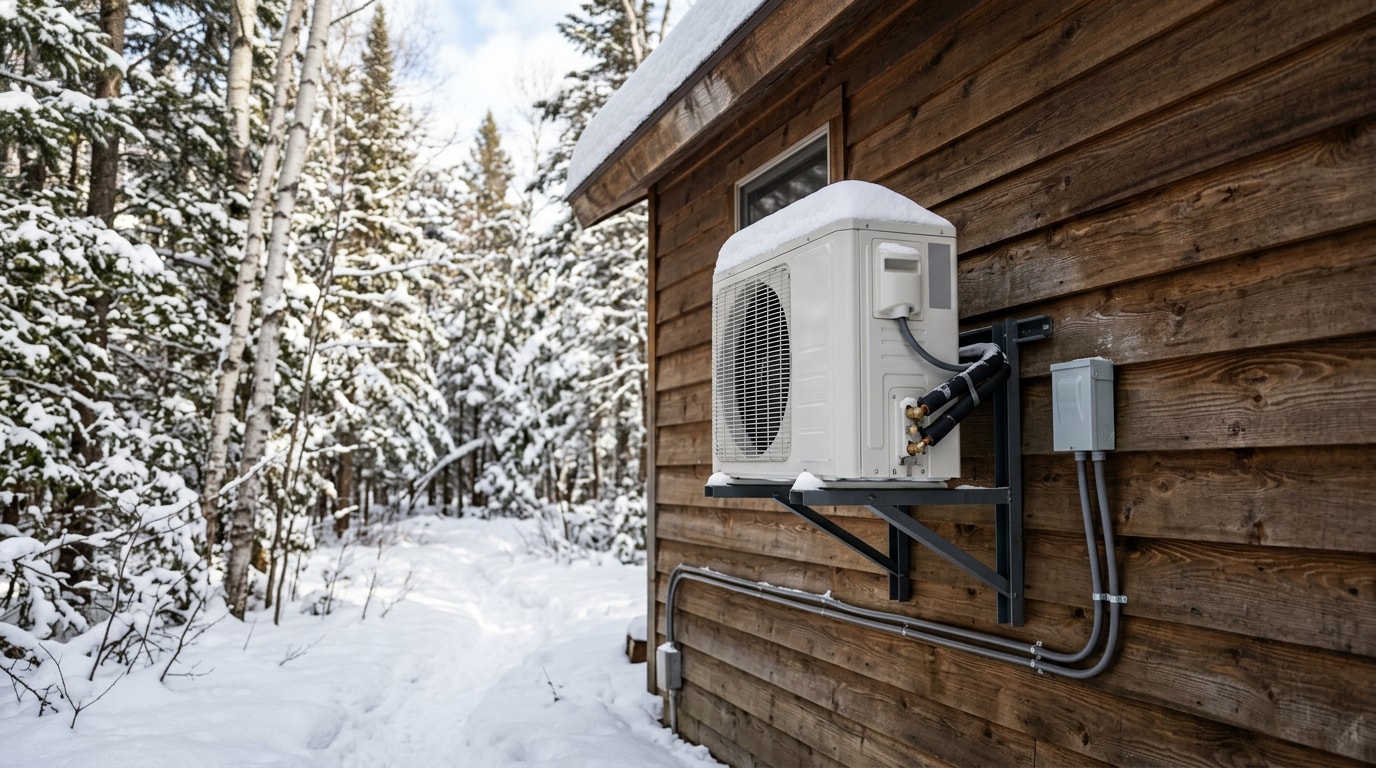
Central air lands in a fairly predictable middle range, which makes it the practical default for homes that already have ductwork. For lake cabins and additions where running ducts isn't realistic, a mini split cooling installation is often the faster, less invasive option. If you're still weighing which direction makes sense for your property, our guide on choosing a heating and air conditioning system walks through the tradeoffs in more detail.
Why Work With a Local, Licensed Installer in Silver Bay
Minnesota doesn't issue a statewide HVAC competency license, but that doesn't mean anyone can legally do this work. State law requires anyone who installs gas piping, heating, ventilation, cooling, air conditioning, fuel burning, or refrigeration equipment to post a $25,000 bond filed with the Minnesota Department of Labor and Industry . Ask to see proof of that bond before anyone touches your system. A reputable installer will have it ready without being asked twice.
In a small town, choosing the right installer matters even more than it does in a big metro, simply because there are fewer qualified options to call if something goes wrong. Our crews have run full installs and mid-winter repairs across Lake County cabins and year-round homes, and the pattern repeats every season: the jobs that fail early are almost always the ones where tonnage was guessed instead of calculated, or where ductwork was reused without checking for leaks first. We size every system off a real load calculation and pressure-test ductwork before calling a job finished.
When replacement, not new installation, is the right call, a good installer sizes the system correctly, commissions it properly, and confirms it's running at its rated efficiency before leaving your property. If your current unit is on its last leg and you're trying to decide whether to repair or replace, see our central air conditioning repair page for the signs that point toward replacement. Once a new system is in, routine maintenance is what keeps it hitting its rated efficiency for the next decade instead of the next three summers.
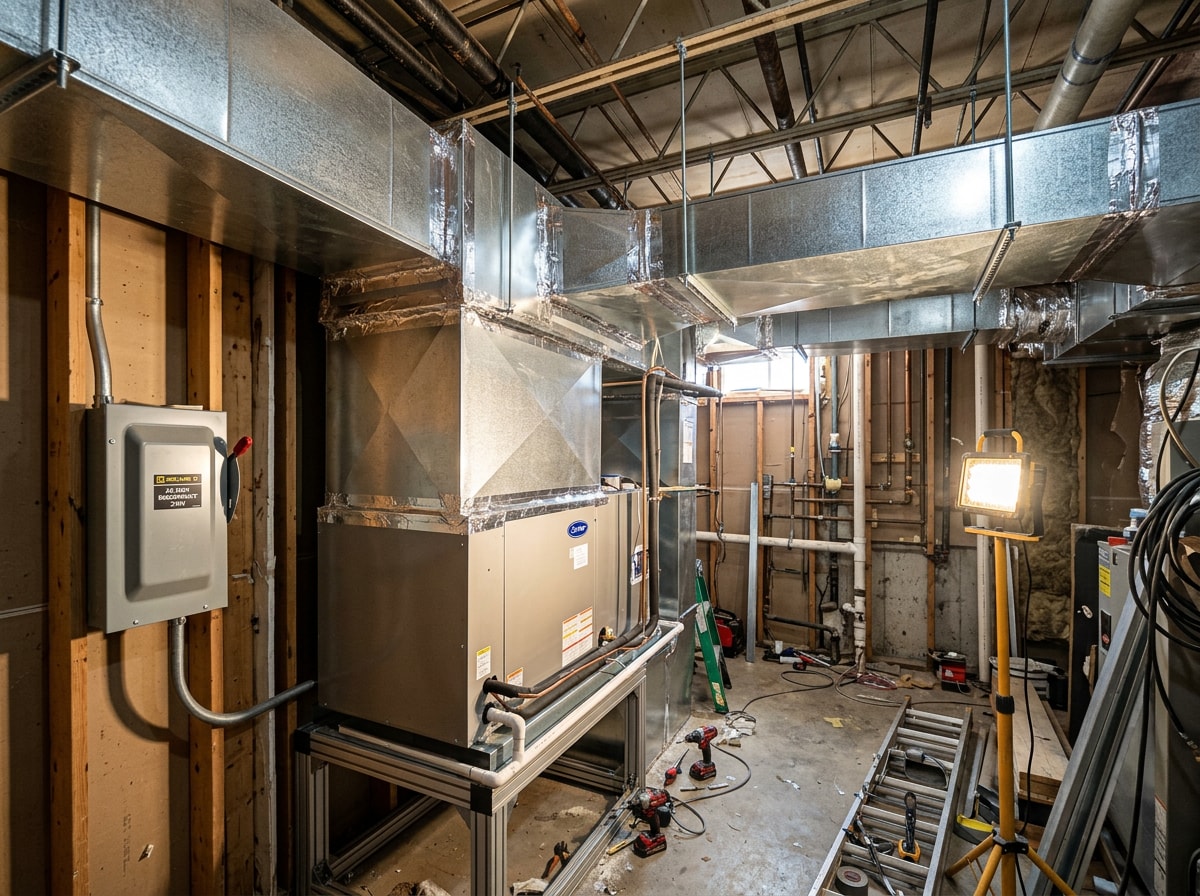
It's also worth noting just how standard central air has become. According to the most recent results from the 2020 Residential Energy Consumption Survey, 88% of U.S. households use air conditioning , and two-thirds of U.S. households use central AC or a central heat pump as their main AC equipment . That national shift is exactly why straightforward replacement-in-place, not a full new build-out, is the scenario most Silver Bay homeowners actually face. If a breakdown catches you mid-heat-wave before a planned replacement, our guide to emergency air conditioning repair in Silver Bay covers what to do while you wait for a crew.
We serve Silver Bay and the surrounding North Shore, and you can see examples of completed work on our projects page. For a full rundown of what we offer beyond cooling, visit our homepage.
FAQ
How Long Does Central Air Conditioning Installation Take?
A straightforward replacement with existing ductwork usually takes just one day. A full new installation without existing ductwork takes considerably longer, typically 3 to 5 days, since crews need to design, run, and seal an entirely new duct system before the equipment goes in.
Do I Need a Permit for Central Air Conditioning Installation?
Yes. Mechanical permits are required for new AC circuits and equipment in Minnesota, and a reputable installer handles that paperwork for you rather than leaving it to you. Skipping a permit can cause problems later with insurance claims or home sales, and since installers are required to be bonded with the Minnesota Department of Labor and Industry , pulling permits correctly is part of what that bond is meant to guarantee.
What Is the Best Time of Year to Install Central Air Conditioning?
Spring and fall are the smartest windows for installation in Minnesota. Scheduling during these shoulder seasons usually means shorter wait times, better installer availability, and less pressure than booking an emergency replacement during a July heat wave.
What SEER2 Rating Is Good for Minnesota's Climate?
Minnesota's shorter, milder cooling season changes the payback math on high-SEER2 equipment compared to hot southern states. A mid-tier SEER2 rating often hits the practical sweet spot for North Shore homes, balancing upfront cost against realistic annual energy savings, especially in Lake County's climate zone 7 conditions where cooling demand is lower than most of the country to begin with.
Can I Install Central Air Without Existing Ductwork?
Yes, but budget for it. New installation without existing ductwork typically runs $8,000 to $15,000 and takes 3 to 5 days, versus a one-day swap when ductwork already exists. For cabins or additions where running ducts isn't practical, a ductless mini-split is often the more cost-effective route.
What's the Realistic Total Cost for a 2,000 Sq Ft Home?
For a typical 2,000 square foot home without major complications, expect a 3 to 4 ton system in the standard mid-efficiency price range, generally landing within $5,000 to $15,000 depending on ductwork condition and equipment tier. Schedule a free inspection to get a number specific to your home and square footage.