An AC outside unit not turning on in Two Harbors, MN usually comes down to one of five things: a tripped breaker, a failed capacitor, a clogged condensate line, a dirty filter, or a refrigerant leak. Lake Superior's cold springs and long winter idle periods make the first two especially common here. This guide walks through the troubleshooting order our technicians actually use on North Shore service calls, what's safe to check yourself, and what should wait for a licensed pro.
Reasons Your Outside AC Unit Won't Turn On
An outdoor condenser can go silent for several different reasons, and they don't all point to the same fix. Some are as simple as a flipped switch. Others signal a failing part that needs replacement.
Tripped Circuit Breaker
A tripped breaker is the single most common reason a condenser won't fire up. Overloaded circuits, power surges from summer storms, and aging wiring can all cause the dedicated outdoor-unit breaker to flip off.
In Two Harbors, this shows up with a seasonal twist. A breaker that sat untouched all winter can trip the first time the AC cycles on in spring simply because it hasn't been exercised in months.
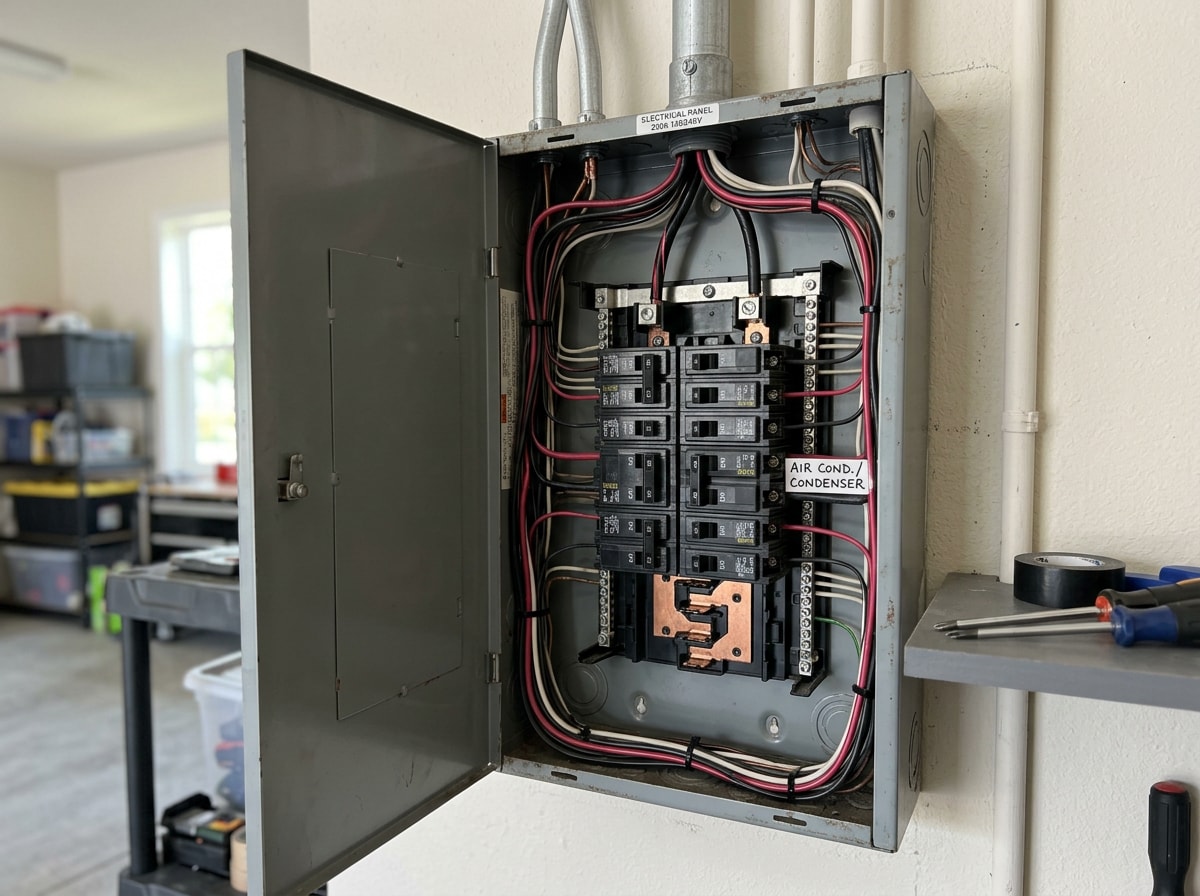
Find your electrical panel and locate the breaker labeled for the air conditioner or condenser. Switch it fully off, then back on, one time. If it trips again immediately, stop resetting it. Frequent trips of a breaker indicate a problem and should be inspected by a qualified electrician , according to the Electrical Safety Foundation International.
Faulty Capacitor
If the unit hums or clicks but the fan never spins, you're likely dealing with a failed capacitor. This small cylindrical component stores the charge needed to start the compressor and fan motor, and when it weakens, the motor can't get the jolt it needs.
A bulging top, leaking fluid, or a burnt smell near the unit are visual red flags. One caveat: capacitors hold an electrical charge even after the power is switched off. Don't open the condenser cabinet to inspect or touch it yourself; this is a job for a technician with the right discharge tools.
Clogged Condensate Drain Line
A clogged condensate line is a common, often overlooked reason systems shut themselves down. When algae, dust, or debris block the line, water backs up and trips a float safety switch designed to stop the system before an overflow can damage your home. It's a protective shutdown, not a true mechanical failure, but it still needs clearing before the unit will run again.
Dirty Air Filter
A clogged filter restricts airflow across the indoor coil. Over time that can cause the coil to ice over or trip a built-in safety shutdown that stops the whole system, including the outdoor unit.
Pull the filter and hold it up to a light. If you can't see light through it, replacing it should be your first move before digging into anything more complicated.
Low Refrigerant
Low refrigerant can prevent normal operation and often shows up as ice on the refrigerant lines, warm air from the vents, or a hissing sound near the outdoor unit. None of these symptoms mean the system simply needs more coolant. Refrigerant doesn't get used up in a sealed system, so low levels almost always mean a leak somewhere in the lines or coil.
That points to a repair job, not a top-off. Refrigerant handling is also federally regulated: EPA regulations under Section 608 of the Clean Air Act require that technicians who maintain, service, repair, or dispose of equipment that could release ozone depleting refrigerants into the atmosphere must be certified .
How to Troubleshoot Your Outside AC Unit
A short, safe checklist can save you a wasted trip or help you describe the problem accurately when you call. Work through these steps in order, starting indoors and moving outward.
Check the Thermostat and Indoor Unit
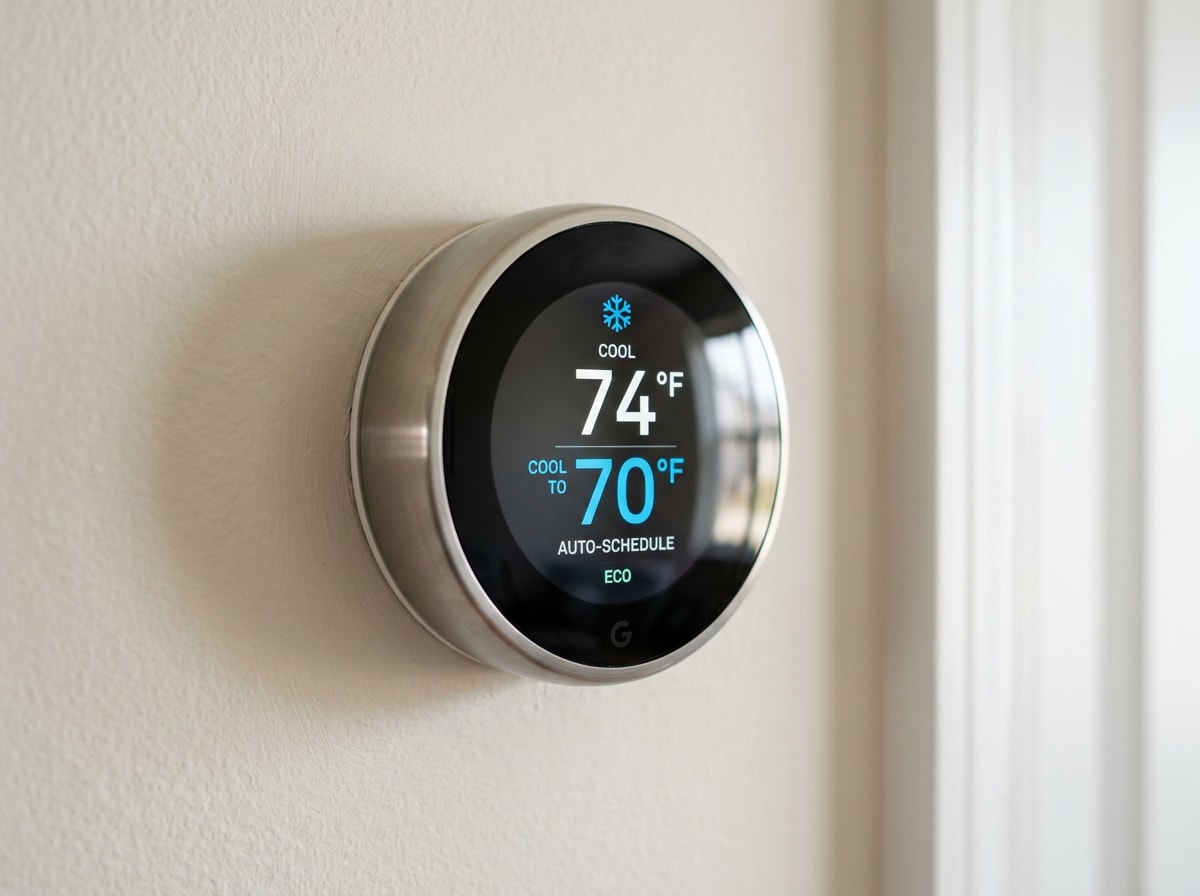
Confirm your indoor air handler is actually running before assuming the outdoor unit is at fault. If the thermostat isn't calling for cooling, because of the wrong mode, dead batteries, or a setting above room temperature, the outdoor condenser was never told to start.
Listen for the indoor blower. If it's running but the outside unit stays silent, that narrows the problem to the condenser or its power supply.
Check the Breaker Panel
Head to your electrical panel and find the circuit labeled for the air conditioner or condenser. It's usually a double-pole breaker rated higher than standard household circuits.
Flip it fully off, wait about 30 seconds, then switch it back on. This resolves a surprising number of no-start calls, especially after a storm or a long idle winter. If it won't stay on, that's a sign of a deeper electrical fault, not something to force repeatedly.
Check the Outdoor Disconnect
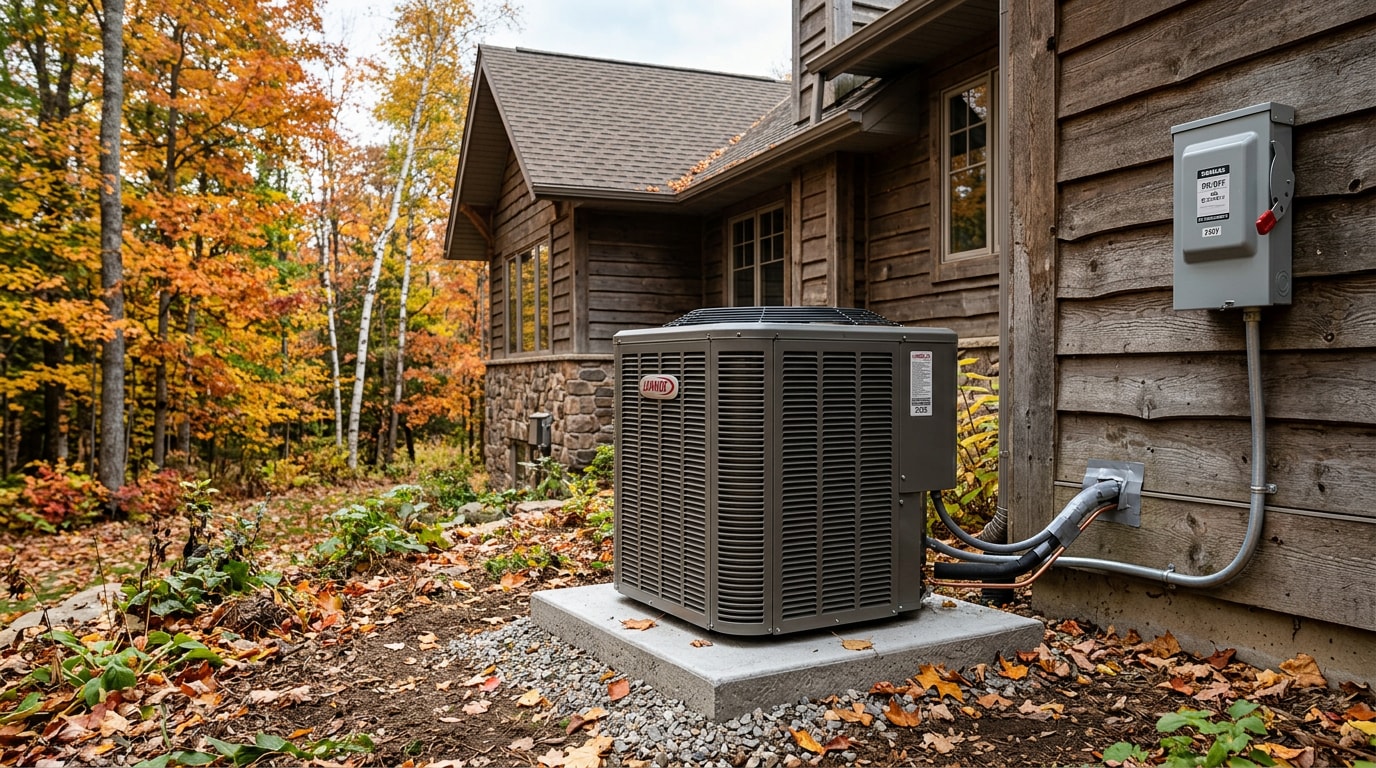
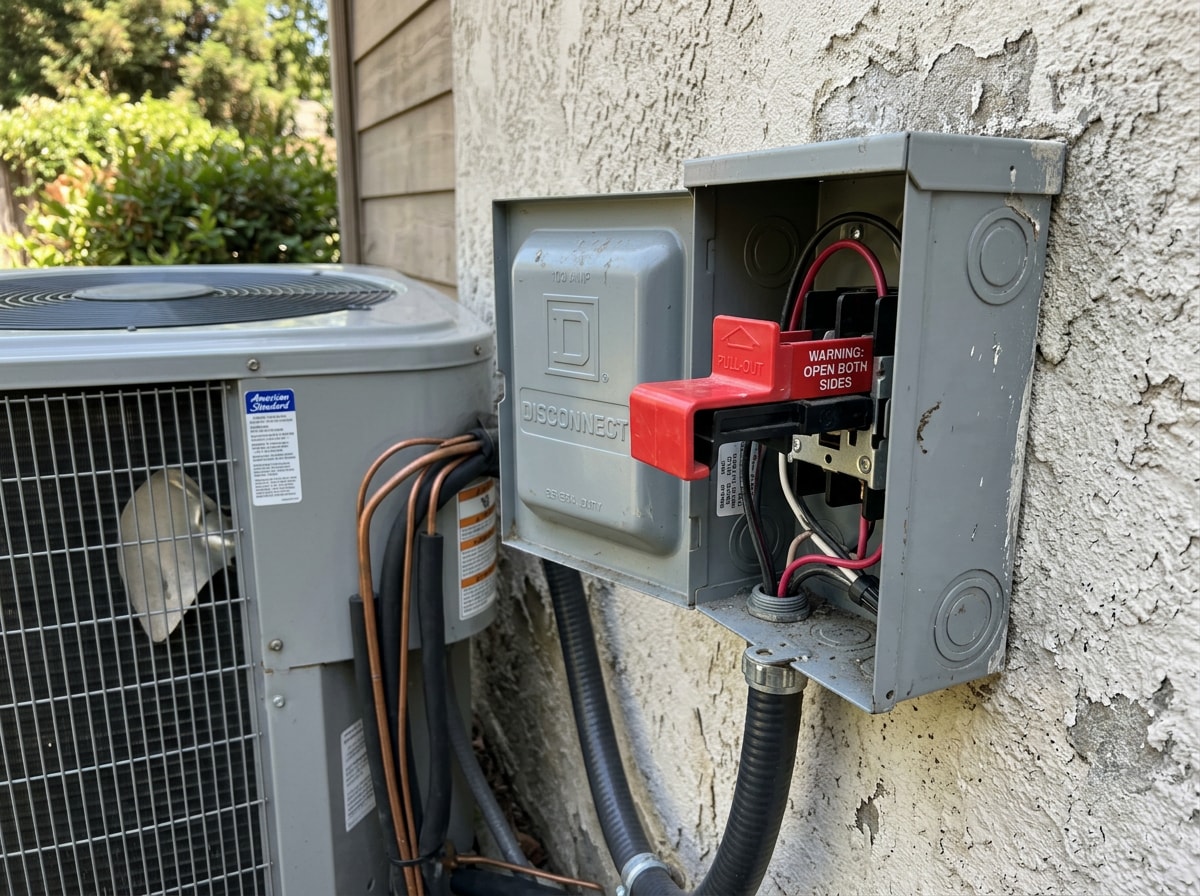
Near the condenser itself, you'll usually find a gray metal or plastic box mounted on the wall. This is the disconnect, and it sometimes gets left off after HVAC service, storm cleanup, or yard work.
Open the box and confirm the pull-out block is fully seated and in the "on" position. If it looks damaged, scorched, or won't stay seated, leave it alone and call a technician.
Quick Symptom Reference
| What You Notice | Most Likely Cause | DIY or Call a Pro |
|---|---|---|
| No sound at all from the unit | Tripped breaker, open disconnect, or dead thermostat batteries | Check yourself first |
| Unit hums or clicks but fan doesn't spin | Failing capacitor or seized fan motor | Call a pro |
| Water pooling indoors, system shut off | Clogged condensate line tripping the float switch | Often DIY; call a pro if it recurs |
| Ice on refrigerant lines, warm air from vents | Low refrigerant or a leak | Call a pro (EPA-regulated repair) |
| Indoor blower runs, outdoor unit stays silent | Power issue or failed contactor at the condenser | Call a pro |
DIY vs. Professional Outside AC Unit Repair
Some fixes are genuinely safe for a homeowner to handle. Others involve high voltage, pressurized refrigerant, or licensing requirements. Knowing which category your problem falls into keeps you safe and keeps you from accidentally voiding a warranty.
Reasonable DIY tasks:
- Swapping out a dirty air filter
- Clearing leaves and yard debris from around the condenser cabinet
- Gently rinsing accessible coil fins with a garden hose
- Resetting a tripped breaker or disconnect one time
Keeping the area around your unit clear is especially worth doing after a Minnesota winter, when snow drifts, ice, and blown debris tend to pile up against the cabinet. For a more thorough seasonal checklist, see our air conditioning maintenance services.
Jobs for a licensed technician: capacitor and contactor replacement, refrigerant leak repair, compressor diagnosis, and any electrical panel work. These require specialized tools and, for refrigerant, EPA certification. Attempting them without training risks injury and further damage to the system. If you've worked through the checks above and the unit still won't start, schedule a free inspection with our air conditioning repair team rather than keep guessing.
What a Service Call Actually Looks Like
A real visit generally follows the same pattern, whether you're in a dense city or a small North Shore town:
- Safety check — the technician confirms power is off before touching any components.
- Electrical test — breaker, disconnect, capacitor, and contactor all get checked.
- Component diagnosis — compressor, fan motor, and refrigerant charge are inspected individually.
- Repair-or-replace recommendation — based on the unit's age and condition.
This looks different depending on the season here. A mid-summer failure often points to a worn capacitor or low refrigerant from heavy use. A first-start-of-the-season visit in Two Harbors frequently uncovers rodent nesting in the control box, minor ice damage from winter weather, or a disconnect that was simply left off during fall shutdown. For more on matching a system to North Shore winters and summers, see how to choose a heating and air conditioning system in Two Harbors. You can also check our Two Harbors service area page for local coverage details.
What Outside AC Unit Repairs Typically Cost
Costs vary by region, unit size, and brand, so treat any number as a ballpark rather than a quote. Generally speaking, repairs rank from least to most expensive like this:
- Capacitor or contactor replacement (lowest cost)
- Breaker or electrical panel repair
- Refrigerant leak location, repair, and recharge
- Compressor replacement (highest cost, sometimes close to a new unit)
That's why technicians often weigh repair against replacement on older systems once a compressor is involved. Regular maintenance measurably reduces how often you land in that expensive end of the list. Section 608 of the Clean Air Act requires that anyone who maintains, services, repairs, or disposes of appliances containing ozone-depleting refrigerants be certified , which is part of why refrigerant work costs more than a simple part swap. If a system is failing on the hottest day of the year, our emergency HVAC service covers same-day situations.
Final Thoughts on an Outside AC Unit Not Turning On
Work through the troubleshooting order: thermostat first, then breaker and disconnect, then filter and debris. If the problem traces back to a capacitor, refrigerant, or compressor, that's your cue to bring in a professional instead of repeating tests that won't change the outcome.
Knowing when to call for help sooner tends to turn a small fix into a small repair bill instead of a big one. Visit our homepage to learn more about our North Shore HVAC services, or schedule a free inspection when you're ready for a diagnostic visit.
Frequently Asked Questions
Why is my outside AC unit not turning on?
Start by checking the breaker and outdoor disconnect, then confirm the thermostat is actually calling for cooling. Reset the breaker once if it's tripped. If the problem persists after these steps, call a licensed technician rather than repeating the reset.
Why is my indoor unit running but the outside unit won't turn on?
The indoor blower responds directly to the thermostat, separate from the condenser's power supply. If the blower runs but the outdoor unit stays silent, the issue is almost always at the condenser itself: a tripped breaker, an open disconnect, a failed capacitor, or a bad contactor.
Why is my thermostat set to cool but my AC not turning on?
This often comes down to dead batteries, the wrong fan mode, or a miswired connection rather than a true outdoor-unit fault. Replacing batteries and double-checking the mode setting resolves many of these cases.
Is there a reset button on my AC unit?
Some condensers have a small reset button near the access panel, though not all models include one. If yours doesn't, the alternative is simply flipping the breaker off and back on once.
Why does my outside AC unit only hum but not start?
Humming without starting almost always traces back to a failing capacitor or contactor. The unit hums when the motor is receiving some power but not enough of a starting charge, which points to component failure rather than something a simple reset will fix.
What should I do if my outside AC unit keeps tripping the breaker?
If the breaker trips more than once after a reset, that's a sign of a genuine electrical fault, not a fluke. It could be a short, a failing compressor, or overloaded wiring, and repeated resets risk real damage. Call a technician before attempting another reset.