Heating and air conditioning wall units in Tofte, MN solve a specific problem: a room with no ductwork and no realistic way to add it. These compact PTAC systems pack a compressor, heater, and fan into one sleeve that slides through an exterior wall. Below is how they work, what they actually cost installed, and the exact point where a North Shore winter starts to push them past their limit.
Quick Answer
- A heating and air conditioning wall unit (PTAC) cools and heats one room without ductwork, using a sleeve built into an exterior wall.
- Two main types exist: heat-pump models (efficient until deep cold) and electric-resistance models (steady heat, higher running cost).
- Installed cost typically runs $1,000–$3,200 per unit depending on whether a sleeve and circuit already exist.
- Minnesota's official design temperature for Tofte is -14°F, cold enough that most heat-pump PTACs lean hard on backup electric heat for weeks at a time.
- For additions, cabins, and garage conversions, a mini-split often outperforms a PTAC in the same budget range.
What Is a Heating and Air Conditioning Wall Unit (PTAC)?
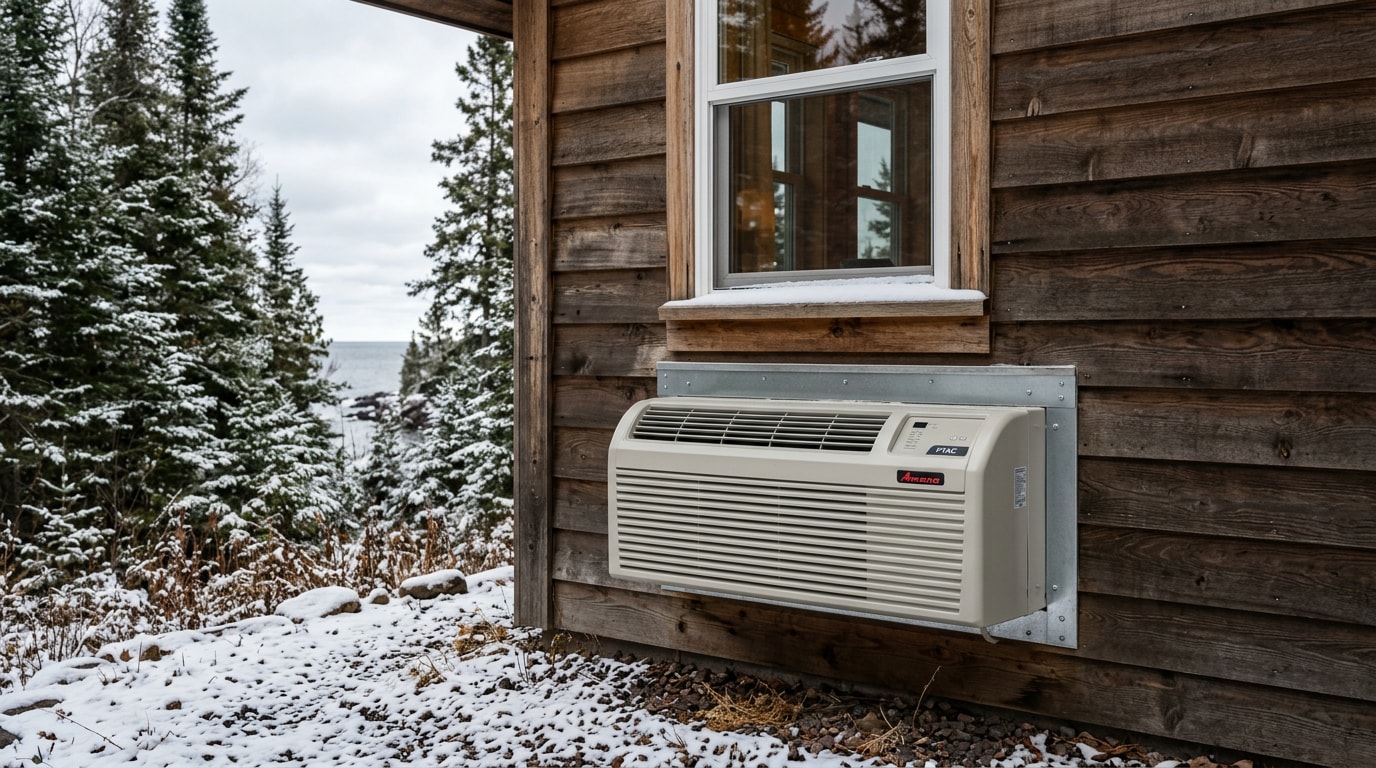
PTAC stands for packaged terminal air conditioner, the technical term behind nearly every wall-mounted heating and cooling unit sold for residential use. A PTAC unit is a self-contained heating and cooling system designed to be installed through an exterior wall, with the compressor, condenser, evaporator, and fans built into one package.
There's no indoor-outdoor split, no refrigerant lines run across a wall, and no ductwork to plan around. The whole system lives inside one cabinet.
PTACs started as hotel equipment, but that's changed. They're now common in hotels, apartment buildings, hospitals, senior living facilities, and a growing number of homes where people want zone-based comfort without tearing into walls. On the North Shore, that usually means a three-season porch, a garage conversion, or a cabin addition near Tofte, MN that was never built with a furnace run in mind.
Types of Wall Units: Heat Pump vs. Electric Resistance
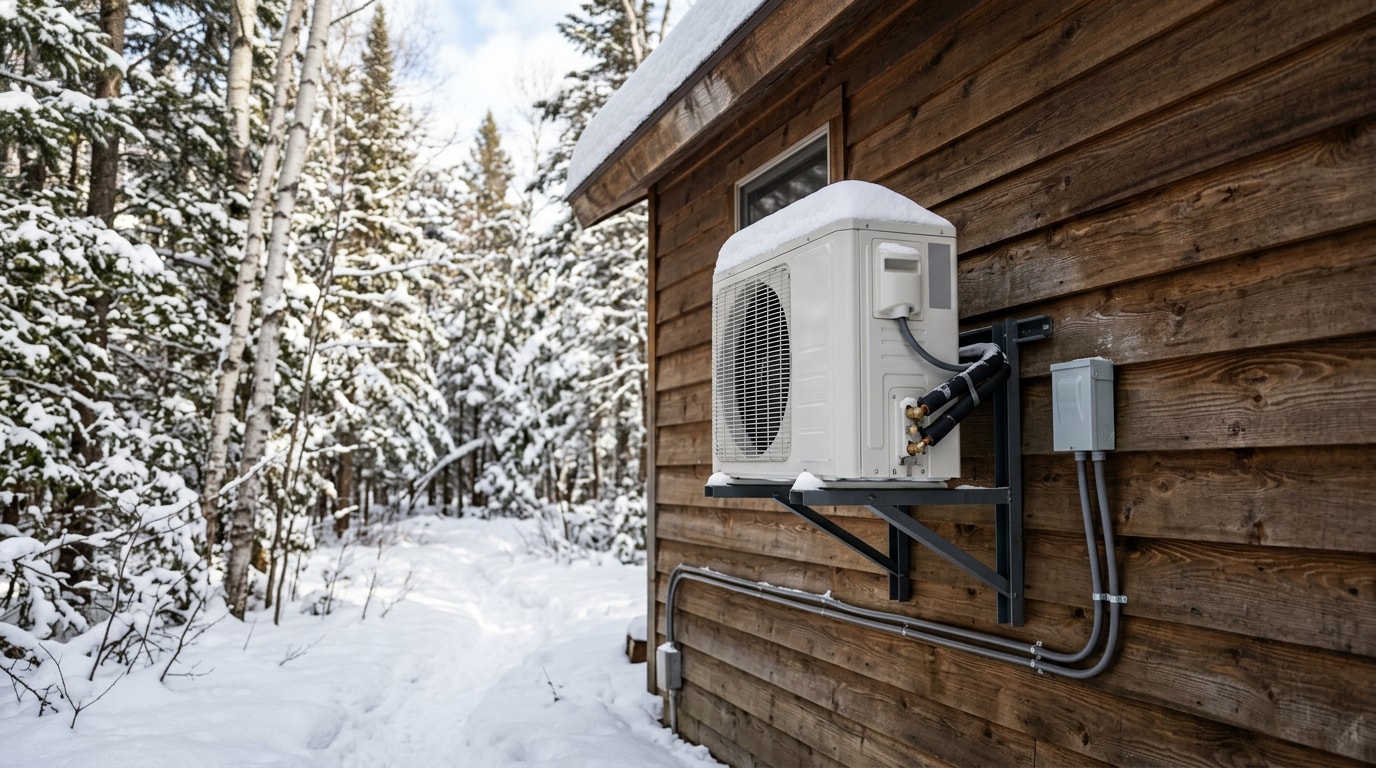
Not every PTAC heats a room the same way. PTACs come in two main types: heat-pump models, which reverse the cooling cycle to pull warmth from outside air and don't get as hot as electric units, and electric-heater models, which use a heating element and fan and can put out significantly more heat in cold weather.
- Heat-pump PTAC: Lower operating cost in mild weather, loses efficiency as outdoor temperatures drop, usually paired with a backup heat strip.
- Electric-resistance PTAC: Lower purchase price, consistent output regardless of outdoor temperature, higher electric bills in a long heating season.
Both configurations give you zoned comfort independent of the rest of the house, which matters most in additions, sunrooms, and converted spaces that sit outside the main heating loop.
What Does a Heating and Air Conditioning Wall Unit Cost in Tofte?
Pricing depends on three things: unit capacity, whether a wall sleeve already exists, and whether a dedicated electrical circuit needs to be added.
| Cost Component | Typical Range |
|---|---|
| Unit only (7,000–15,000 BTU) | $700 – $3,000 |
| Wall sleeve (if not already installed) | $150 – $400 |
| Professional installation labor | $300 – $1,500 |
| Total installed, sleeve already in place | $900 – $1,800 |
| Total installed, new wall opening | $1,750 – $3,200 |
Retrofitting an existing sleeve is almost always cheaper than cutting a new opening, since the electrical rough-in and structural work are already done. If you're not sure which situation applies to your space, schedule a free inspection and we'll measure the wall, check the circuit, and quote both options before you commit.
Sizing a Wall Unit: BTUs by Room Size
Oversizing wastes money and causes short-cycling. Undersizing means the unit runs nonstop and still can't keep up. The most energy-efficient room air conditioner is the one sized correctly to the square footage of the space it's cooling.
| Room Size | Recommended Capacity |
|---|---|
| 150–250 sq ft | 6,000 BTU |
| 250–350 sq ft | 7,000–8,000 BTU |
| 350–450 sq ft | 9,000–10,000 BTU |
| 450–550 sq ft | 12,000 BTU |
| 550–700 sq ft | 14,000 BTU |
If the room is heavily shaded, reduce capacity by about 10 percent; if it gets direct sun most of the day, add about 10 percent. These numbers come from ENERGY STAR's official room air conditioner sizing chart, which assumes standard 8-foot ceilings and average insulation, both of which vary across older North Shore homes.
(Note: that ENERGY STAR link is external, see citation below in the live article.)
PTAC vs. Mini-Split vs. Central Air vs. Window Unit
Four systems get compared constantly, and each wins in a different situation.
| System | Ductwork Needed | Typical Noise (dB) | Best Use Case | Cold-Climate Note |
|---|---|---|---|---|
| PTAC | No | 55–65 | Single room, additions | Heat-pump models lose efficiency below ~25°F |
| Ductless mini-split | No | 25–40 | Multi-zone homes, cabins | Modern inverter models hold up well in sub-zero temps |
| Central air | Yes | 50–60 (outdoor unit) | Whole-home comfort | Pairs with a furnace for reliable Minnesota winters |
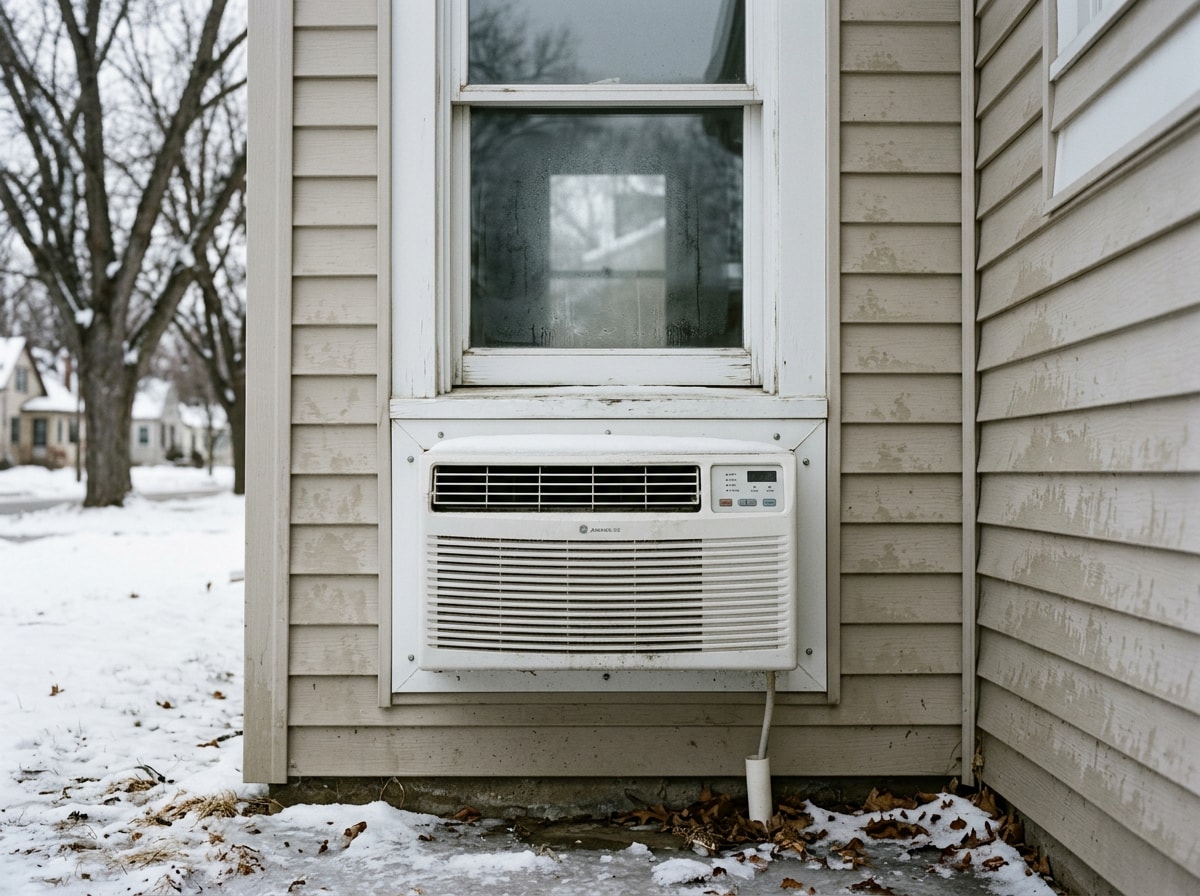
| Window unit | No | 50–60 | Rentals, temporary cooling | Not rated for winter heating |
The real trade-off: PTACs win on upfront cost and installation speed, mini-splits win on noise and cold-weather performance, and central air wins on whole-home consistency. For additions where a PTAC's winter limits are a concern, compare it against a ductless mini-split cooling installation before you buy. Homeowners weighing a full system replacement instead of a single-room fix should also look at central air conditioning installation.
How a PTAC Works
A PTAC's refrigeration cycle is the same one used in central air, just scaled into one cabinet. To cool a room, the compressor pumps refrigerant through coils that absorb heat and humidity, which is then expelled outside.
For heat, some units run a heat pump that reverses the refrigerant flow to warm passing air, while others simply run electricity through a heating coil and blow that heat into the room with a fan.
We've seen what that looks like on an actual Tofte winter night. On a -10°F evening off Lake Superior, a heat-pump PTAC struggles to pull usable warmth from air that cold, so the backup electric strip ends up carrying most of the load, which is exactly when the electric bill jumps. On a 90°F July afternoon, the same unit runs the standard cooling cycle without any backup needed.
That gap between "works fine" and "backup-heat-only" is the single biggest thing buyers underestimate about wall units in this climate.
Installing a Wall Unit: Sleeves, Wiring, and Drainage
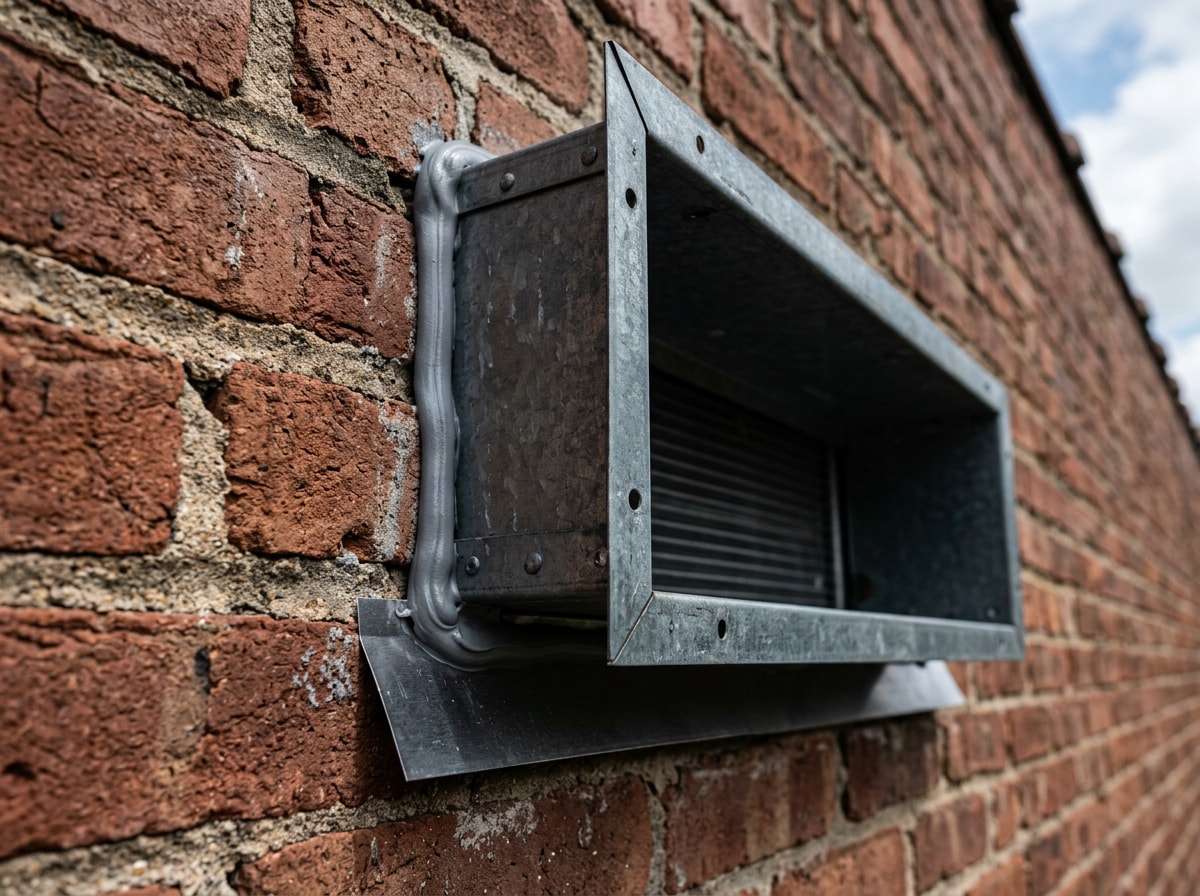
Most PTACs install through an exterior wall, usually beneath a window, inside a metal sleeve sized to the unit's dimensions. The sleeve pitches slightly outward so condensation drains away from the house instead of pooling indoors.
Electrically, PTACs need a dedicated circuit, typically 115V, 208-230V, or 265V depending on heating capacity. In Minnesota, that circuit work falls under state electrical permitting, and homeowners can request an electrical permit directly through the Department of Labor and Industry for work done on their own property. Confirm wall-opening and circuit requirements with a licensed HVAC contractor before anyone cuts into a wall.
You can browse examples of completed wall-unit, mini-split, and furnace installations in our project gallery.
Tofte's Climate: When a Wall Unit Isn't Enough
This is the part most buying guides skip, and it's the part that actually matters on the North Shore.
Minnesota's adopted climatic design condition table lists Tofte's outdoor winter design temperature at -14°F, with Silver Bay even colder at -28°F , and Grand Marais close behind at -19°F . These are the numbers contractors use for ACCA Manual J load calculations, not worst-case outliers, they're the temperatures equipment is supposed to be sized against every winter.
At those temperatures, a heat-pump PTAC's efficiency drops hard, and electric-resistance backup carries most of the heating load for days at a stretch. PTACs already use roughly 15 to 25 percent more electricity than a mini-split cooling the same space , and that gap widens in extended cold snaps.
A few practical limits worth knowing before you buy:
- Coverage stops at that one room's walls, no spillover to adjacent spaces.
- A poorly sealed sleeve is a direct path for lake wind to infiltrate the wall cavity.
- Long-term energy use tends to run higher than a cold-climate mini-split or a furnace/boiler backup system.
If your home already runs on a boiler and you're troubleshooting heat loss elsewhere in the house, it's worth ruling out a control issue first. For a related read, see Boiler Thermostat Not Working in Lutsen, MN? Here's What to Check. And if a wall unit does fail mid-cold-snap, our emergency HVAC service covers Tofte, Lutsen, and the rest of the North Shore.
For most additions in this climate, we point homeowners toward a cold-climate-rated mini-split repair and installation path instead of a straight PTAC, especially if the room will be used year-round rather than seasonally. Air-source heat pumps transfer heat between your home and the outside air, and modern versions can cut electricity use by about 50 percent compared to furnaces and baseboard heaters , a gap that shows up on utility bills over a full Minnesota winter.
Homes that rely on a wall unit as their only source of heat in a room also tend to see more dust and humidity swings than ducted or ductless alternatives. If that's a concern in a nursery, workshop, or home office, pair the conversation with our indoor air quality solutions page.
The team at Grand Marais HVAC services wall units, mini-splits, and boilers throughout Tofte, Lutsen, Grand Marais, and Silver Bay, and the sizing conversation always starts the same way: what's the room actually used for, and how many weeks a year does it sit below zero. Schedule a free inspection and we'll walk the space with you before you buy anything.
FAQ
Do wall AC units also heat rooms?
Yes. Most wall units sold today include either a heat-pump or an electric heat strip. Check the spec sheet for "heat pump" or "with heater" before buying, since not every model includes winter heat.
What do you call an AC and heater combo wall unit?
It's usually called a PTAC, or in heat-pump form, a packaged terminal heat pump (PTHP). Both terms describe the same through-the-wall cabinet.
Are wall air conditioners with heaters energy efficient?
It varies by model. Look for inverter technology and a published SEER2 or EER rating. An ENERGY STAR-certified heat-pump PTAC can save well over 1,700 kWh compared to a baseline electric-resistance PTAC over its lifetime , which adds up fast in a cold climate.
How long do PTAC wall units last?
Most PTACs run 8–12 years with regular filter cleaning and coil maintenance. Units that cycle hard through Minnesota winters on backup electric heat tend to wear out on the lower end of that range.
Will a wall unit heat a room through a full Tofte winter?
It can, but expect the backup electric heat to do most of the work once temperatures drop into single digits or below. Tofte's official design temperature is -14°F, and heat-pump PTACs lose a meaningful amount of heating capacity well before that point.
Do I need a permit to install a wall unit in Minnesota?
Yes, in most cases. The dedicated electrical circuit a PTAC requires falls under Minnesota's state electrical permitting rules, and any new wall opening typically needs a mechanical permit from your local building authority as well.